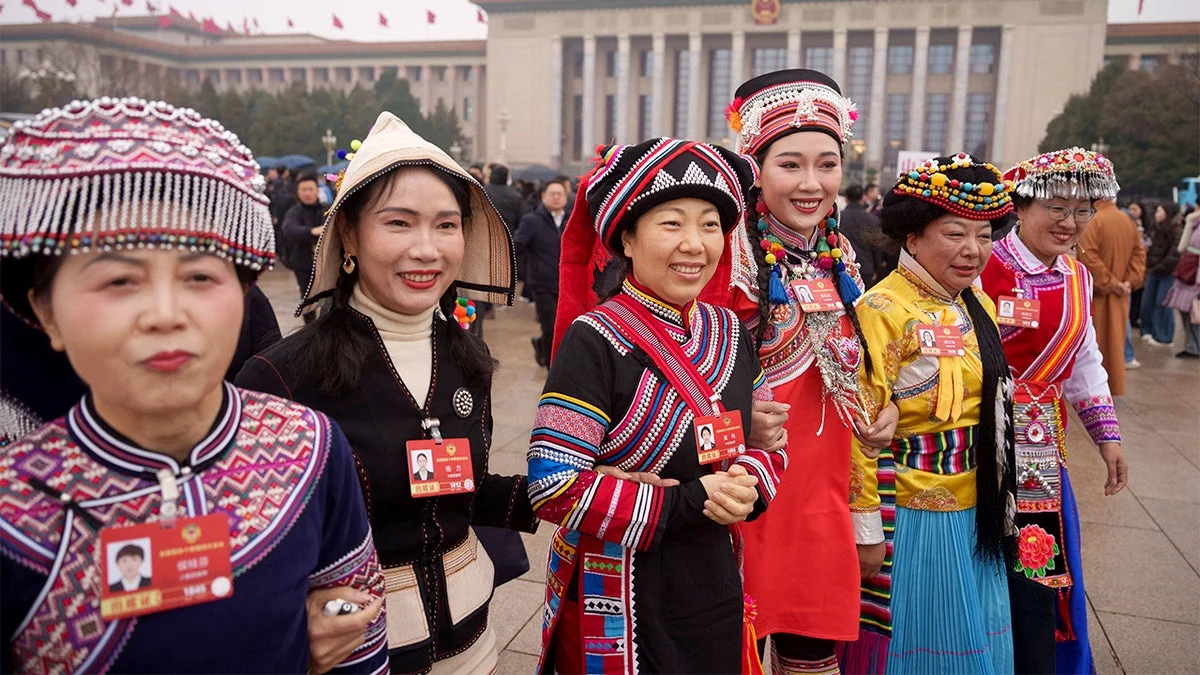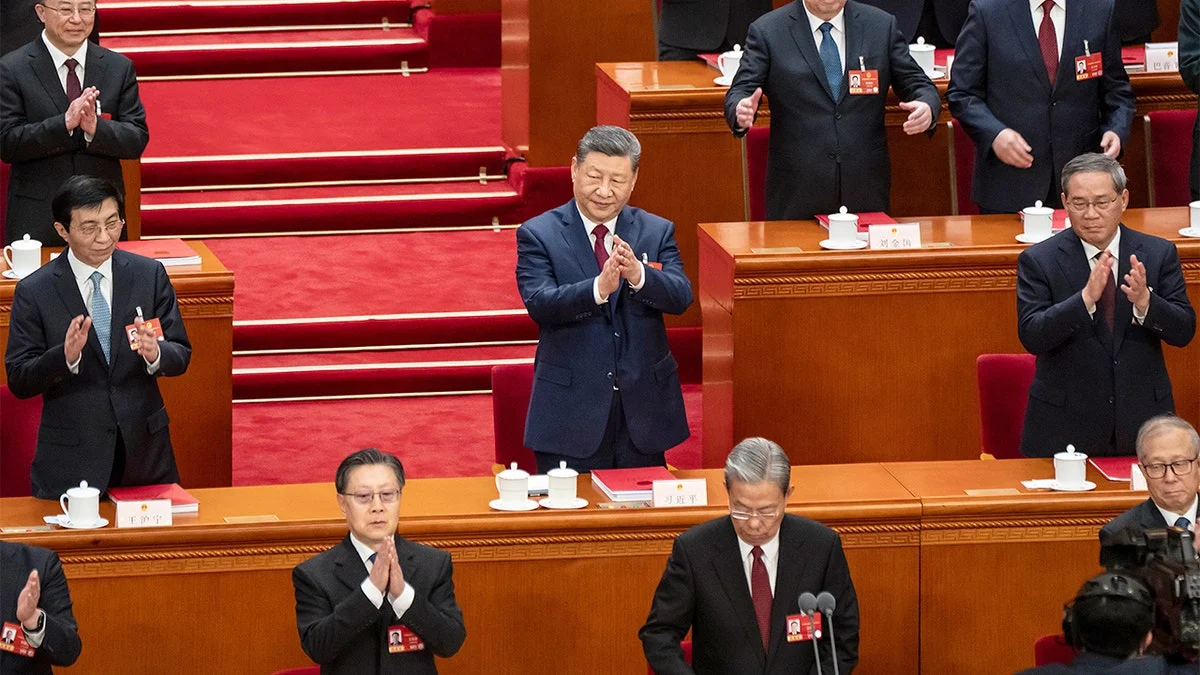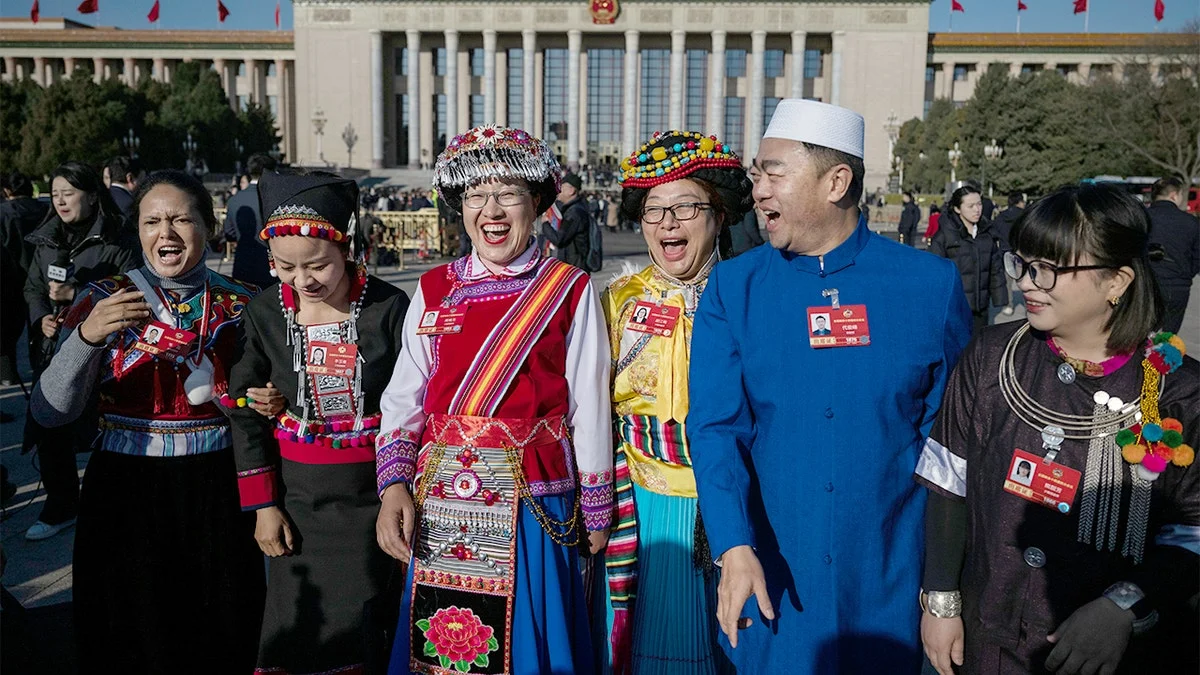
China’s top legislature passed the “Ethnic Unity and Progress Promotion Law” on March 12, 2026, formalizing Beijing’s ongoing efforts to strengthen national identity and ethnic integration across the country’s 56 ethnic groups. The law was approved during the closing meeting of the fourth session of the 14th National People’s Congress held in Beijing.
The legislation aims to codify “fostering a strong sense of community for the Chinese nation” into official state policy, according to state media Xinhua. It also seeks to encourage high-quality economic development in regions with large ethnic minority populations and promote shared prosperity among all ethnic groups.
Li Hongzhong, vice chairman of the NPC Standing Committee, said the law intends to advance ethnic affairs governance under legal frameworks. The law requires all ethnic groups, organizations, the armed forces, political parties, social groups, and companies to cultivate a unified Chinese national consciousness in accordance with the Constitution and the law.
Mandated Use of Mandarin and Legal Authority on Ethnic Unity
The law enshrines the use of Mandarin Chinese in compulsory education and establishes a legal basis for targeting individuals or organizations outside China who are viewed as undermining ethnic unity. Experts warn these provisions could weaken cultural identities among ethnic minorities by enforcing assimilation policies more rigorously.
According to The Associated Press, the law grants authorities the power to act against external entities that threaten what Beijing defines as ethnic harmony.
Criticism from Scholars on Ethnic Autonomy and Human Rights
Academics have criticized the law for undermining ethnic autonomy promised under China’s previous policies. James Leibold, a professor at La Trobe University, described the measure as a “death nail” to meaningful self-governance for ethnic minorities.
Rayhan Asat, a legal scholar at Harvard University, argued the law could serve as a pretext for the Chinese government to justify human rights abuses against ethnic groups under the guise of maintaining unity.
China’s population was recorded at 1.44 billion in the 2020 census, with ethnic minorities comprising approximately 8.89%. The law aligns with Beijing’s broader strategy to integrate these groups more closely into a unified national identity.
For more stories on this topic, visit our category page.