
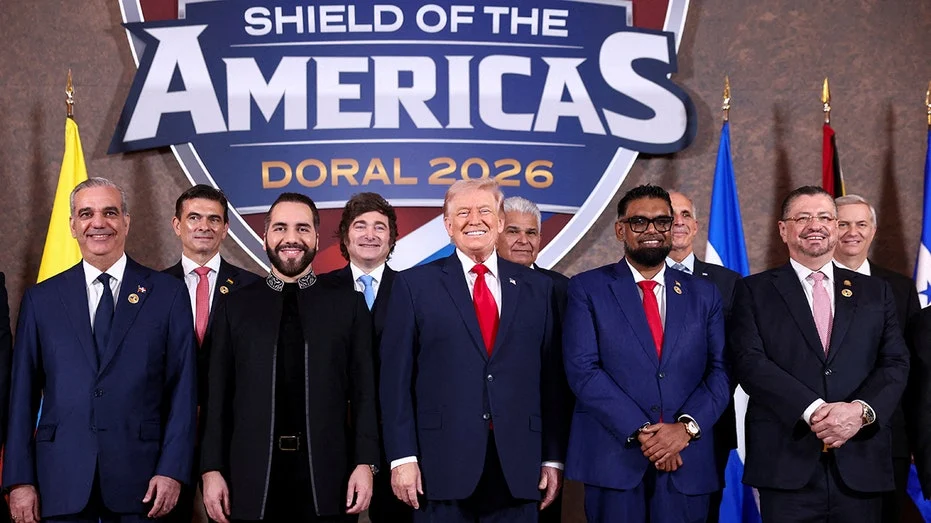
The United States is expanding a hemispheric security strategy called “Shield of the Americas” to dismantle transnational criminal organizations and counter foreign influence in Latin America, according to Joseph M. Humire, acting assistant secretary of War for Homeland Defense and Americas Security Affairs. The initiative integrates military, intelligence, and law enforcement efforts across partner nations to target cartel infrastructure and illicit networks.
The strategy centers on the Americas Counter Cartel Coalition, which currently includes 18 member countries, with 13 nations formally part of the Shield of the Americas framework. Humire highlighted that the coalition enables partner-led, deterrence-focused operations on both land and maritime territories. A key shift from prior administrations is U.S. forces accompanying partner militaries during counter-narcotic and counter-terrorist operations, including in Ecuador where permission was granted by President Daniel Noboa.
Mexico is not yet a member of the coalition, though the U.S. military maintains strong training and capacity-building ties with Mexico’s forces. Humire noted Mexico’s recent offensive against cartel leader El Mencho as a positive development and expressed hope for Mexico’s future coalition membership.
Enhanced Military and Intelligence Operations
The Pentagon has increased surveillance assets, maritime patrols, and cyber operations to disrupt illicit networks. Capacity-building initiatives aim to sustain prolonged counter-cartel efforts among regional partners. The administration prioritizes the Western Hemisphere as a top national security focus, reflecting a policy shift under former President Trump.
Countering Foreign Influence from China, Russia, and Iran
Beyond cartel threats, the strategy addresses geopolitical risks from China, Russia, and Iran. The Pentagon has boosted intelligence sharing, joint cybersecurity programs, and measures to protect critical infrastructure from foreign control.
Significantly, Panama withdrew from China’s Belt and Road Initiative after U.S. engagement, reducing Beijing’s influence there. The U.S. has also established a persistent presence along the Panama Canal, including a jungle operations school and joint security groups.
Regional Security and Political Dynamics
U.S. operations such as Operation Absolute Resolve targeted Venezuela’s government despite its ties to adversaries China, Russia, and Iran, demonstrating limits to their regional influence. The administration is also recalibrating policy toward Cuba, focusing on its security collaborations in the hemisphere.
Humire emphasized the message that partnerships with U.S. adversaries may not yield effective results, underscoring the U.S. commitment to hemispheric defense as reflected in the 2025 National Security Strategy and 2026 National Defense Strategy.
For more stories on this topic, visit our category page.