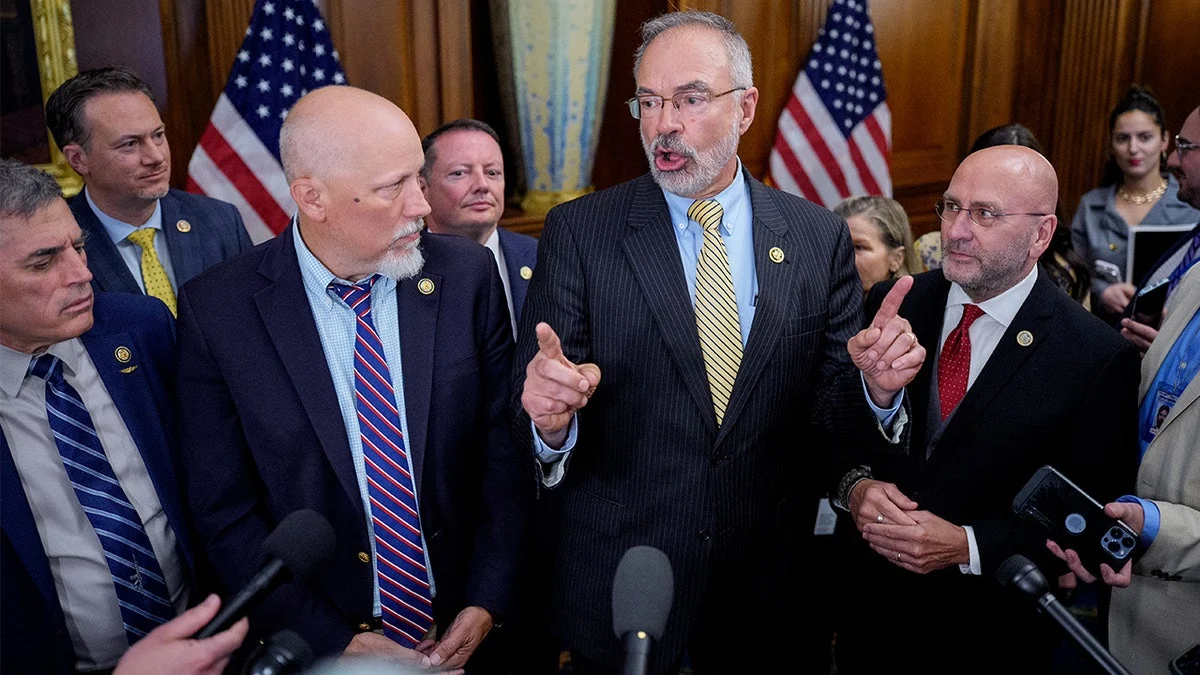

House Republicans passed a 42-day funding extension for the Department of Homeland Security (DHS) late Friday, aiming to end a partial government shutdown that has stretched since February 14. The bill, approved 213-203 mostly along party lines, faces significant obstacles in the Senate and does not guarantee an immediate end to the shutdown, which is on track to become the longest in U.S. history.
The House measure, championed by Speaker Mike Johnson (R-La.), would fund DHS operations for two months. Johnson expressed confidence that negotiations with Senate Democrats would continue during the recess, stating, “In those eight weeks, we will figure this out with Democrats and figure out a couple of reforms or whatever they need to make sure that we do this right, but we are going to protect the homeland.”
The vote included bipartisan support from three Democrats—Reps. Don Davis (N.C.), Marie Gluesenkamp Perez (Wash.), and Henry Cuellar (Texas)—while over a dozen members did not vote. The bill preserves funding for DHS and its affiliated agencies but faces a Senate filibuster backed by Democrats, who have objected to how immigration enforcement funding is handled.
Senate Opposition and Immigration Funding Standoff
Democrats have blocked previous Republican-led DHS funding measures, largely due to provisions supporting Immigration and Customs Enforcement (ICE) and U.S. Customs and Border Protection (CBP). Earlier Friday, the Senate passed a funding deal excluding ICE and parts of CBP, but the House Freedom Caucus and GOP leadership rejected it, criticizing the upper chamber for abandoning immigration officers.
House Minority Leader Hakeem Jeffries (D-N.Y.) condemned the Republican bill, calling it a political maneuver that “inconveniences” Americans to push a hardline immigration agenda. Meanwhile, the National Border Patrol Council endorsed the House bill, describing the Senate funding exclusions as “completely unacceptable.”
President Donald Trump also criticized the Senate measure, underscoring the importance of fully funding ICE. Both Trump and Johnson expressed reservations about passing a second budget package to address separate funding for immigration enforcement agencies, highlighting the political difficulties amid a closely divided Congress and an intense election cycle.
Impact on Federal Workers and Airport Operations
The ongoing shutdown has left tens of thousands of federal employees without pay and caused significant disruptions at airports nationwide, where Transportation Security Administration (TSA) staffing shortages have led to long security checkpoint wait times and missed flights. To mitigate this, President Trump issued an executive order ensuring TSA agents would receive continued pay despite the lapse in appropriations. TSA workers are expected to receive their first full paychecks since the shutdown began on the upcoming Monday.
The House vote came as both chambers prepared to recess for Easter without resolving the funding impasse, increasing the likelihood that the shutdown will surpass previous records for duration and impact.
Why it matters
The passage of the DHS funding bill by the House underscores the deep partisan divide over immigration enforcement funding amid a historic government shutdown. With Senate Democrats filibustering Republican legislation, the risk of prolonged federal worker furloughs and continued disruptions—especially in airport security operations—remains high. The standoff also reflects broader tensions over immigration policy as lawmakers grapple with budget negotiations in an election year.
Background
The partial DHS shutdown began on February 14 after Congress failed to pass full-year appropriations for the department. The impasse has affected key agencies including TSA, ICE, and CBP. Previous stopgap measures have failed due to disagreements relating to immigration policy and agency funding levels. This furlough and unpaid status for many federal personnel has heightened public and political pressure to reach a resolution.
Read more Politics stories on Goka World News.