
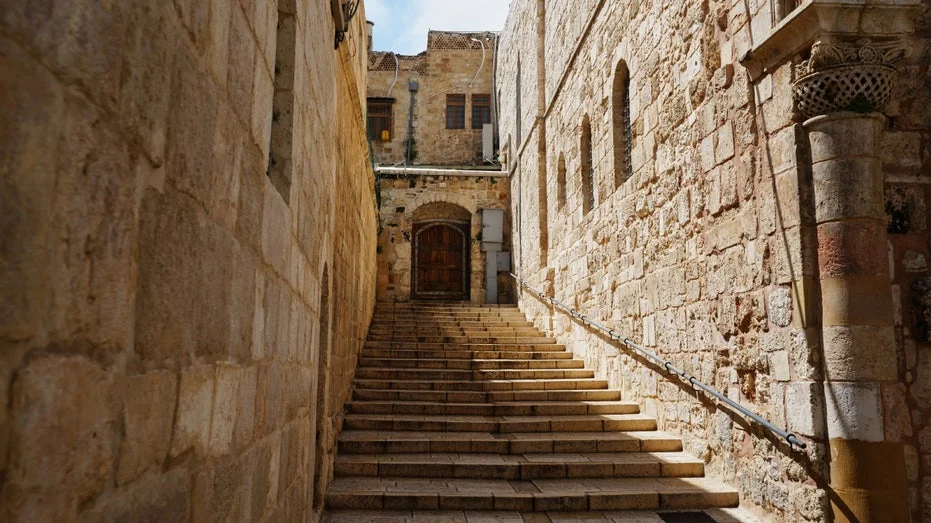
Israel closed Jerusalem’s Church of the Holy Sepulchre and other major holy sites on Palm Sunday amid ongoing conflict with Iran, citing security risks from missile attacks. This unprecedented closure disrupted one of Christianity’s most significant religious observances. Israeli police barred Latin Patriarch Pierbattista Pizzaballa and Father Francesco Ielpo from accessing the church for a private Mass, leading to international criticism and calls for reopening the sites.
In response to the closure, Israeli police issued a video statement explaining that the measure was part of life-saving restrictions under directives from the Home Front Command due to repeated missile attacks targeting the Old City and surrounding residential areas. The police emphasized that these security measures apply equally to Jewish, Christian, and Muslim holy sites and are intended to protect all residents and visitors.
Israel’s President Isaac Herzog publicly expressed sorrow over the incident, clarifying the restrictions were based on security concerns arising from ongoing missile threats from Iran-backed forces. He reaffirmed Israel’s commitment to religious freedom and maintaining the historic status quo at Jerusalem’s holy sites.
The Latin Patriarchate of Jerusalem condemned the move as “manifestly unreasonable and grossly disproportionate,” particularly critical because the requested Mass was private and not open to the public. A spokesperson for the Latin Patriarchate highlighted the religious significance of Palm Sunday and questioned the justification for denying access.
Italy’s Prime Minister Giorgia Meloni also criticized Israel’s decision, calling it “an offense” to religious freedom. She emphasized the importance of the Holy Sepulchre as a sacred Christian site and condemned the prevention of the Patriarch and church custodians from performing Palm Sunday services.
Prime Minister Benjamin Netanyahu stated there was no malicious intent behind the restrictions and promised efforts to partially reopen the Church of the Holy Sepulchre. He acknowledged the “holiness of the week leading up to Easter” and reiterated that safety remains the paramount concern given the ongoing conflict.
Why it matters
The closure of key Christian holy sites during one of the most solemn religious holidays underlines the broader impact of the Israel-Iran conflict on religious freedoms and communal life in Jerusalem. It highlights the challenge Israeli authorities face in balancing security needs with the protection of sacred traditions and rights of religious communities in a highly sensitive area.
Background
The ongoing war between Israel and Iran-backed forces has dramatically affected security in Jerusalem, including several missile attacks targeting the Old City. The Home Front Command of Israel has implemented strict security measures across diverse religious sites to prevent civilian casualties. These measures have included restrictions on gatherings and access, affecting Jews, Christians, and Muslims alike.
Read more World News stories on Goka World News.