
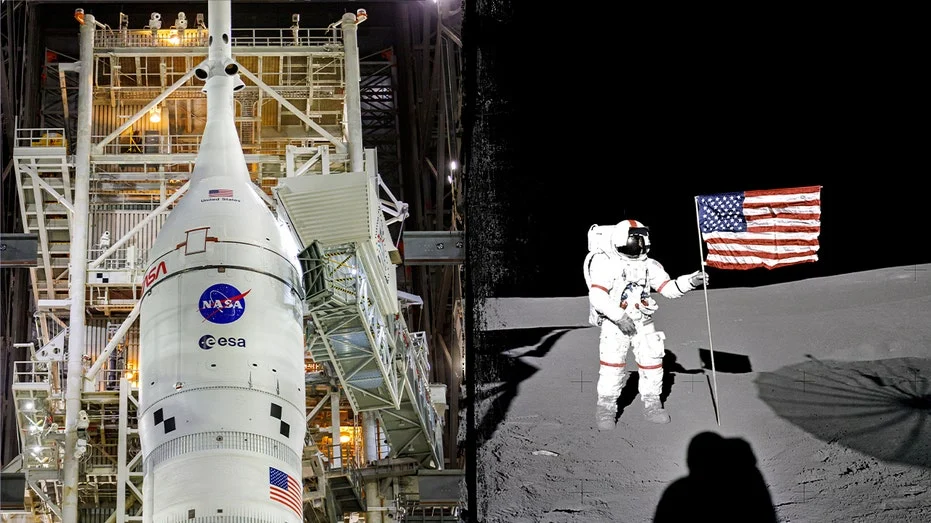
NASA is accelerating efforts to construct a permanent human base on the moon in a strategic move to outpace China’s expanding lunar ambitions. The U.S. space agency, under the Trump administration, is pushing a roughly $20 billion program to establish lunar infrastructure, marking a significant policy shift from previous plans centered on the Gateway lunar orbiting space station.
NASA Administrator Jared Isaacman emphasized that the new goal is a sustained presence on the moon rather than symbolic visits. “This time, the goal is to stay,” he said, highlighting the administration’s intention to build a long-term foothold for deep space exploration directly on the lunar surface.
New Direction for NASA’s Lunar Strategy
Earlier NASA plans had focused on the Gateway, a proposed space station orbiting the moon designed to serve as a communication hub and transfer point for astronauts heading to the lunar surface. However, Gateway has faced delays and funding uncertainties, prompting NASA to redirect resources toward creating surface infrastructure. This approach is seen as more supportive of extended operations, enabling storage, supply buildup, and capability expansion on the moon itself.
Casey Dreier, chief of space policy at The Planetary Society, explained that a lunar base would function much like research stations in Antarctica, providing a strategic platform for future Earth and deep space missions. However, he noted the $20 billion budget and seven-year timeline are ambitious and may initially result in a limited presence that grows over time.
China’s Advancing Lunar Capabilities
China has made rapid progress in lunar exploration, including successful robotic sample return missions and spacecraft landings on the moon’s far side. The country aims to send astronauts to the moon by around 2030, marking its first crewed lunar mission and intensifying the competition with the U.S.
Dreier noted that China has launched numerous satellites and landed substantial mass on the moon, currently giving it an operational advantage in lunar activities. China is collaborating with international partners, including Russia, to develop a long-term presence near the lunar south pole—a region believed to hold essential resources like water ice.
Isaacman described China as “a real geopolitical rival” challenging American leadership in space. The push for a lunar base is partly motivated by the strategic importance of the moon, regarded as “the ultimate high ground” in space operations, with potential implications for contested space environments around Earth.
Why it matters
The renewed emphasis on building a lunar base represents a shift toward securing long-term strategic and operational advantages in space exploration. By establishing infrastructure on the moon, NASA aims to maintain U.S. leadership in space amid a landscape increasingly influenced by rival nations’ ambitions. The competition could shape future policies related to space security, resource utilization, and technological innovation.
Read more Politics stories on Goka World News.