
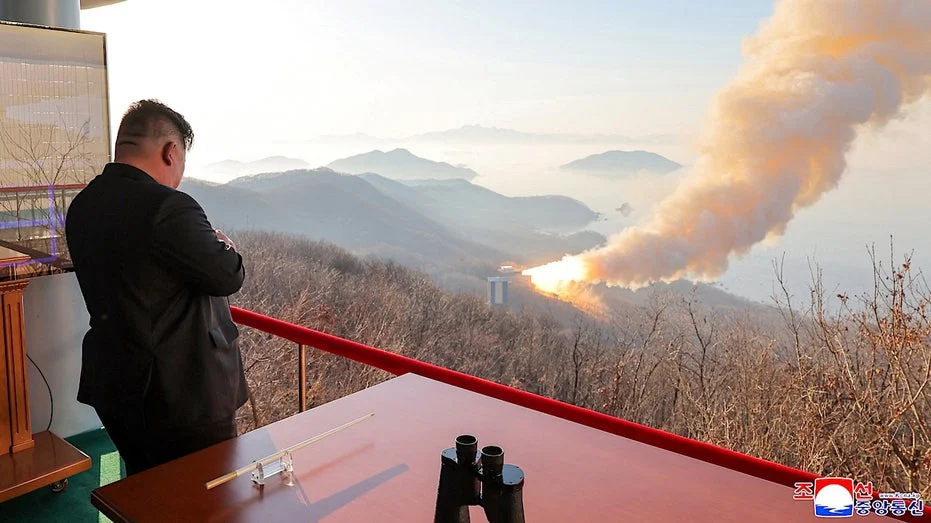
North Korean leader Kim Jong Un oversaw the test of a high-thrust solid-fuel rocket engine, marking a significant step in the country’s efforts to develop missiles capable of striking the U.S. mainland, state media reported Sunday.
The Korean Central News Agency (KCNA) stated that the tested engine, constructed with carbon-fiber composite materials, produced 2,500 kilonewtons of thrust—an increase over a similar engine tested last year. This development is part of a newly announced five-year defense plan intended to upgrade North Korea’s “strategic strike” capabilities.
Kim described the test as having “great significance in putting the country’s strategic military muscle on the highest level.” Photographs released by KCNA showed the ground ejection test of the solid-fuel engine, highlighting Pyongyang’s focus on modernizing its missile technology.
Technical significance and challenges
Solid-fuel missile engines represent a critical advancement because they allow missiles to be launched more quickly with less warning, enhancing their survivability and complicating enemy detection efforts compared to older liquid-fuel systems. Analysts suggest such engines could enable deployment of more mobile or compact long-range missiles.
However, experts caution that North Korea still faces major technical hurdles, including the reliable reentry of warheads through the atmosphere. Some details regarding the engine’s performance, such as total combustion time, were not disclosed, leading to speculation that the report may exaggerate capabilities.
Broader military modernization efforts
Alongside the engine test, Kim Jong Un inspected special operations training and evaluated a newly developed main battle tank, which KCNA claims has protection systems able to withstand most current anti-tank weapons. Independent verification of these claims has not been possible.
These developments align with a broader push to modernize both missile and conventional military forces in North Korea. Following the collapse of diplomatic talks with the United States in 2019, Pyongyang has steadily advanced its nuclear and missile programs despite international sanctions, while maintaining a conditional openness to negotiations.
Why it matters
North Korea’s progress in solid-fuel missile technology holds strategic implications for regional and global security. The improved missile readiness enabled by solid-fuel systems heightens the risk of a swift and less detectable launch, complicating defense strategies of South Korea, the United States, and their allies.
South Korea and the United States have stated they are closely monitoring North Korea’s weapons developments amid growing concerns about Pyongyang’s advancing strike capabilities.
Read more World News stories on Goka World News.