
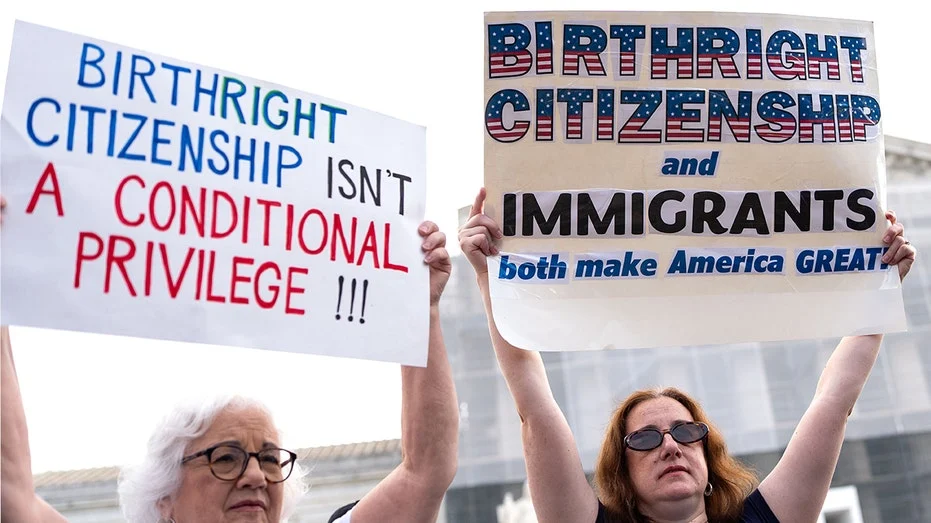
The Supreme Court is set to hear oral arguments Wednesday on President Donald Trump’s executive order seeking to restrict birthright citizenship in the United States. The case raises a constitutional question that has remained largely unchallenged for over 150 years: who qualifies as a U.S. citizen by birth under the 14th Amendment.
The executive order, signed on Trump’s first day back in office, would end automatic citizenship for nearly all children born on U.S. soil to parents who are undocumented immigrants or in the country with temporary legal status. It would apply to those born after February 19, 2025, and would direct federal agencies to stop issuing or accepting documents that recognize citizenship for such children.
Trump’s administration argues the order addresses a misinterpretation of the 14th Amendment’s Citizenship Clause, which states, “All persons born or naturalized in the United States, and subject to the jurisdiction thereof, are citizens of the United States.” The administration contends that the phrase “subject to the jurisdiction thereof” excludes children born to parents without lawful permanent status.
Opponents counter that the executive order is unconstitutional and unprecedented, citing legal precedent including the 1898 Supreme Court ruling in Wong Kim Ark, which affirmed birthright citizenship for children of non-citizens permanent residents born in the U.S. Critics emphasize that the provision has been broadly interpreted to grant citizenship to almost all persons born on U.S. soil, except for children of foreign diplomats or hostile occupying forces.
The case, formally known as Trump v. Barbara, stems from a class-action lawsuit filed by immigrant rights groups, multiple states, and U.S.-born children of undocumented parents. The plaintiffs seek to protect citizenship-related benefits such as Social Security, SNAP, and Medicaid for these children. Some plaintiffs are themselves expecting children born in the U.S.
To date, no court has upheld the Trump administration’s reinterpretation of the Citizenship Clause, and lower courts have blocked the order’s enforcement. The Justice Department argues the existing rulings impose “destructive consequences” on border security and confer citizenship unlawfully on hundreds of thousands of children annually.
The Court’s ruling, expected within three months, could redefine a core aspect of U.S. citizenship law and has significant legal and social implications for millions of Americans and residents.
Why it matters
This case tests the scope of the 14th Amendment’s Citizenship Clause and could alter the status of an estimated 4.6 million U.S.-born children living with undocumented immigrant parents, according to Pew Research Center data. A decision upholding Trump’s order would mark a major break from longstanding constitutional interpretation and affect access to essential benefits and legal protections for many families.
Background
Birthright citizenship has been a constitutional norm since the 14th Amendment’s ratification in 1868. The Supreme Court’s 1898 ruling in United States v. Wong Kim Ark established that children born in the United States to lawful permanent residents, regardless of parents’ nationality, are U.S. citizens. This precedent has broadly shaped U.S. citizenship policy despite occasional political challenges.
Trump’s executive order marks the most direct judicial test of the birthright citizenship doctrine in over a century, reflecting his administration’s broader immigration crackdown. Legal experts and advocacy groups warn that the order’s implementation would create administrative confusion and potential statelessness for affected children.
Read more Politics stories on Goka World News.