
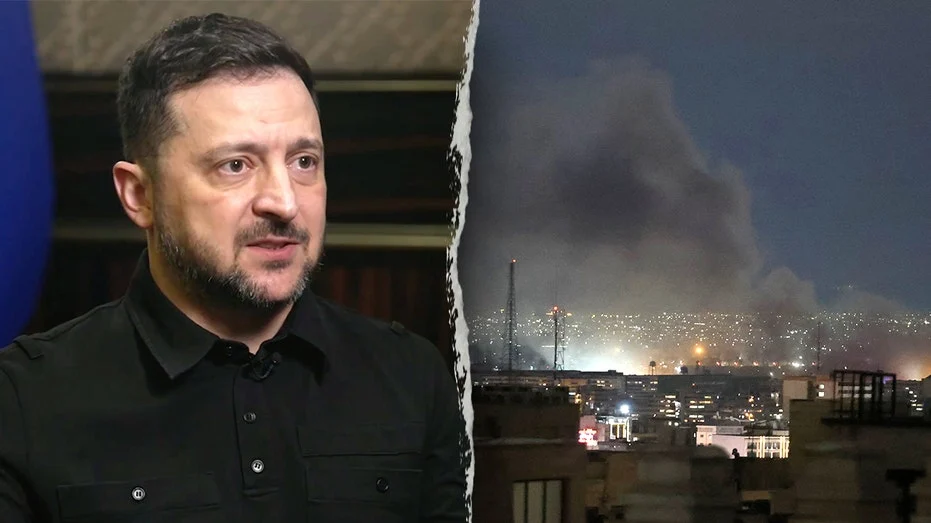
Ukrainian President Volodymyr Zelenskyy has offered Ukraine’s cutting-edge counter-drone technology to Gulf allies, including the United Arab Emirates, Saudi Arabia, Qatar, and Jordan, as part of efforts to strengthen defense partnerships amid escalating regional threats and the protracted war with Russia. In return, Zelenskyy is seeking increased missile support, particularly ballistic missiles, to address Ukraine’s critical air defense shortages.
During a meeting in Abu Dhabi with UAE President Mohammed bin Zayed Al Nahyan, Zelenskyy discussed an agreement whereby Ukraine would provide its advanced anti-drone systems in exchange for ballistic missile and financial assistance. In a subsequent interview with Fox News, Zelenskyy described Ukraine’s battlefield innovations, highlighting an integrated drone interceptor and electronic warfare system that he claimed is unique globally.
“We have, for example, drone interceptors, we have [a] system of electronic warfare and a lot of things — all these jointly work in one system. This is what we have [that] nobody has,” Zelenskyy said. This technology is being shared with at least four Persian Gulf nations facing growing threats from Iranian drone capabilities.
Zelenskyy emphasized the reciprocal nature of these partnerships, underscoring Ukraine’s ongoing “big deficit” of vital air defense weapons, especially the U.S.-supplied PAC-3 Patriot missile systems that counter ballistic threats. Ukraine has signed 10-year defense agreements with Saudi Arabia and Qatar, with a similar deal expected soon with the UAE.
Amid rising tensions in the Middle East and the U.S. military’s increasing focus there, Zelenskyy warned that shifting attention could hinder weapons support to Ukraine. He accused Russia of bolstering Iran’s military by sharing drone technology and combat tactics, including the use of Shahed “kamikaze” drones.
“Russia will share all they know about this war … They’re already sharing with Iranians,” Zelenskyy said. He also suggested Moscow seeks to prolong instability in the Middle East to divert U.S. resources from Ukraine.
On the battlefield, Zelenskyy reaffirmed Ukraine’s determination not to concede territory in the Donbas region, citing concerns over troop morale, defense integrity, and civilian displacement. He called on global partners, including the Trump administration in the U.S., to maintain focus on Ukraine alongside addressing Middle East conflicts.
The ongoing conflict has seen a surge in Russian drone attacks; over 270 drones struck Ukraine overnight on March 27-28, resulting in at least five deaths, according to Ukrainian officials.
Why it matters
This exchange of advanced drone defense technology for missile support signifies Ukraine’s strategic pivot towards leveraging battlefield innovations to strengthen international defense partnerships, especially with Gulf states confronting Iran’s drone threats. As the war in Ukraine extends into its fourth year, increasing access to ballistic missile interceptors is crucial for Ukrainian defense capabilities. Additionally, the alliance underscores the interconnection between Eastern European and Middle Eastern security dynamics amid heightened tensions involving Russia, Iran, and the U.S.
Background
Ukraine has faced intense Russian missile and drone attacks, straining its air defense systems. The PAC-3 Patriot missile system, primarily supplied by the U.S., has been key to intercepting ballistic threats. Meanwhile, Gulf states, confronting threats from Iran-backed forces using drones, have sought advanced counter-drone technologies. Ukraine’s offer to share its integrated drone defense represents a novel export of its battlefield-developed technologies.
The broader geopolitical context involves Russia’s support for Iran’s drone programs and military cooperation, as well as U.S. military and diplomatic engagements in both Eastern Europe and the Middle East. These dynamics influence arms flow and strategic cooperation affecting multiple theatres of conflict.
Read more World News stories on Goka World News.