
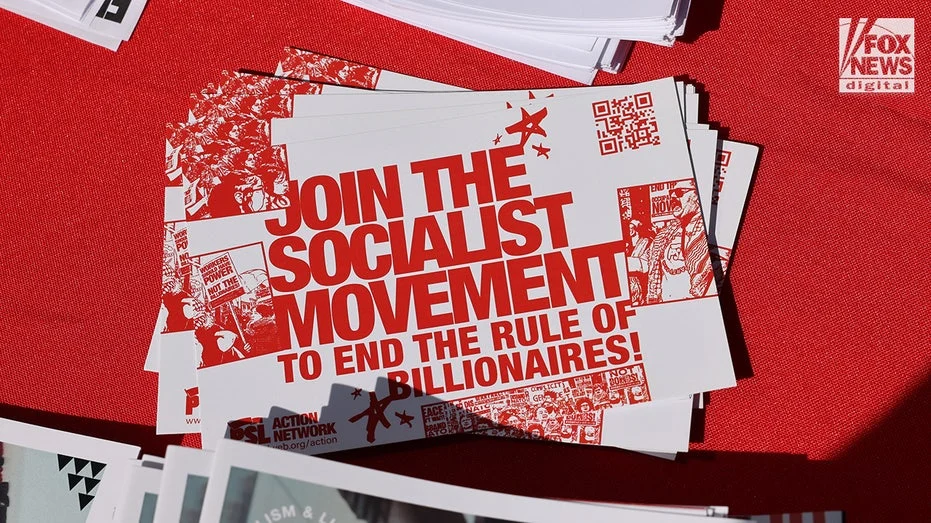
On Sunday, communist and socialist activists joined key Democratic groups in calls for a nationwide economic strike on May 1, during the #NoKings rallies held across the United States, including a major event in St. Paul, Minnesota. The protests, framed around May Day—a traditional international day of labor and leftist political action—called for a shutdown of work, school, and commerce as a show of political force.
At the St. Paul demonstration, organizers distributed communist literature, waved flags from socialist and revolutionary movements, and urged attendees to escalate their activism into a nationwide economic disruption. Ezra Levin, co-founder of the Democratic advocacy group Indivisible, which was a principal organizer, publicly supported the strike initiative, urging protesters to mark May 1 on their calendars as a tactical escalation targeting the prioritization of workers over billionaires.
Why it matters
The unified call for a May Day strike illustrates growing cooperation between mainstream Democratic activists and far-left socialist and communist groups. This coalition signals an expanded influence of radical leftist ideology within broader protest networks. The backing of prominent Democratic organizations, such as Indivisible, which has received significant funding from billionaire philanthropist George Soros’ Open Society Foundations, underscores the evolving dynamics in progressive political mobilization.
Background
The #NoKings protests involved approximately 500 organizations reporting a combined annual revenue nearing $3 billion, including the American Federation of Teachers, MoveOn, and Indivisible alongside explicitly socialist and communist groups such as the Party for Socialism and Liberation, Freedom Road Socialist Organization, and local branches of the Communist Party USA.
At the St. Paul rally, communist groups sold Marxist literature including the “Communist Manifesto” and promoted ideologies rooted in revolutionary Marxism, tracing their framework to figures like Marx, Lenin, and Trotsky. Flags representing socialist governments of Cuba, Venezuela, and the Islamic Republic of Iran were displayed, highlighting ideological solidarity with internationally recognized socialist states.
Funding and international ties of key activist networks
Some left-wing groups involved maintain connections to a global activist network funded by tech entrepreneur Neville Roy Singham. Singham, based in Shanghai, has invested over $25 million in organizations such as People’s Forum, CodePink, and BreakThrough BT Media, which propagate narratives critical of U.S. democracy while supporting authoritarian regimes including China, Iran, Cuba, and Venezuela. This network funds conferences and media outlets that critique U.S. policies and emphasize opposition to what they characterize as rising fascism in the United States.
What to watch next
The upcoming May 1 strike is positioned as a critical moment to measure the ability of this coalition of Democratic and far-left groups to mobilize disruptive economic action nationwide. Observers will monitor the strike’s scale, participation levels, and impact on commerce and labor, as well as whether this marks a sustained strategic shift in progressive protest tactics leading into the 2024 election cycle.
Read more Politics stories on Goka World News.