
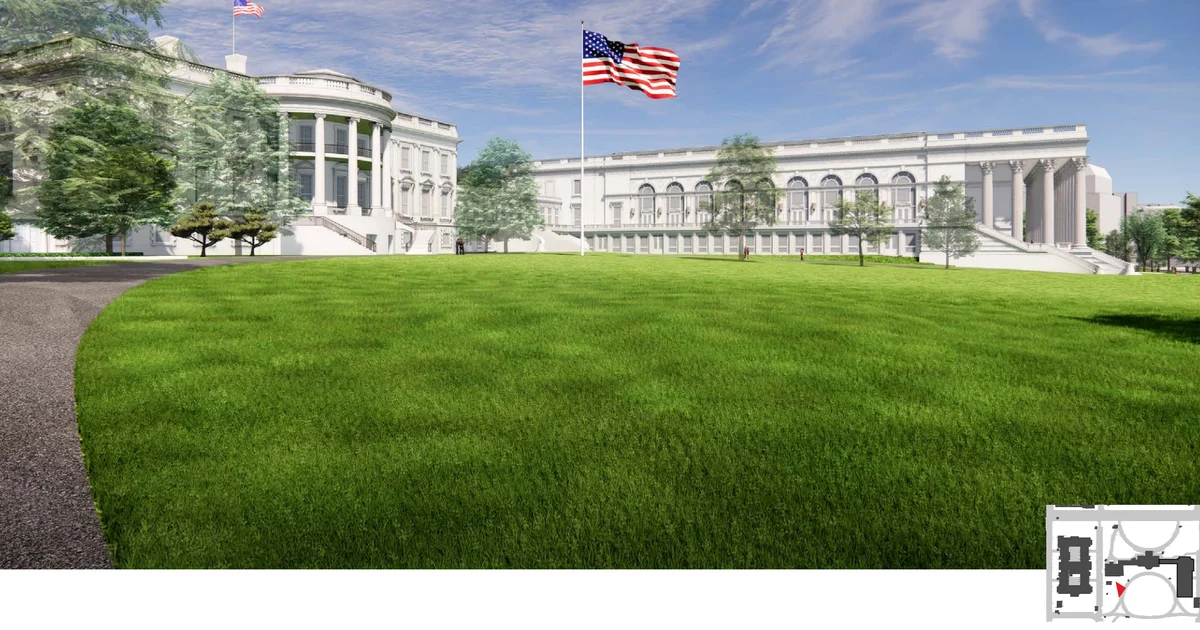
A federal judge has temporarily stopped the Trump administration’s construction of a 90,000-square-foot ballroom intended to replace the White House’s East Wing, ruling that the project lacks the necessary congressional authorization. U.S. District Judge Richard Leon determined the preservation group’s legal challenge to the construction was likely to succeed because no existing statute grants the President the authority claimed to proceed unilaterally.
The ruling, effective in 14 days, follows a lawsuit filed by the National Trust for Historic Preservation in December 2025. The group argued the administration failed to comply with federal historic preservation guidelines before demolishing the East Wing and starting construction. They also questioned the funding method, which involves approximately $400 million raised primarily from private donations.
The ballroom project, announced by former President Trump in summer 2025, moved forward rapidly. By September, the East Wing had been demolished despite Trump’s earlier assurances that the structure would remain intact. Last month, a panel of the U.S. Commission of Fine Arts, which includes Trump allies, unanimously approved the project. The National Park Service projected construction completion by mid-2028.
Judge Leon emphasized in his ruling that the White House is an iconic national symbol and that the President serves as its steward, not its owner. He noted that three federal laws reserve authority over property alterations and funding to Congress, meaning the project requires legislative authorization before it can proceed. “Unless and until Congress blesses this project through statutory authorization, construction has to stop,” Leon wrote.
The administration announced plans to appeal the ruling. Trump has stated he raised the $400 million through private donors and corporations including Lockheed Martin, Amazon, and Microsoft. The funds were collected by a nonprofit, transferred to the National Park Service, and deposited into an account controlled by the president ordinarily used for minor White House repairs.
Judge Leon criticized this funding arrangement, describing it as a complex scheme far removed from clear congressional approval. He had earlier referred to it as a “Rube Goldberg” contraption during court hearings.
Carol Quillen, president and CEO of the National Trust for Historic Preservation, called the ruling a victory for the public and preservation of a national landmark. Meanwhile, Trump labeled the decision “so wrong” and argued that White House construction projects typically do not require congressional consent, especially when privately funded.
Why it matters
The ruling underscores the constitutional principle that Congress holds authority over federal property funding and alterations, reaffirming legislative oversight in major White House modifications. It halts a significant expansion project initiated without formal congressional approval, potentially setting a precedent for future changes to national landmarks and executive properties. The case highlights debates about public input, preservation laws, and executive authority limits.
Background
The Trump White House ballroom is part of broader efforts by former President Trump to leave a lasting architectural impact on Washington during his second term, including planned renovations of the Kennedy Center for the Performing Arts and a proposed triumphal arch in Virginia. The National Trust for Historic Preservation has actively challenged these initiatives, citing procedural, funding, and preservation concerns.
Read more Politics stories on Goka World News.