
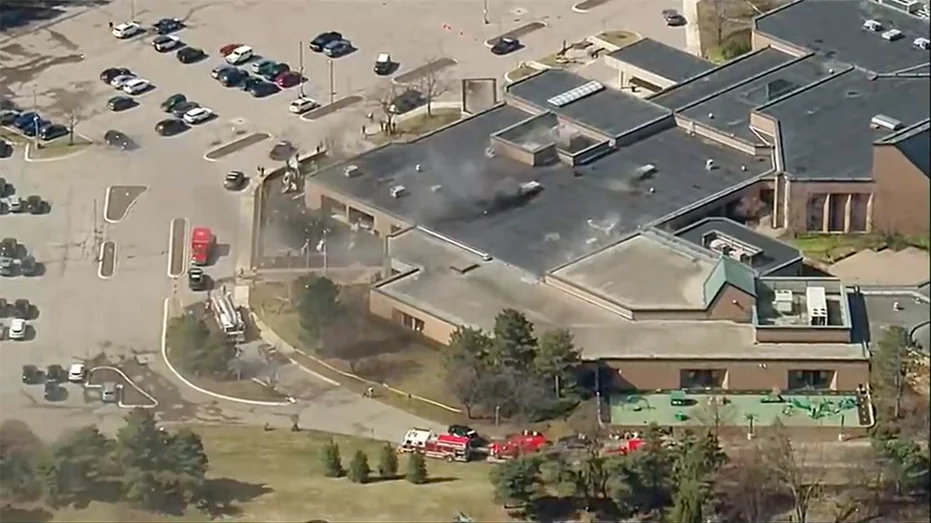
Federal investigators have revealed that the man who attacked a synagogue in West Bloomfield, Michigan, earlier this month was radicalized by Hezbollah, the Iran-backed militant group, and sought to inflict as many casualties as possible on Jewish worshippers. The incident, which occurred on March 12, involved a vehicle rammed into the Temple Israel building, followed by an exchange of gunfire that ended with the attacker’s death.
Authorities identified the attacker as Ayman Mohamad Ghazali, a Lebanese-born American. According to officials, Ghazali deliberately targeted the synagogue because it hosts the largest gathering of Israeli Americans in Michigan, with more than 100 children present that day. His motivation was reportedly intensified by the loss of several family members in Lebanon amid ongoing conflict between Lebanon and Israel.
Investigators said Ghazali meticulously planned the attack, equipment his truck with explosives, fireworks, gasoline, and booby traps. In the minutes before the assault, he sent multiple videos and messages to his sister in Lebanon, stating his intent to kill as many Jewish people as possible in what he called a “special operation.” The FBI’s Detroit Special Agent in Charge Jennifer Runyon cited a video in which Ghazali declared, “I have booby trapped the car. I will forcibly enter and start shooting them. God willing, I will kill as many of them as I possibly can.”
Federal prosecutors stated that had Ghazali survived, he would have been charged with providing “material support” to Hezbollah by carrying out an attack under the group’s ideological influence. U.S. Attorney for the Eastern District of Michigan James Gorgon emphasized that while Ghazali acted alone in executing the attack, his actions were guided by Hezbollah propaganda designed to inspire lone attackers. This included months of consuming militant propaganda and posting messages online that referenced vengeance for his family members’ deaths and hostility toward Israel.
Why it matters
The attack highlights ongoing concerns about the domestic influence of foreign terrorist propaganda, especially from groups like Hezbollah. It underscores the challenge facing U.S. security agencies in detecting and disrupting radicalization that leads to violent acts on American soil despite the attackers not appearing on terrorist watch lists or prior FBI scrutiny. For communities with significant Jewish populations, such as Michigan’s, this incident raises alarms about the security of religious institutions.
Background
Hezbollah is a Lebanese political and militant group backed by Iran, designated as a terrorist organization by the U.S. government. Its propaganda efforts have increasingly targeted diasporic communities and individuals in the U.S., seeking to inspire extremist acts. The Michigan attack follows a pattern of radicalized individuals adopting violent ideologies remotely and executing attacks without direct operational ties to the group. This case further illustrates the federal government’s approach to prosecuting individuals who become operational agents of foreign terrorist networks by their own actions.
Officials continue to investigate potential leads and watch for any broader network involvement. Members of the public are advised to report suspicious radicalization or threats, as the balance between civil liberties and national security remains a critical consideration in preventing such attacks.
Read more US News stories on Goka World News.