
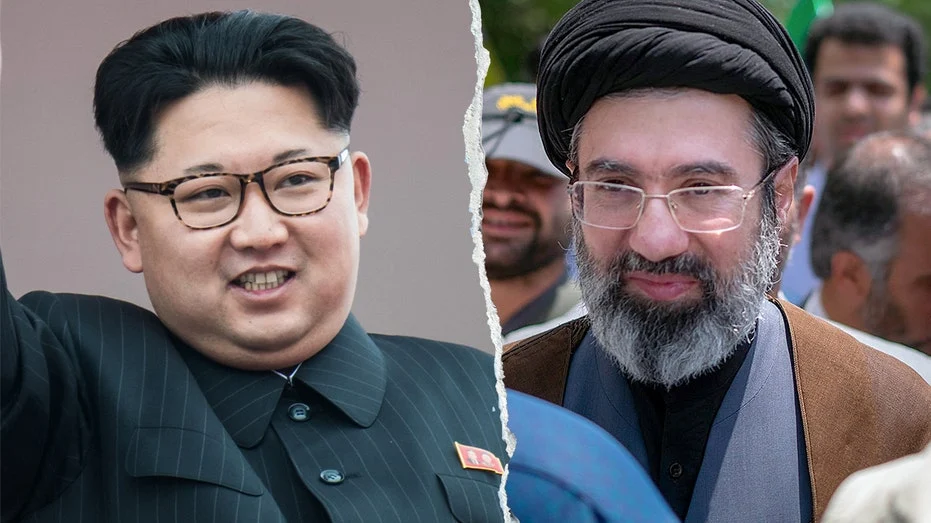
Iran’s ongoing missile campaign against United States and Israeli targets is reportedly supported by weaponry and technology provided by North Korea, according to Bruce Bechtol, a political science professor and specialist on the Iran-North Korea strategic partnership. This connection underpins a broader security concern as tensions in the Middle East continue to escalate.
Bechtol, co-author of the book “Rogue Allies: The Strategic Partnership Between Iran and North Korea,” indicated that Iran’s missile arsenal includes systems directly acquired and developed with North Korean assistance. For example, he identified the Musudan missile, which Iran reportedly purchased from North Korea in 2005 and used in an attack toward the U.S. military base at Diego Garcia, a British Indian Ocean Territory located about 2,500 miles from Iran.
The expert emphasized that North Korea has contributed not only missiles but also critical technologies and facilities. According to Bechtol, North Korea helped Iran develop medium-range ballistic missiles such as the Shahab-3, based on North Korea’s No Dong missile designs. Iran is said to have further advanced this technology, producing variants like the Emad and Ghadr missiles with ranges exceeding 1,000 miles, posing threats to Israel, neighboring Arab countries, and U.S. bases in the region.
Additionally, Bechtol mentioned the Khorramshahr-4 missile, which can carry a heavier warhead, possibly including cluster munitions, thus increasing its destructive capacity. This capability has drawn international attention as the missile capabilities extend Iran’s reach significantly.
He explained the strategic exchange as one where North Korea acts as a supplier of weapons, technology, and technical expertise, while Iran compensates them with cash and oil shipments. The Wisconsin Project also reported North Korean involvement in constructing missile test and tracking facilities within Iran, further indicating deep military collaboration.
Why it matters
The reported military collaboration between Iran and North Korea has heightened global concerns about missile proliferation and regional security. Iran’s enhanced missile capabilities raise the stakes in ongoing conflicts involving U.S., Israeli, and Gulf Arab forces. The ability to strike distant U.S. bases and allied countries complicates diplomatic and military efforts to stabilize the Middle East and prevent further escalation.
The U.S. and its allies continue to conduct strikes and increase their defensive measures in response to what they describe as a growing threat from Iran’s missile attacks. The persistence of such missile technology transfers tested international non-proliferation norms and poses challenges to sanctions and diplomatic efforts aimed at curbing Iran’s military development.
Background
Iran’s missile program has evolved over decades with help from various foreign partners, including North Korea. Both countries face international sanctions and restrictions due to their nuclear and missile ambitions, as well as their designations as state sponsors of terrorism by the U.S. government.
The cooperation includes transfer of missile designs, manufacturing expertise, and testing sites, representing a complex military alliance that has persisted despite international sanctions. This partnership enables Iran to threaten regional adversaries and U.S. military interests, while North Korea gains financial resources amid its own international isolation.
Observers and analysts are closely monitoring this alliance amid ongoing conflicts in the Middle East, including the U.S.-Israeli military campaign targeting Iranian assets. Future developments in missile technology and weapons proliferation from this relationship will remain a critical factor in regional security calculations.
Read more World News stories on Goka World News.