
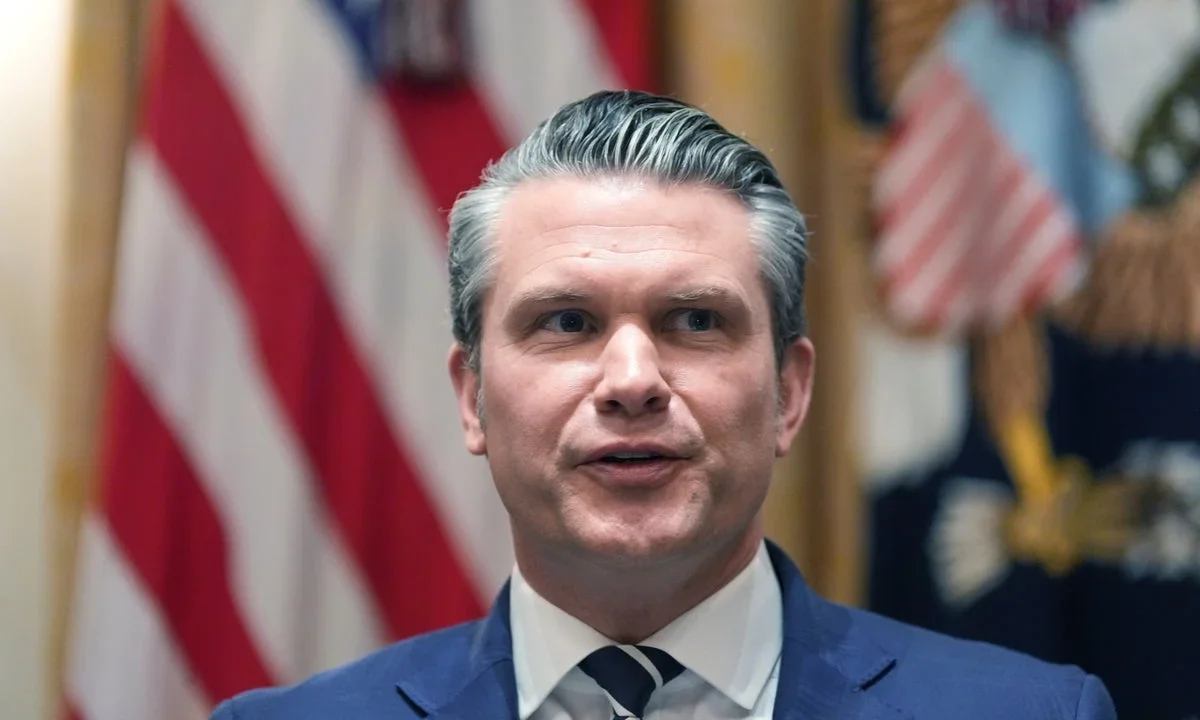
Defense Secretary Pete Hegseth’s personal broker reportedly approached a major asset manager in February about investing millions in defense companies just weeks before U.S. airstrikes on Iran, according to an investigation by the Financial Times.
The Financial Times, citing three individuals familiar with the matter, said the broker, affiliated with Morgan Stanley, contacted BlackRock to inquire about acquiring shares in its Defense Industrials Active ETF. This fund, valued at $3.2 billion, holds significant stakes in major defense contractors such as RTX (Raytheon Technologies), Lockheed Martin, Northrop Grumman, and Palantir Technologies.
BlackRock flagged the inquiry internally, but no investment was ultimately made since the fund was not available for Morgan Stanley clients to purchase at that time.
In response, Department of Defense spokesman Sean Parnell called the allegations “false and fabricated,” demanding an immediate retraction. Parnell stated, “Neither Secretary Hegseth nor any of his representatives approached BlackRock about any such investment.” He described the report as a “baseless, dishonest smear” and affirmed the Defense Department’s commitment to ethical standards and legal compliance.
BlackRock’s Defense Industrials Active ETF targets companies expected to benefit from increased government defense spending amid geopolitical tensions and global economic competition. Its portfolio includes firms heavily contracted by the Pentagon, linking the fund’s performance closely to U.S. defense policy and spending.
The allegations surfaced amid broader concerns about possible insider trading related to Operation Epic Fury, the U.S. military campaign against Iran. These concerns intensified after unusual trading activity in oil markets was detected shortly before President Donald Trump announced a temporary halt to bombing operations to facilitate peace talks.
The White House has denied any administration officials profiting from insider knowledge, labeling such implications as “baseless and irresponsible.”
Meanwhile, lawmakers have introduced legislation aimed at preventing government officials from profiting from information gained through their positions, reflecting increasing scrutiny of the intersection between politics, military action, and financial markets.
Why it matters
The allegations raise potential ethical and legal issues surrounding conflicts of interest and insider trading among high-ranking government officials during sensitive military operations. The trustworthiness of defense leadership is critical as the U.S. remains engaged in a prolonged conflict with Iran, which has already resulted in U.S. casualties and damaged military assets.
Background
Operation Epic Fury began several weeks ago with U.S. airstrikes targeting Iranian interests in the Middle East. Pete Hegseth has played a prominent public role as a defender of the campaign, frequently engaging with media and asserting the necessity of military action against Iran’s nuclear ambitions.
BlackRock’s ETF in question focuses on companies positioned to benefit financially from increased U.S. defense expenditures tied to geopolitical tensions. This context underscores the sensitivity of any financial activities by government officials linked to defense contracting firms at critical moments before or during military operations.
Read more World News stories on Goka World News.