
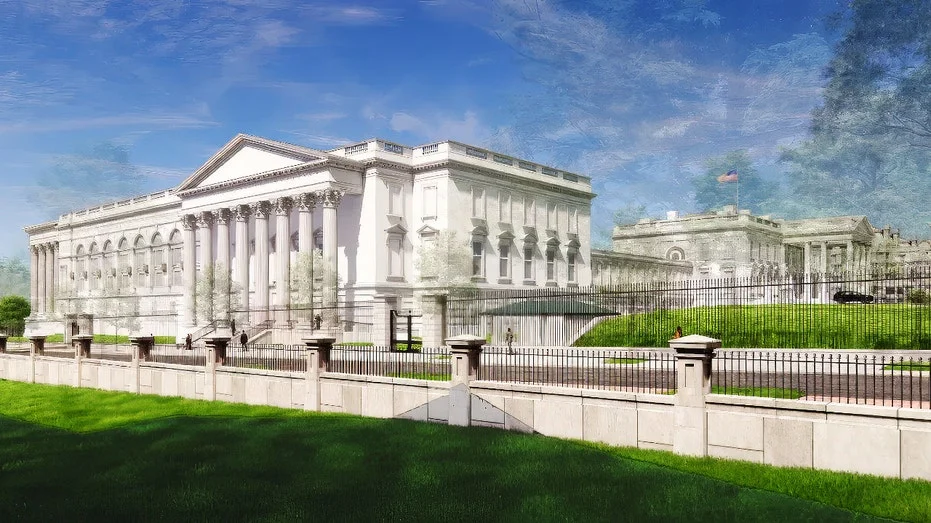
Former President Donald Trump revealed on March 29, 2026, that the construction of a new White House ballroom includes a concealed massive underground military complex. This development, he said, is already underway beneath the planned ballroom and features extensive security measures such as bulletproof glass and drone-proof roofs.
Trump emphasized that the roughly $400 million project to replace the East Wing, demolished in October, is being financed entirely through private donations without using taxpayer money. “All of the money paid is paid by myself and donors… it’s all donors,” he said, highlighting the cost being covered by personal contributions and external supporters.
The ballroom and the underlying complex are intended to increase the White House’s capacity for hosting large events and visiting dignitaries, addressing the limitations of the old East Wing dining room, which could only seat around 200 guests. Trump described the ballroom as architecturally consistent with the historic White House, praising it as a tribute to the building’s style and scale.
The project secured approval from the U.S. Commission of Fine Arts in February, with a unanimous 6-0 vote to fast-track construction. Trump reported that the work is progressing ahead of schedule and under budget.
According to Trump, the underground facility will serve a dual purpose, enhancing security capabilities alongside expanding event space above. Features like bulletproof glass and drone-proof ceilings reflect concerns about modern security threats that necessitate reinforced protection.
This private funding and construction effort has stirred some debate, with Democrats moving to restrict funds related to the project and raising questions about donor influence and legal authority. A federal judge has also queried Trump’s authorization for the project, underscoring ongoing scrutiny over the initiative.
Why it matters
The project signals a significant shift in how White House event spaces and security infrastructure could be developed, blending private funding with military security enhancements. The use of private donors for a high-profile government building raises questions about transparency, influence, and precedent for future projects. The security features indicate heightened concern about contemporary threats such as drone attacks, which could affect how government buildings nationwide approach physical security. Furthermore, the development expands the White House’s ability to host large international and domestic gatherings, potentially impacting diplomatic and political functions.
Background
The old East Wing, which housed additional office and event space including a dining room, was demolished in October 2025 to make way for the new ballroom. Temporary structures have historically been used to accommodate large events at the White House due to space limitations. Trump’s plan to replace this with a permanent, architecturally cohesive facility aligns with a broader goal to modernize and secure White House event capabilities. The ballroom is part of a long-standing desire among administrations to enhance hospitality capacity without compromising security.
The military’s involvement in the underground complex reflects growing awareness of emerging threats that require hardened facilities and integrated defense systems. The project remains controversial due to its scale, funding sources, and potential security implications, with political opponents questioning its oversight and motivations.
Read more Politics stories on Goka World News.