
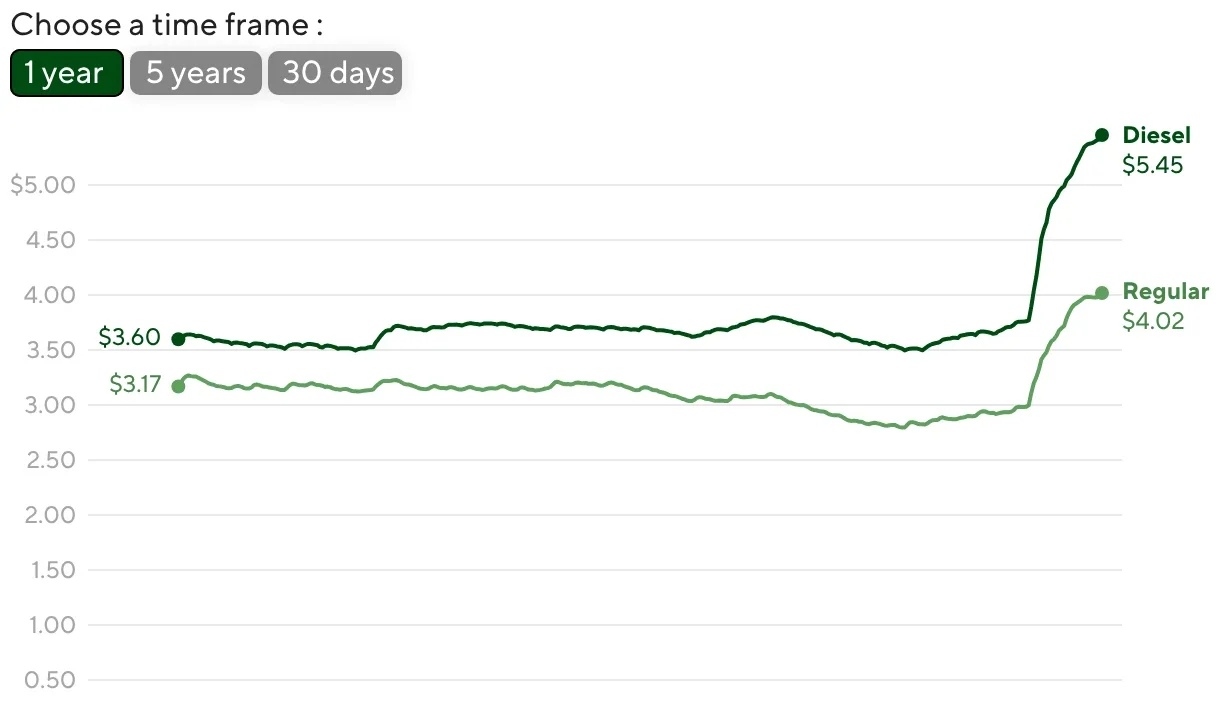
Average U.S. gasoline prices surpassed $4 per gallon on March 31, 2026, for the first time since 2022, driven largely by the ongoing conflict involving Iran, according to data from AAA.
Supply Disruptions in a Key Oil Transit Region
Energy analysts attribute the price surge to disruptions in shipping through the Strait of Hormuz, a strategic maritime passage between the Persian Gulf and the Gulf of Oman. Approximately 20% of the world’s oil supply passes through this waterway, making it critical to global energy markets. Until shipping conditions normalize, prices are expected to remain high.
Impact on Fuel and Goods Transportation Costs
Diesel fuel prices, which affect trucks, boats, and trains essential for transporting goods, have risen more sharply than regular gasoline. The diesel market was already tight before the conflict escalated. With transportation costs rising, sectors from food delivery services to agriculture face increased operational expenses.
Regional Price Variations and Contributing Factors
States like California experience higher gas prices partly due to heavy reliance on imported oil and higher state gasoline taxes. However, price increases are widespread across the country. The U.S. Energy Information Administration notes that crude oil only makes up about half the retail price of a gallon of gasoline; refining costs, taxes, and marketing also contribute. Seasonal demand increases during warmer months further influence prices.
Broader Energy Cost Implications
Beyond gasoline, residential heating oil prices are rising, signaling potential increases in heating costs for consumers during upcoming cold months. Although the U.S. is the world’s top oil producer, prices are determined by the global market, making domestic fuel costs sensitive to international geopolitical developments such as the conflict with Iran.
Why it matters
Higher fuel prices increase the cost of living and operating expenses for consumers and businesses, impacting transportation, food prices, and household heating bills. Continued instability in the Persian Gulf threatens to prolong these economic pressures, underscoring the vulnerability of global energy supply chains to geopolitical events.
Read more US News stories on Goka World News.