
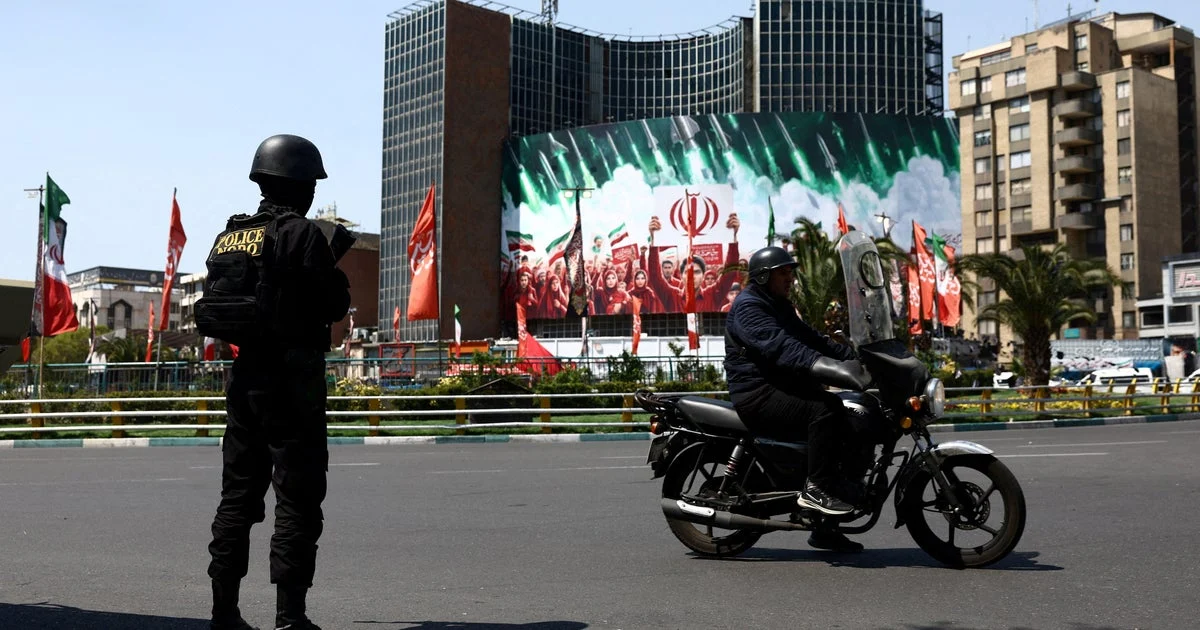
Iran’s military announced a fresh wave of missile and drone strikes targeting U.S. and Israeli locations in the Gulf region hours before President Donald Trump was scheduled to deliver a nationally televised speech updating the nation on the ongoing war with Iran.
The announcement came from Iran’s military central command, Khatam Al-Anbiya, which said the strikes included Israeli cities such as Tel Aviv on the Mediterranean coast and Eilat on the Red Sea, as well as U.S. military facilities in Bahrain and Kuwait. No immediate reports indicated whether any of the attacks achieved direct hits.
Context of the announcement
This development occurred amid President Trump’s plans to address the nation about the status of U.S. military operations in Iran, which he has said could conclude within two to three weeks. A White House official indicated Mr. Trump will claim that U.S. forces are meeting or exceeding key operational goals.
Meanwhile, the declaration of new strikes from Iran came as tensions remain high over control of the Strait of Hormuz, a crucial chokepoint for global energy shipments. Tehran has warned that it may maintain control over the strait without reopening it, a move that could cause sustained disruption to international oil markets.
Regional and economic repercussions
Following Trump’s remarks about winding down the conflict, international energy markets responded positively, with Brent crude oil prices falling below $100 per barrel after previously spiking significantly since the onset of hostilities. Stock markets in the U.S. also rose amid the prospect of an impending end to military operations.
Still, economists caution that if Iran maintains control of the Strait of Hormuz, oil prices could climb dramatically. Increased instability in the Gulf could have prolonged effects on the global economy.
Trump’s stance on NATO and allied involvement
In the lead-up to the address, President Trump criticized NATO allies for not participating in the U.S.-Israeli campaign against Iran, suggesting he might consider withdrawing the United States from the transatlantic alliance. The possibility of the U.S. leaving NATO has generated debate, as U.S. law requires congressional approval for such a move, which the administration has not secured.
Separately, NATO Secretary-General Mark Rutte is reportedly set to meet with Trump at the White House next week amid ongoing tensions regarding alliance contributions and cooperation over the conflict.
Why it matters
The announcement of new Iranian attacks highlights the persistent volatility in the Gulf region and underscores the risks facing U.S. and allied personnel and assets. President Trump’s impending speech and statements about potentially exiting NATO signal shifts in U.S. foreign policy that could affect international security partnerships and military engagement in the Middle East. Additionally, control over the Strait of Hormuz remains a critical economic concern, influencing global oil supplies and market stability.
Read more World News stories on Goka World News.