
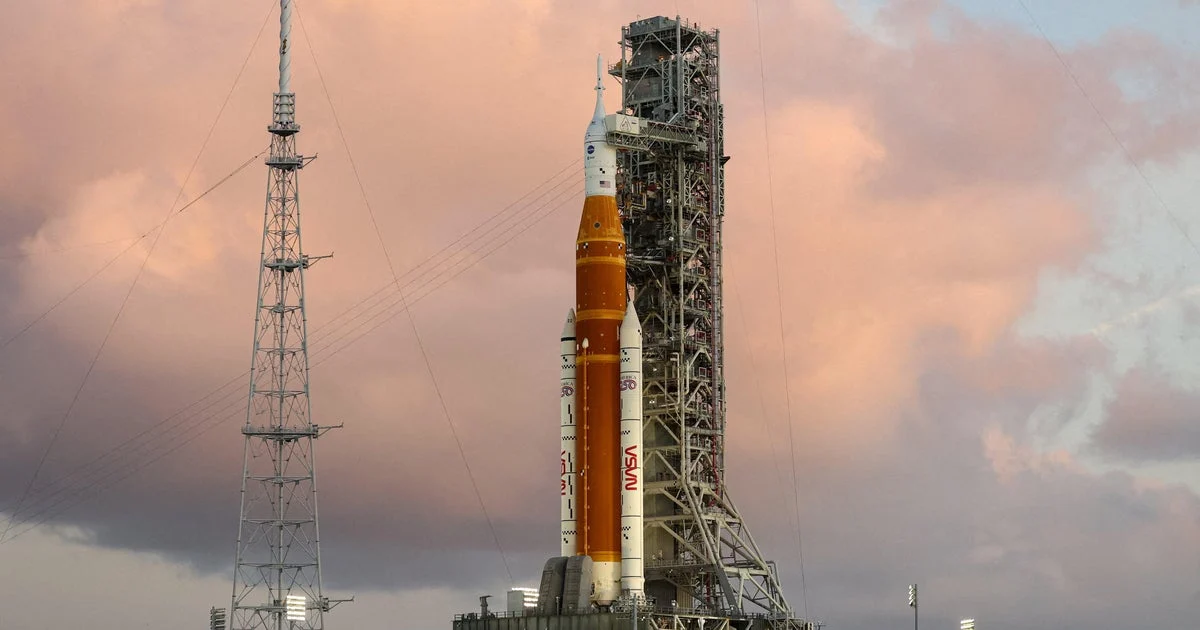
NASA has resolved a key safety system issue related to the Artemis II mission’s flight termination system, officially giving the go-ahead for the spacecraft’s launch from Kennedy Space Center. The mission aims to carry four astronauts on a nine-and-a-half-day journey around the moon and back, marking the first crewed Artemis flight and a crucial step toward future lunar landings.
Flight Termination System Issue Delays Countdown
Approximately two hours before the scheduled launch window opened at 6:24 p.m. EDT on April 1, NASA declared the mission “NO-GO” due to a problem with the rocket’s flight termination system (FTS). This safety system is designed to destroy the rocket if it deviates from its flight path to protect people and property on the ground. The issue involved verifying the system’s ability to receive commands from the Eastern Range, which manages airspace clearance during the launch.
To address the problem, NASA used heritage equipment from the space shuttle program capable of interfacing with the range’s command system to troubleshoot the issue. After testing the solution, flight controllers confirmed the FTS was fully functional, and the Eastern Range declared the launch “GO” around 5:15 p.m. EDT.
Final Preparations for Launch
Following the resolution of the safety concern, technicians completed closing key hatches on the Orion spacecraft, including the launch abort system (LAS) hatch and the crew module side hatch. These closures ensure the vehicle is fully sealed and ready for flight and enable rapid emergency escape if needed. The closeout team performed detailed inspections and leak checks to confirm the integrity of the seals.
The four astronauts on Artemis II—Commander Reid Wiseman, Pilot Victor Glover, and Mission Specialists Christina Koch and Jeremy Hansen—boarded Orion earlier in the day. Prior to launch, they conducted communication and suit leak checks while the closeout team assisted with securing helmets, gloves, and seatbelts. The astronauts will wear specially designed “Orion Crew Survival System” suits, engineered to protect them even in cabin depressurization scenarios.
Mission Objectives and Timeline
Artemis II is NASA’s first crewed mission in the Artemis program and will test Orion’s life support, propulsion, navigation, and communication systems with humans aboard. After about 24 hours orbiting Earth to verify spacecraft systems, the crew will execute a trans-lunar injection burn to head toward the moon’s far side. The mission is set to cover approximately 252,000 miles and last around nine and a half days, returning safely to Earth on April 10.
Why it matters
This successful safety system resolution clears the path for Artemis II, a critical precursor to NASA’s goal of landing astronauts on the moon again by 2028. Demonstrating Orion’s crewed operations and safety systems in a deep space environment is vital to building confidence for subsequent Artemis missions, including Artemis III, which aims to put astronauts back on the lunar surface.
Background
Artemis II will launch from historic Launch Complex 39B at Kennedy Space Center, a site that has supported major space missions since 1969, including Apollo 10, the Skylab missions, Apollo-Soyuz, and numerous space shuttle flights. The Artemis program builds on decades of NASA lunar exploration experience while incorporating new technology designed for sustained human presence on and around the moon.
Read more US News stories on Goka World News.