
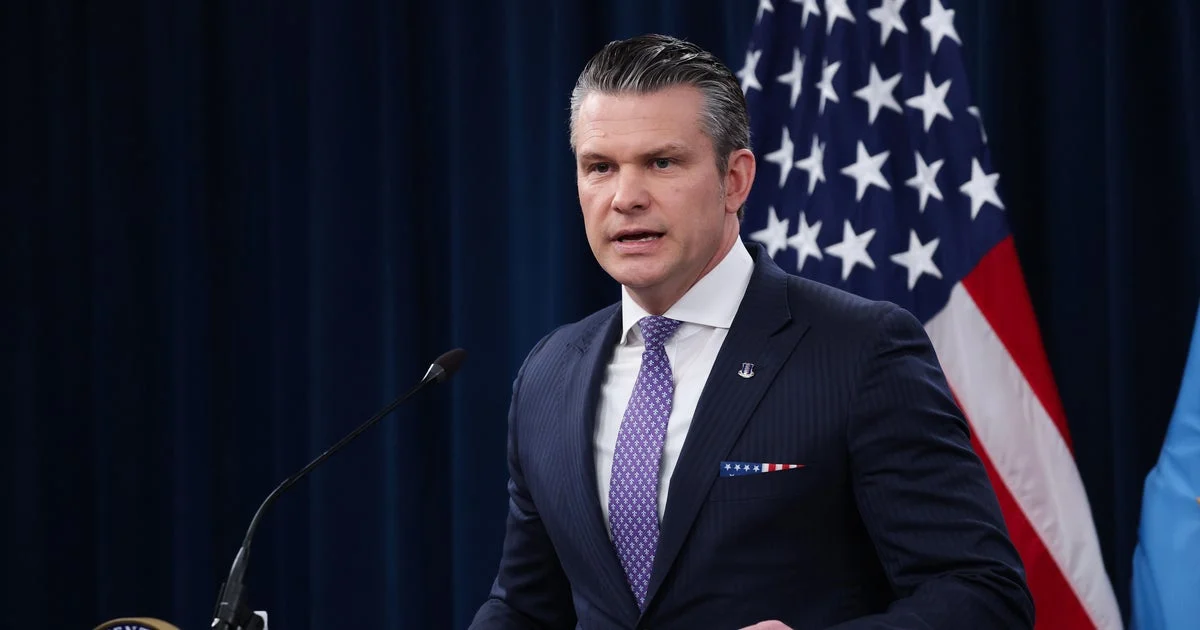
Defense Secretary Pete Hegseth and Joint Chiefs Chairman Gen. Dan Caine stated on March 31, 2026, that the coming days will be pivotal in the ongoing war against Iran, emphasizing increased U.S. military pressure and active negotiations with Tehran. Their remarks came amid heightened regional tensions and attacks targeting oil infrastructure.
Escalation and Military Strategy
At a Pentagon briefing, Hegseth claimed that the U.S. is gaining the upper hand militarily, saying “American firepower is only increasing” while Iran’s capabilities are waning. “Just one month in — only one month — we set the terms,” he added. Gen. Caine described ongoing U.S. military operations aimed at degrading Iran’s ballistic missile and drone programs, focusing on weakening Tehran’s capacity to project power beyond its borders.
The officials highlighted U.S. pressure to reopen the Strait of Hormuz—a strategic oil transit route Iran has complicated—warning that the U.S. has “options” if Iran does not comply. Hegseth noted increased vessel traffic through the Strait compared to earlier, although most ships currently come from Iranian ports or declare food cargo, due to limited inspection access.
Diplomatic Efforts and International Involvement
Despite the military stance, Hegseth confirmed that negotiations with Iran remain “very real” and “gaining strength,” stating a preference to resolve the conflict diplomatically if Tehran agrees to relinquish nuclear-related materials and reopen the Strait. He also criticized the lack of coordinated international military support, singling out the U.K.’s Royal Navy for not taking a more active role in securing the waterway.
Meanwhile, former President Donald Trump reiterated his frustration with allied nations for not contributing military assets in the U.S.-Israeli campaign against Iran. Trump encouraged countries like the U.K. to take control of the Strait of Hormuz themselves, warning the U.S. might no longer provide assistance.
Recent Attacks and Economic Impact
The briefing took place following an Iranian drone attack on the Kuwaiti Very Large Crude Oil Carrier (VLCC) Al-Salmi near Dubai, an incident Kuwait’s state news agency described as direct and malicious. This attack on energy infrastructure coincides with rising gas prices in the U.S., where fuel costs have surpassed $4 per gallon for the first time since August 2022.
White House Press Secretary Karoline Leavitt assured that gas prices should decline to previous multi-year lows once the conflict ends and reiterated the administration’s commitment to strengthening American energy production.
Ongoing Military Coordination
On the same day, U.S. Central Command announced meetings between Adm. Brad Cooper and Israeli military leaders to discuss progress in ongoing operations aimed at weakening Iran’s regional influence. Adm. Cooper also visited U.S. troops supporting Operation Epic Fury prior to leaving the region.
Why it matters
The developments underscore an intensification of both military and diplomatic efforts by the U.S. and its allies to contain Iran’s influence in the Middle East. The Strait of Hormuz remains a critical chokepoint for global oil supplies, and disruptions there risk prolonging energy market volatility and impacting fuel prices worldwide. Continued military operations and international engagement will shape the conflict’s trajectory in the coming days.
Background
The U.S. and Israel launched military actions against Iran beginning February 28, 2026, escalating a conflict that has already affected regional security and global energy markets. The Strait of Hormuz, through which about a fifth of the world’s oil passes, has been a focal point of tension, with Iran leveraging its geographic position to challenge global maritime routes. Diplomatic efforts have attempted to negotiate terms for de-escalation, but military operations remain active as of late March.
Read more Politics stories on Goka World News.