
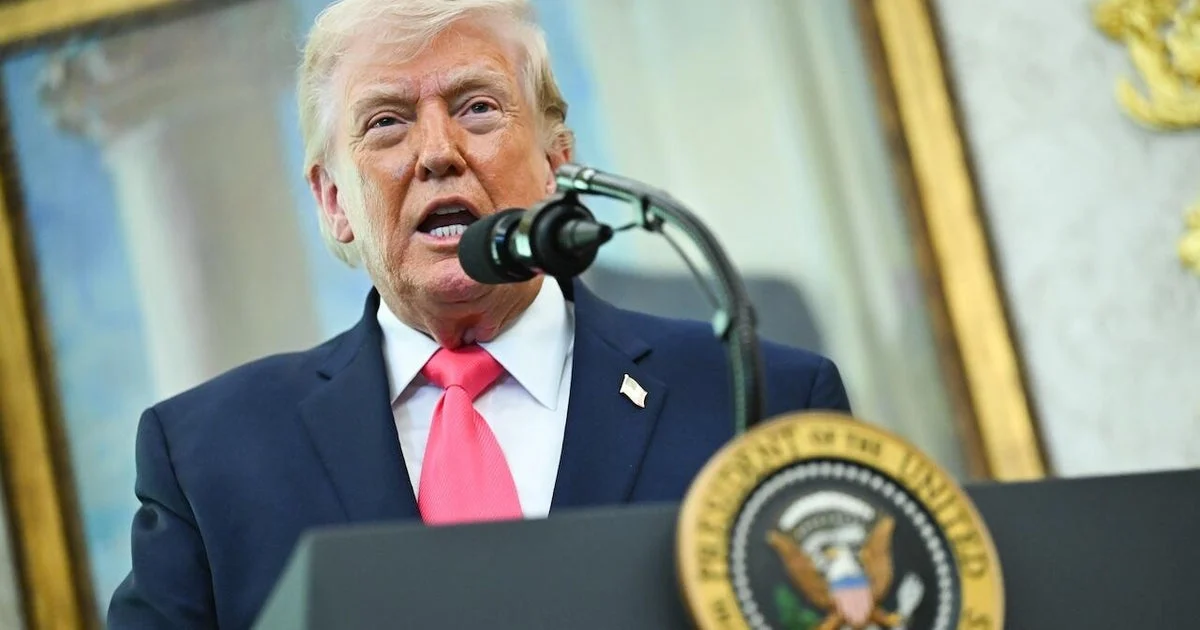
President Donald Trump is scheduled to deliver a prime-time address Wednesday night to update the nation on the ongoing U.S. military operation in Iran, known as Operation Epic Fury. Thirty-three days into the campaign, Trump will reiterate his projection that U.S. forces will leave Iran within two to three weeks, extending beyond the administration’s original four-to-six-week estimate.
A White House official told CBS News that the president will highlight the military’s progress in achieving its key goals, including the destruction of much of Iran’s naval capabilities, the neutralization of proxy groups destabilizing the region, and measures to prevent Iran from acquiring nuclear weapons. According to the official, the operation is meeting or exceeding all established benchmarks.
Despite the announced timeline, several thousand U.S. troops, including Special Operations Forces, Marines, and Army paratroopers, remain deployed in the Middle East, providing the U.S. with options to escalate the conflict if necessary. Potential military objectives mentioned by sources include reopening the Strait of Hormuz shipping lane, targeting Iran’s Kharg Island oil terminal, or securing Iran’s stockpile of enriched uranium.
On the nuclear issue, Trump told Reuters he is not concerned about Iran’s underground stockpiles of highly enriched uranium, which could be used for weapons if further processed. Much of this material is believed to be buried beneath rubble from previous U.S. airstrikes, and the U.S. intelligence community assessed in 2025 that Iran was not actively pursuing a nuclear bomb. “That’s so far underground, I don’t care about that,” Trump said, adding that satellite monitoring would continue.
Trump is also expected to address NATO allies during the speech, expressing frustration with their refusal to assist the U.S. in reopening the Strait of Hormuz. The strait’s effective closure by Iran has disrupted global oil supplies and driven up prices. The president indicated he is “absolutely” considering withdrawing the U.S. from NATO if allied support is not forthcoming, though he said he has not yet abandoned efforts to compel Iran to allow free maritime passage.
Economically, the conflict is contributing to rising fuel costs in the U.S., with average gas prices surpassing $4 per gallon for the first time in nearly four years. Diesel prices have also increased, and higher transportation costs could lead to broader consumer price inflation. Public opinion remains divided; a recent CBS News poll found 60% of Americans disapprove of the U.S. military action in Iran, and 67% oppose paying higher gas prices due to the conflict, although support among Republicans remains strong.
Why it matters
Trump’s address comes at a pivotal moment as U.S. forces approach a critical phase in the Iran war, with implications for regional security and global energy markets. His comments on NATO signal potential shifts in longstanding military alliances, while the outlined timeline frames expectations about the duration and scope of U.S. involvement. The economic fallout resonating at home underscores the war’s tangible impact on American consumers amid broader economic concerns.
Background
Operation Epic Fury began approximately one month ago as a coordinated U.S.-Israeli effort to curtail Iran’s military capabilities and nuclear ambitions. The initial plan projected the operation would last between four and six weeks. Iran’s control of the Strait of Hormuz, a strategic chokepoint for one-fifth of global oil shipments, has been a central focus of U.S. military and diplomatic pressure. Previous U.S. efforts have involved targeted airstrikes and naval deployments to counter perceived Iranian threats and ensure free maritime navigation.
Read more Politics stories on Goka World News.