
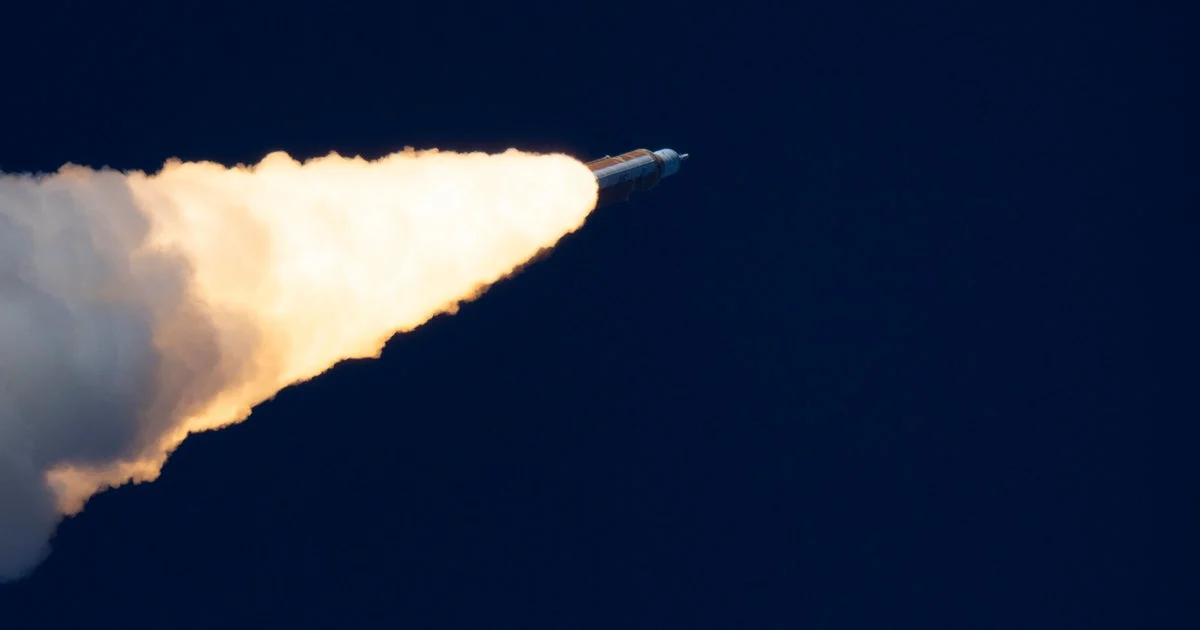
NASA’s Artemis II crew began a rigorous 24-hour test orbit of Earth immediately following their successful launch on April 1, 2026, marking the first piloted lunar mission since Apollo ended more than five decades ago. The four astronauts onboard the Orion spacecraft are conducting thorough checks of the capsule’s life support, propulsion, and control systems to ensure readiness before proceeding toward the moon.
Critical Systems Testing in Earth Orbit
During a highly elliptical, 24-hour orbit, the Artemis II crew—commander Reid Wiseman, pilot Victor Glover, mission specialist Christina Koch, and Canadian astronaut Jeremy Hansen—are putting the Orion capsule through its paces. These system verifications include testing environmental controls, carbon dioxide scrubbing, water supply, and onboard sanitation facilities. Shortly after reaching orbit, the crew encountered a temporary issue with the capsule’s toilet system, which was quickly resolved by flight controllers and astronauts.
Three hours into the mission, pilot Victor Glover manually flew the Orion, controlling its thrusters to verify the spacecraft’s handling and responsiveness around the upper stage rocket that delivered them to orbit.
Mission Trajectory and Lunar Flyby
After completing system checks, the spacecraft is scheduled to perform a trans-lunar injection (TLI) burn—an approximately six-minute engine firing that will increase velocity by about 900 mph to send Orion out of Earth orbit toward the moon on a free-return trajectory. This trajectory will allow the crew to loop around the far side of the moon before returning safely to Earth, with a targeted splashdown in the Pacific Ocean off Southern California on April 10.
The four-day transit will take the astronauts to over 252,000 miles from Earth, surpassing the Apollo 13 record for the farthest human distance from the planet. During their flyby, the crew will pass within approximately 4,100 miles of the lunar surface, gaining unprecedented views and scientific observation opportunities of the moon’s far side.
Upcoming Activities and Return Plan
Following their initial orbit, the crew will take staggered sleep periods while mission control monitors spacecraft systems and performance. The Artemis II mission includes plans for a crew-to-crew communication attempt with astronauts aboard the International Space Station on April 9, preceding their reentry and splashdown on April 10. The capsule will endure temperatures up to 5,000 degrees Fahrenheit during atmospheric reentry before descending by parachute for a gentle ocean landing. Recovery teams will assist the astronauts post-splashdown for transfer to medical evaluations and debriefings.
Why it matters
Artemis II represents a test flight paving the way for sustained human presence on the moon and future missions to Mars. Validating Orion’s systems in crewed flight conditions is essential for NASA’s goal of routine lunar exploration and establishing a lunar base. The mission also carries significant symbolic weight as the first crewed flight beyond low-Earth orbit in over 50 years, inspiring new generations and advancing scientific understanding of deep space operations.
Background
Artemis II follows NASA’s Artemis I uncrewed test flight and is part of the Artemis program aimed at returning humans to the moon. Unlike prior Apollo missions, Artemis II will not enter lunar orbit or land but will perform a flyby to demonstrate Orion’s capabilities with a crew onboard. This mission sets the stage for Artemis III, which aims to land astronauts back on the lunar surface, utilizing commercially developed landers from SpaceX and Blue Origin in the late 2020s.
Read more Climate & Environment stories on Goka World News.