
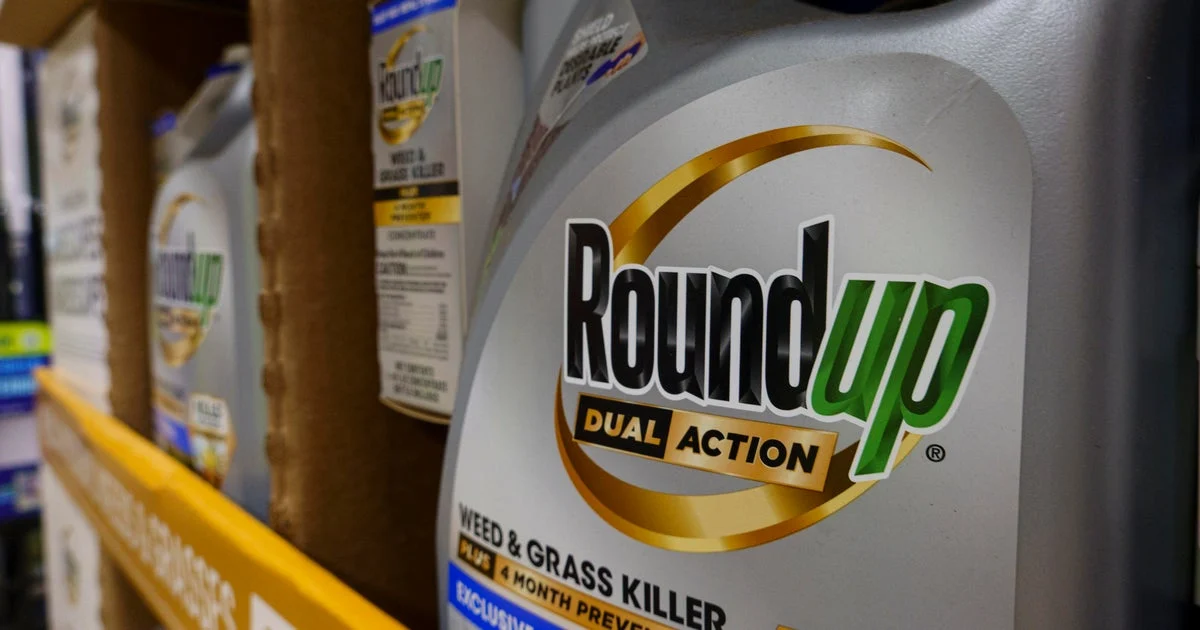
Democratic Senator Cory Booker submitted a legal brief to the U.S. Supreme Court on Wednesday backing plaintiffs who allege that Monsanto failed to adequately warn consumers about cancer risks linked to its widely used herbicide, Roundup. The filing supports a case that could determine whether thousands of similar lawsuits can continue.
The case, Monsanto Company v. John L. Durnell, focuses on whether federal pesticide labeling laws override state-level claims accusing Monsanto of insufficient warnings about the possible health hazards of Roundup’s active ingredient, glyphosate. The Supreme Court’s decision could either halt many pending lawsuits or allow them to proceed through state courts.
Monsanto’s parent company, Bayer, has already paid over $10 billion to settle earlier Roundup-related claims and is negotiating another proposed $7.25 billion settlement to resolve additional lawsuits. Monsanto denies any link between glyphosate and cancer, citing scientific studies establishing the chemical’s safety when used as directed.
In his amicus brief, Booker argued that Monsanto is seeking an overly broad federal exemption from liability that Congress has not granted, cautioning the court against preempting state actions on a complex issue lawmakers have debated without resolution. He emphasized that the Federal Insecticide, Fungicide, and Rodenticide Act (FIFRA) was intended to set minimum safety standards, not to block state lawsuits.
Booker also highlighted the importance of state-level litigation as a way to hold companies accountable as scientific understanding evolves. He has introduced legislation in Congress aiming to increase pesticide manufacturer accountability, including bills that would allow pesticide injury claims in federal court and restrict certain harmful chemicals—proposals that would amend the federal law central to the Supreme Court dispute.
The Trump administration, through the Justice Department, filed a brief supporting Monsanto. It argues that federal law should preempt state failure-to-warn claims because federal regulators have already approved Roundup’s labeling. Monsanto stated that uniform federal standards are necessary to avoid conflicting state regulations and to ensure the security and affordability of the national food supply.
Despite ongoing litigation, former President Trump has promoted increased domestic production of glyphosate, calling it vital to national security and food supply resilience. Booker has criticized this approach, condemning a federal executive order that encouraged boosting glyphosate production amidst unresolved safety concerns.
The safety of glyphosate remains scientifically disputed: the World Health Organization’s International Agency for Research on Cancer classifies it as a probable carcinogen, while the U.S. Environmental Protection Agency has found it unlikely to cause cancer when properly used. This divide has fueled numerous lawsuits, including cases where juries have ruled that Monsanto failed to warn about cancer risks.
The Supreme Court is scheduled to hear oral arguments on April 27, with a ruling expected later in the term. The decision could significantly shape the future of lawsuits related to Roundup’s cancer risks and determine the extent of state versus federal regulatory authority in pesticide labeling.
Why it matters
The Supreme Court’s ruling in this case will clarify whether federal pesticide labeling laws preempt state lawsuits, influencing the ability of thousands of cancer patients to seek damages based on exposure to Roundup. The decision will affect corporate liability standards, regulatory authority boundaries, and financial liabilities for Bayer and Monsanto.
Background
Glyphosate, the active ingredient in Roundup, has been the subject of ongoing scientific and legal controversy. While the EPA maintains glyphosate is safe when used as directed, the WHO’s cancer agency classifies it as a probable carcinogen. This conflict has led to extensive litigation, including high-profile jury verdicts against Monsanto.
Senator Booker has actively engaged on pesticide regulation and accountability, proposing legislative reforms to enhance consumer protections and clarify liability under federal pesticide laws. The Supreme Court’s impending decision will weigh heavily on these issues, with implications for future pesticide regulation and public health advocacy.
Read more Politics stories on Goka World News.