
The Supreme Court expressed doubts on April 1 about President Donald Trump’s executive order that seeks to end birthright citizenship for children born in the United States to parents who are in the country illegally or temporarily. The case, Trump v. Barbara, challenges a policy that departs from over a century of constitutional interpretation under the 14th Amendment’s Citizenship Clause.
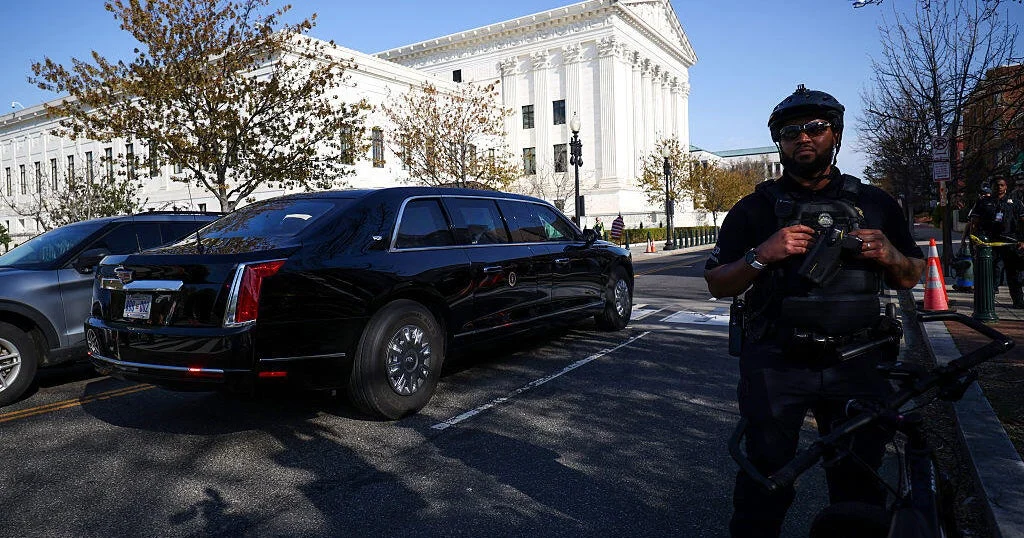
President Trump attended a portion of the oral arguments along with White House counsel and the Attorney General, marking the first time a sitting president appeared in the Supreme Court during oral arguments. The case tests the constitutionality of the executive order, which has been blocked by lower courts on grounds that it is likely unlawful.
The administration’s argument
Solicitor General D. John Sauer presented the government’s case, arguing that the phrase “subject to the jurisdiction thereof” in the 14th Amendment limits automatic citizenship to children of parents who are lawfully present and intend to remain permanently in the U.S. He claimed this narrow interpretation was supported by a 19th-century understanding and referenced the 1898 Supreme Court decision Wong Kim Ark, asserting that “domicile” was a prerequisite for citizenship.
However, multiple justices expressed skepticism. Chief Justice John Roberts described the administration’s reliance on exceptions—such as children of diplomats or enemies during wartime—as too narrow to justify denying birthright citizenship to millions of children born to undocumented immigrants. Justice Elena Kagan and others challenged the interpretation as unsupported by the text or historical usage.
Justices also raised practical concerns. Justice Neil Gorsuch questioned how authorities would determine “domicile,” and Justice Amy Coney Barrett asked about difficulties applying the rule to cases with unknown or trafficked parents. Justice Ketanji Brown Jackson inquired how citizenship status would be confirmed for newborns under the order.
The challengers’ argument
The American Civil Liberties Union’s legal director, Cecilia Wang, argued on behalf of families opposing the order. Wang warned that accepting the government’s position could jeopardize the citizenship status of millions of Americans, past and present, and disrupt a foundational legal principle that nearly all children born on U.S. soil are citizens.
Wang disputed the government’s reliance on Wong Kim Ark’s mention of “domicile,” saying the ruling explicitly stated domicile was irrelevant to citizenship. Justice Samuel Alito questioned why the case repeatedly referenced domicile if it played no part in the decision. Justice Brett Kavanaugh suggested that siding with the challengers could result in a straightforward affirmation of Wong Kim Ark without overruling it.
Why it matters
The Supreme Court’s ruling could affirm or disrupt more than a century of constitutional interpretation guaranteeing birthright citizenship. It also has broad implications for immigration policy and citizenship rights of children born to undocumented or temporary residents. If upheld, the executive order would mark a significant narrowing of citizenship eligibility, affecting millions and raising questions about enforcement and legal status documentation.
Read more US News stories on Goka World News.