
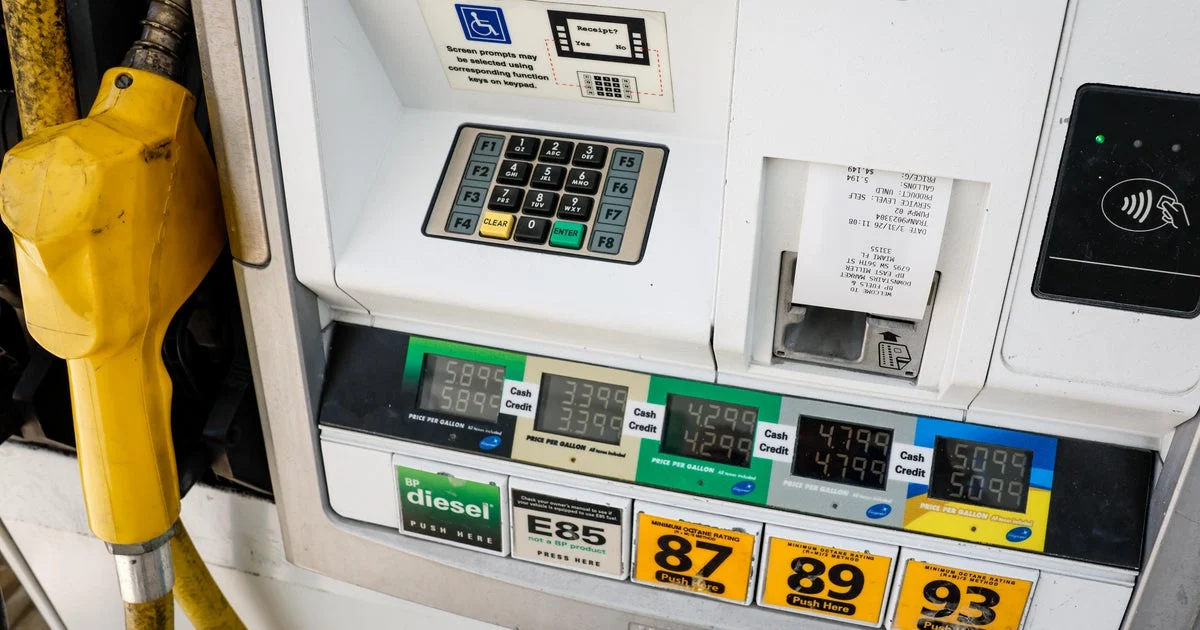
U.S. gasoline prices averaged $4.06 per gallon on Wednesday, reaching a level not seen since August 2022, as the ongoing war in Iran disrupts global oil supplies, CBS News reported.
The price increase reflects a 36% jump since the conflict started, fueled by concerns over the Strait of Hormuz, a critical waterway through which about 20% of the world’s oil supply passes. Lloyd’s List Intelligence analysis indicates that most ships currently transiting the strait are linked to Iran, effectively limiting oil flow and driving up crude prices.
According to the U.S. Energy Information Administration, Brent crude oil prices constitute approximately 51% of the retail cost of gasoline, making fluctuations in global oil markets particularly impactful on fuel prices at the pump.
Trump’s Planned Address on the Iran Conflict
President Donald Trump is scheduled to deliver a prime-time address on Wednesday evening to update the public on the situation in Iran. Ahead of the speech, Trump told CBS News that gas prices will decline “when we leave, when it’s over.”
White House press secretary Karoline Leavitt indicated that the administration expects gas prices to fall after “Operation Epic Fury” is complete, restoring the multi-year low prices experienced before recent disruptions.
Lowering energy costs was a central promise of Trump’s campaign. However, petroleum analyst Patrick De Haan of GasBuddy expects that prices may continue rising short-term due to ongoing geopolitical uncertainty. He predicted the national average could reach $4.10 per gallon this week, with certain states such as Michigan, Indiana, and Ohio likely to see continuing increases.
Why it matters
Gasoline prices affect the cost of living and economic stability for American consumers, especially as the nation approaches sensitive geopolitical negotiations. The Iran war’s impact on global oil supply and transportation routes like the Strait of Hormuz directly influences fuel affordability. The expected updates from the president could shape market and public expectations about the conflict’s resolution and energy prices.
Background
The war in Iran has intensified since early 2026, causing significant disruptions to oil production and transport. The Strait of Hormuz, a strategic chokepoint for global oil shipments, remains largely inaccessible to international vessels, escalating tensions and inflating crude oil prices worldwide.
U.S. gasoline prices have historically been sensitive to Middle East conflicts, which raise concerns over supply security. The current spike to over $4 per gallon marks a critical threshold not crossed since mid-2022, highlighting the fragility of fuel markets amid geopolitical instability.
Read more Business stories on Goka World News.