
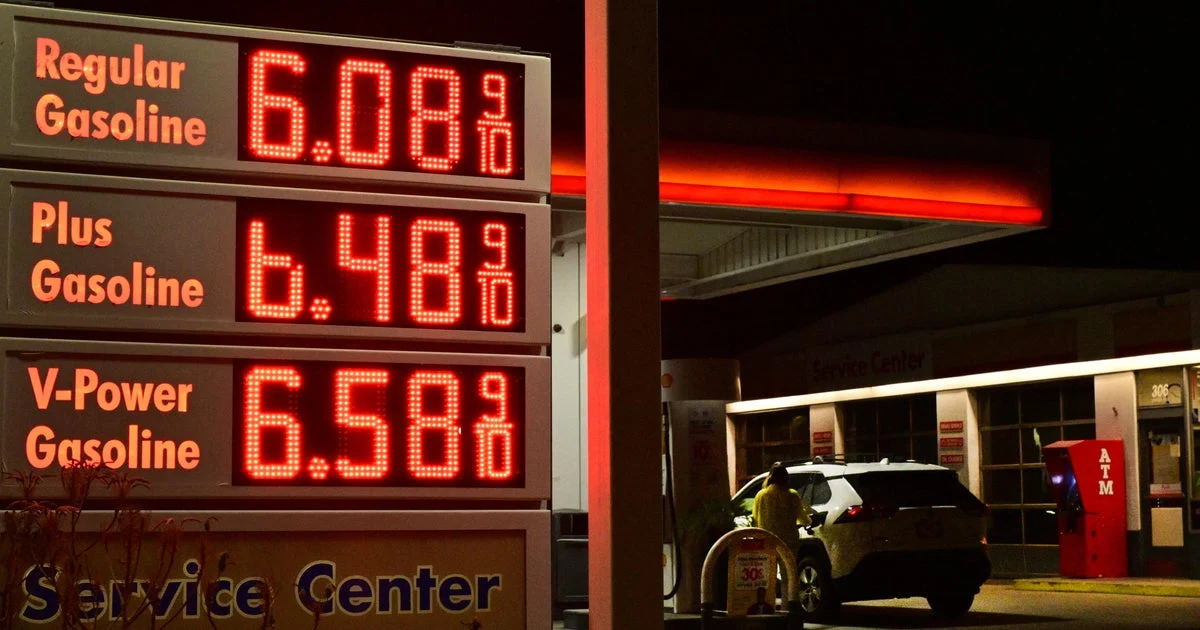
California drivers continue to face the highest gas prices in the United States, with costs exceeding $6 per gallon. However, a six-month CBS News California investigation found no evidence that oil companies are engaging in illegal price gouging. Instead, a combination of state-specific taxes, environmental regulations, refinery closures, and global supply chain challenges contribute to elevated prices.
Factors driving California’s high gas prices
California’s gas prices are influenced by taxes and fees that make up approximately 55% of the cost per gallon, far above the national average. These costs include a 61-cent state excise tax, charges for underground storage, fees for carbon emissions programs such as Cap-and-Trade and the Low Carbon Fuel Standard, and state and local sales taxes. Additionally, California’s unique requirement for a specialized low-carbon gasoline blend adds about 10 to 15 cents per gallon.
The state’s isolated fuel market, limited refining capacity, and strict environmental regulations further increase distribution and refining expenses. UC Berkeley economist Severin Borenstein identified an unexplained “mystery surcharge” on gas prices stemming from disruptions starting in 2015, which continues to affect prices today.
Impact of refinery closures and global supply volatility
Two major California refineries—Valero in the San Francisco Bay Area and Phillips 66 Wilmington near Los Angeles—have shut down in recent years, removing nearly 20% of the state’s refining capacity. This reduction forces California to rely more heavily on imported gasoline, particularly from Asian refineries, which face less stringent environmental standards but require long-distance shipping that introduces delays and supply risks.
These imports can take weeks to arrive, exposing California to price spikes during refinery outages or global disruptions such as the current Middle East conflict. China has curtailed fuel exports amid regional shortages, compounding the state’s vulnerability to supply shortages and price volatility.
No proof of illegal price gouging
Following year-long scrutiny and a taxpayer-funded special legislative session in 2023, California officials concluded there is no evidence that oil companies are illegally inflating prices. Natural Resources Secretary Wade Crowfoot acknowledged factors causing price spikes but stopped short of blaming the oil industry for gouging.
State legislation introduced after the special session sought to increase oversight and cap refinery profits during price surges, although the profit cap law has since been paused. Refinery representatives warn that profit restrictions during high-price periods could harm the industry’s viability in California, which faces high operational costs and regulatory burdens.
Why it matters
California’s experience highlights the complexity of balancing climate-driven policies with economic realities in energy markets. High taxes and environmental rules aim to reduce carbon emissions but increase costs for consumers and challenge the competitiveness of local refineries, leading to closures that tighten supply. The growing reliance on foreign refining increases exposure to international market fluctuations and supply chain disruptions, which can raise prices unpredictably.
Understanding the real causes behind California’s high gas prices is critical as the state navigates efforts to maintain affordable fuel supplies while pursuing ambitious climate goals.
Read more Politics stories on Goka World News.