
Marine archaeologists have discovered the wreck of the Danish warship Dannebroge, sunk during the 1801 Battle of Copenhagen by Admiral Horatio Nelson’s British fleet, along with part of a sailor’s jawbone on the seabed of Copenhagen Harbor.
The find was announced by Denmark’s Viking Ship Museum on April 2, 2026, marking exactly 225 years since the naval clash. The underwater excavation, conducted amid thick sediment and near-zero visibility about 50 feet below the surface, is urgent because the site will soon be covered by construction for Lynetteholm, a large new housing district project in the harbor.
The Dannebroge, Denmark’s 157-foot flagship at the time, was a central target in the battle. Commanded by Commodore Olfert Fischer, the ship sustained heavy cannon fire, which sparked a deadly onboard fire before it ultimately exploded and sank. The blast was reportedly heard across Copenhagen. Historical records indicate 19 crew members remain unaccounted for, and archaeologists believe the recovered jawbone may belong to one of them.
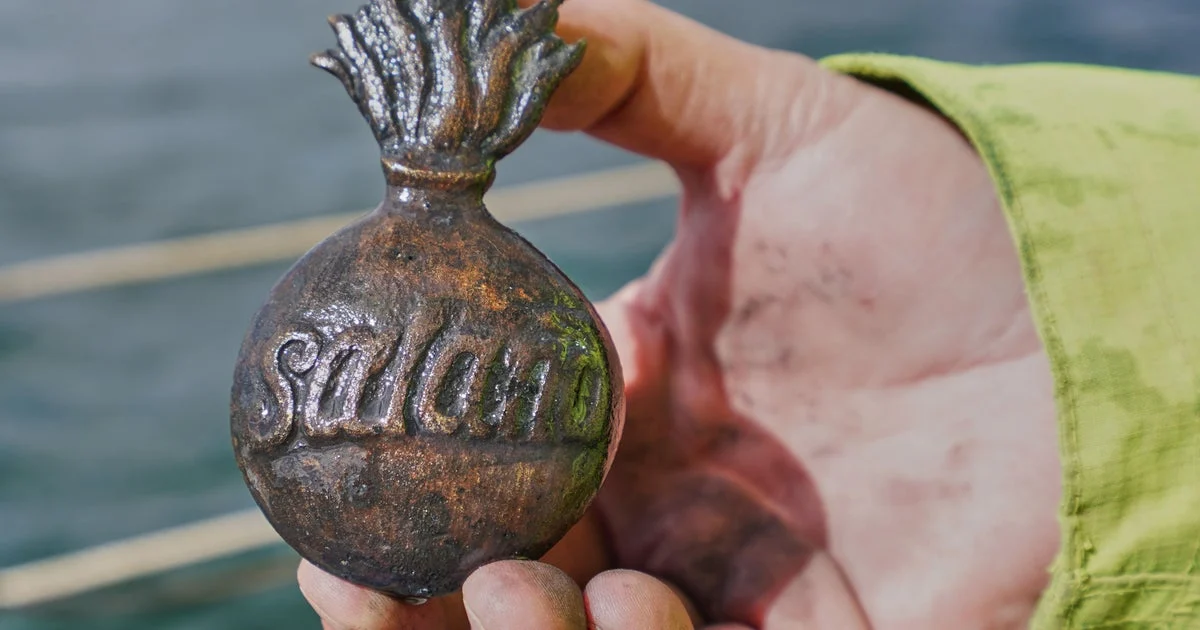
Morten Johansen, head of maritime archaeology at the Viking Ship Museum, described the chaotic conditions onboard, emphasizing the damage caused when wooden splinters from cannon hits injured crew members. The site has yielded numerous artifacts including cannons, uniforms, insignia, shoes, bottles, and ceramics. Scientific dendrochronology confirmed the wooden remains match the ship’s original construction period.
Divers working at the wreck must navigate dangerous conditions, with clouded waters around the site full of silt and loose cannonballs, relying on touch as well as sight. Archaeologists hope that studying the wreck will offer new insights into the experience of sailors during the battle, beyond what historical texts and paintings convey.
Background
The Battle of Copenhagen took place in 1801 when Nelson’s British fleet attacked the Danish navy, which was enforcing a blockade as part of an alliance that included Russia, Prussia, and Sweden. The battle was one of Nelson’s most significant early victories, designed to break the Northern European coalition against Britain.
The event also popularized the phrase “to turn a blind eye,” attributed to Nelson ignoring a signal, citing his partial blindness.
The Dannebroge’s destruction remains a symbolic moment in Danish naval history, and its discovery offers a tangible connection to this pivotal battle.
Why it matters
The excavation provides a rare archaeological window into naval warfare of the early 19th century and personalizes a nationally significant historic event. It may allow historians to refine knowledge of the battle’s details and commemorate those who perished.
With the site slated for urban development, the discoveries underscore the tension between preserving heritage and modern construction. The Dannebroge findings join recent significant northern European shipwrecks uncovered underwater, contributing valuable artifacts and historical context to maritime archaeology.
Read more World News stories on Goka World News.