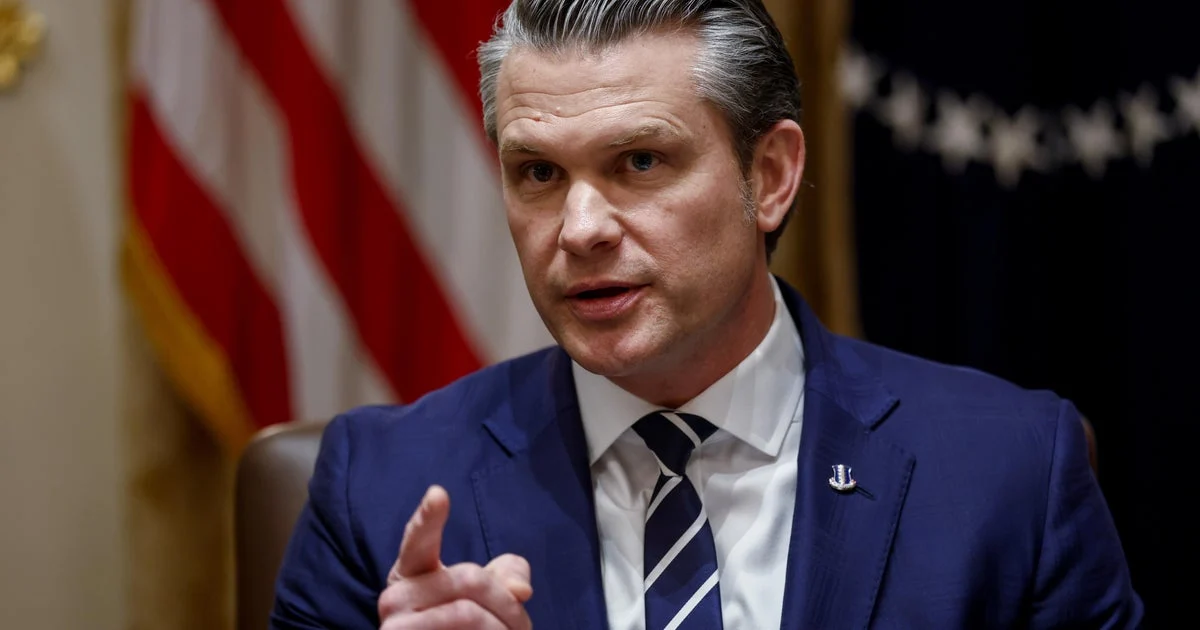
Defense Secretary Pete Hegseth announced on April 2, 2026, that he will authorize service members to carry their personal firearms onto military installations. The decision comes amid concerns about recent shootings on U.S. military bases and centers on the premise of personal protection, referencing the Second Amendment.
Hegseth posted a video on the social platform X detailing that he will issue a memo directing base commanders to grant requests from troops to carry privately owned weapons. These requests will be presumed necessary for personal protection, and commanders must provide detailed written explanations if they deny permission.
Currently, Defense Department policy prohibits military personnel from carrying personal firearms on base without specific approval from senior commanders. Weapons are typically kept in secure storage and checked out only for sanctioned activities like hunting or range use. Outside of military police and training scenarios, troops generally cannot carry firearms on installations.
In his video, Hegseth cited notable incidents that have raised questions about service members’ lack of weapon access during emergencies. Among them was a 2025 shooting at Fort Stewart, Georgia, where an Army sergeant used a personal handgun to injure five soldiers before being subdued. Other events include the 2009 Fort Hood shooting by an Army psychiatrist, which resulted in 13 deaths.
“In these instances, minutes are a lifetime,” Hegseth said, emphasizing that trained service members can make those moments count if armed.
Opposition and Concerns
Tanya Schardt, senior counsel at the Brady gun violence prevention group, expressed concern that loosening firearms restrictions could lead to increased suicides and gun violence among troops. She noted that most active-duty suicides involve personal weapons rather than military-issued ones and underscored that military installations are already highly secure environments.
Schardt also pointed out that Defense Department leadership has traditionally opposed relaxing personal firearm policies, originally established during George H.W. Bush’s administration. A recent Pentagon report indicated that while suicide rates among active-duty troops declined slightly in 2024, there has been a gradual overall increase since 2011.
Broader Policy Changes Under Hegseth
Hegseth’s directive to allow personal firearms reflects broader shifts he has made at the Pentagon since becoming defense secretary. He has challenged existing military policies he considers “woke,” including changes to equal opportunity programs, grooming standards, and fitness requirements. The military has moved to sever ties with some graduate programs viewed as promoting progressive ideas and has reviewed library materials focusing on diversity and inclusion.
Hegseth has also restructured the Chaplain Corps and removed several high-ranking military officials, including Army Chief of Staff Gen. Randy George, who was directed to retire immediately.
Background
Under previous Defense Department policy, military bases typically restricted carrying personal firearms to maintain controlled environments and reduce risks of accidental or intentional shootings. Only authorized personnel like MPs and troops in official training or hunting activities handled weapons on base.
Shootings on bases have periodically raised concerns about security and access to weapons. These incidents have prompted debate about balancing safety with the rights and protection needs of service members while on military property.
Why it matters
Hegseth’s policy change could reshape security protocols across all military installations by broadening the presence of firearms among service members. This shift reflects ongoing tensions between gun rights advocates and those urging caution due to risks of gun violence and suicide in the armed forces. The requirement for commanders to justify denials adds a procedural layer affecting local command discretion.
The decision also fits into a wider cultural and political realignment within the Pentagon under Hegseth’s leadership, signaling potentially significant changes in military culture and governance.
Read more Politics stories on Goka World News.