
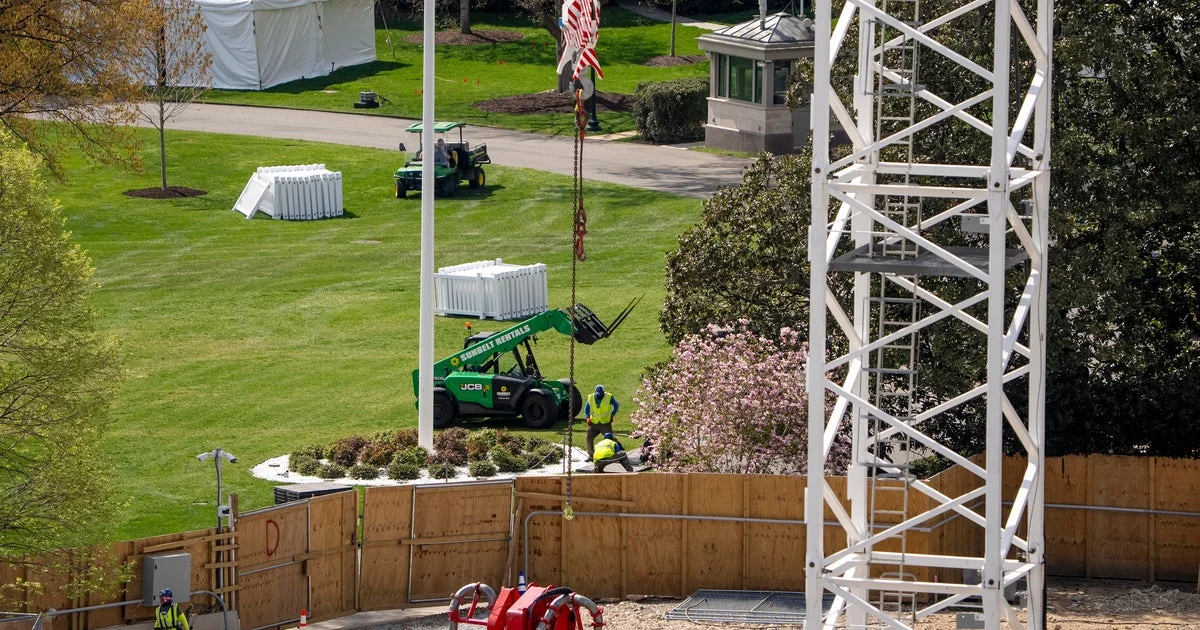
The National Capital Planning Commission (NCPC) approved the design for President Trump’s East Wing renovation, which includes a 90,000-square-foot project featuring a ballroom with seating for 1,000 guests. The vote on Thursday was 9 to 1, with two commissioners abstaining, marking the final federal regulatory approval for the project. However, construction above ground is expected to remain on hold after a federal judge ruled earlier this week that congressional authorization is required before the project can proceed. The Department of Justice is appealing that ruling.
The project has faced significant public opposition and legal hurdles throughout its development. The NCPC’s approval was delayed by a month amid more than 32,000 public comments submitted online and over 100 individuals—including architects and historic preservationists—testifying against the project during the commission’s March meeting. Despite this opposition, James Blair, an NCPC commissioner and senior White House aide, described the critiques as politically motivated and “unserious.”
White House officials initially announced the ballroom project in July with a planned cost of $200 million, which has since doubled. The privately financed renovation will add office space for the first lady, kitchen facilities, a double-decker colonnade, and improvements to a secure underground military complex beneath the East Wing. It remains unclear whether taxpayer funds or private donations are financing the military bunker portion.
Although President Trump stated early on that the renovation would not alter the existing White House structure, heavy machinery demolished much of the historic East Wing in October 2025, removing longtime architectural features. Demolished materials were transported to a Maryland scrapyard, and excavated dirt was taken to a nearby golf course.
In December, the National Trust for Historic Preservation filed a lawsuit to block construction, arguing the project lacked congressional approval and raised questions about its funding sources. A judge initially denied the Trust’s request for a temporary restraining order but later granted it. Democrats have also criticized the administration’s use of private donations solicited through a nonprofit organization, highlighting concerns over conflicts of interest involving donors with government business.
Senator Richard Blumenthal labeled the project a “vanity” endeavor and called for transparency about donor influences. Efforts by Democratic lawmakers to impose legislative restrictions on this and similar projects have not advanced in the Republican-led Congress. The White House has released a partial donor list and hosted a recognition dinner but has not disclosed individual contribution amounts or total funds raised.
The Commission of Fine Arts (CFA)—another regulatory body overseeing federal construction—unanimously approved the East Wing design in February, despite receiving over 99% opposition in public comments. The CFA’s approval occurred after just a few months of review, raising concerns among preservation advocates about the accelerated timeline compared to previous White House renovations.
Following a recent redesign that removed a grand staircase facing the ballroom, the NCPC was informed on Wednesday and proceeded to vote on the altered plans the next day. The White House praised the commission’s approval, with spokesperson Davis Ingle expressing commendation and President Trump stating on social media that the ballroom will be the largest and most beautiful of its kind worldwide. Trump also claimed the project is “on time and under budget,” though that has been disputed.
Why it matters
The East Wing ballroom renovation represents a major structural change to the White House complex, stirring debate over historic preservation, governmental transparency, and the proper use of private donations in federal projects. The legal determination that congressional approval is necessary could set a precedent affecting future White House renovations. The controversy also highlights tensions between the administration and preservationists as well as concerns about political influence in funding high-profile federal construction.
Background
The White House’s East Wing has historically housed offices and public event spaces, but its renovation scale during President Trump’s administration is unprecedented in recent decades. Prior renovations generally underwent thorough and prolonged review by regulatory commissions, including the NCPC and CFA. The swift approval process and legal challenges reflect broader political and institutional conflicts regarding executive branch authority and adherence to traditional oversight mechanisms for federal properties.
Read more US News stories on Goka World News.