
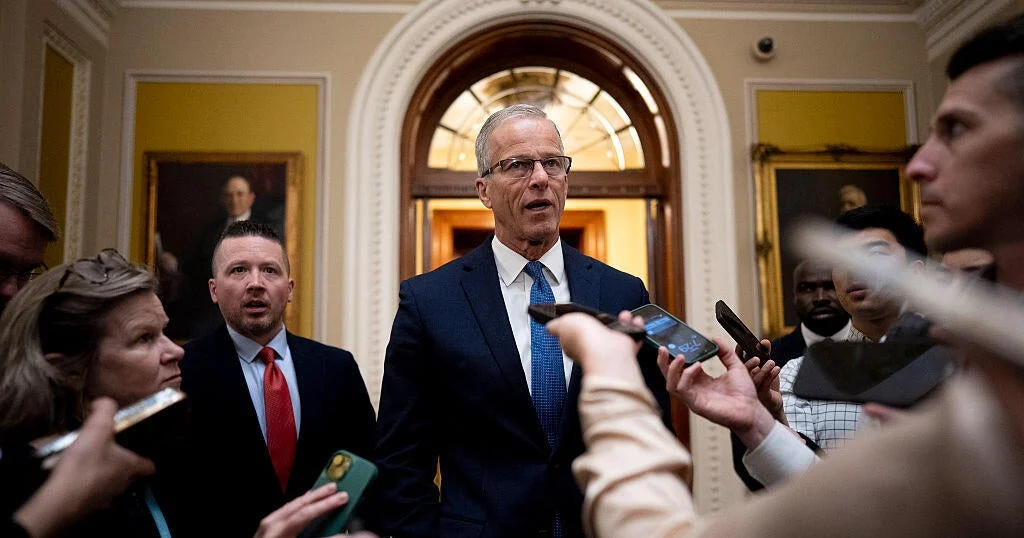
The Senate took an important step toward ending the partial shutdown of the Department of Homeland Security (DHS) on Thursday by approving a funding measure that covers the majority of the department. President Donald Trump also pledged to sign an order to pay all DHS employees, although the source of that funding remains unclear.
Senate Approves Partial DHS Funding
Senate Majority Leader John Thune introduced a bipartisan bill that would fund most DHS operations except for Immigration and Customs Enforcement (ICE) and portions of Customs and Border Protection (CBP). The measure had been agreed upon by Senate Democrats and Republicans the previous week.
However, the House of Representatives did not act on the Senate measure during its brief pro forma session on Thursday, prolonging the DHS shutdown until at least next week. Most members of Congress are currently on recess until the week of April 13.
Disputes Delay Full DHS Funding
Democrats have opposed funding DHS’s immigration enforcement agencies in the wake of two fatal shootings involving federal agents in Minneapolis earlier this year. Negotiations to include ICE reforms stalled last week, prompting the Senate to move ahead with funding the rest of DHS.
In the House, conservative opposition led Speaker Mike Johnson to reject the Senate plan. Instead, he proposed a temporary funding measure for the entire department but left for recess without advancing any legislation.
Trump’s Commitment to DHS Workers Amid Uncertainty
On Thursday, Trump publicly announced via Truth Social that he would sign an order ensuring payment to all DHS employees, including those still affected by the partial shutdown. Employees at ICE, CBP, and the Coast Guard have continued receiving pay, and last week the president signed an executive order to pay TSA agents as well.
However, the administration has not clarified how this payment commitment will be funded without approved congressional appropriations.
Senate and House Strategy for Immigration Funding
On Wednesday, Trump urged lawmakers to use the budget reconciliation process to fund ICE and Border Patrol, bypassing the need for Democratic support. Senate and House leaders said they intend to pursue a three-year funding package for immigration enforcement agencies through reconciliation while working to pass the broader DHS funding separately.
Thune indicated the Senate is focused on passing this narrower reconciliation bill quickly, aiming to avoid attaching other legislative priorities to expedite approval by the June 1 deadline.
Why it matters
The ongoing DHS shutdown affects a wide range of federal security operations, from border enforcement to transportation security. Resolving the impasse is critical for restoring full department functionality and ensuring federal employees receive uninterrupted pay. The use of reconciliation to fund immigration agencies signals a partisan approach to overcoming legislative gridlock, which could influence future budget battles.
Read more Politics stories on Goka World News.