
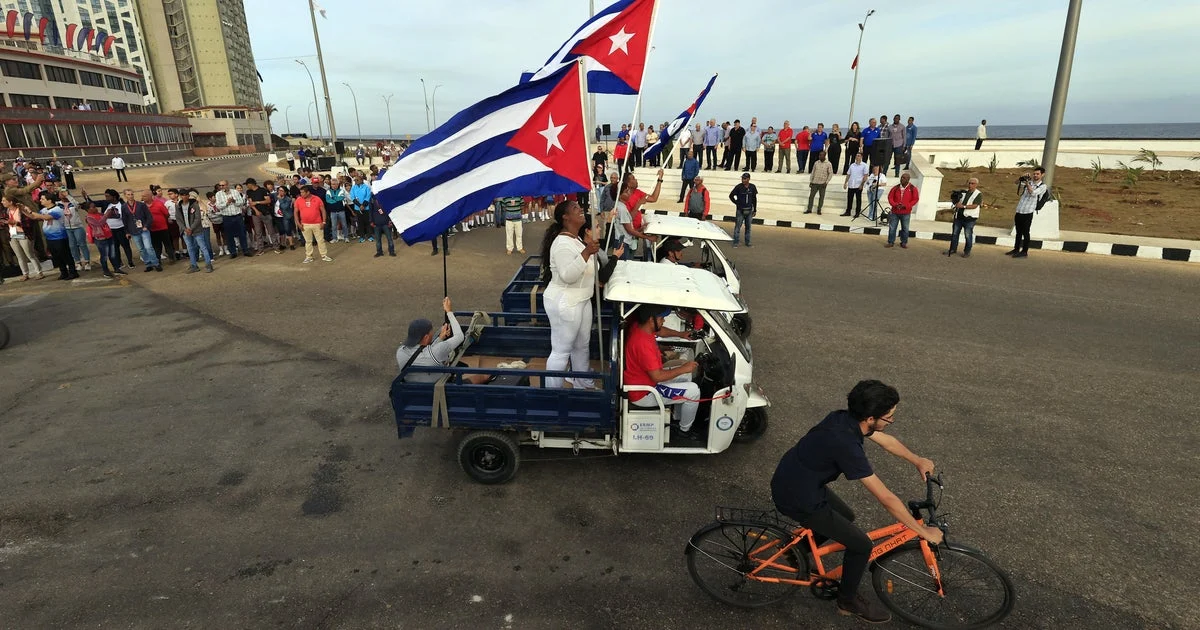
President Donald Trump has intensified his rhetoric about taking action against Cuba, following recent U.S. military interventions in Venezuela and Iran. Speaking publicly in March 2026, Trump indicated he might “take” Cuba, signaling potential future U.S. measures against the island nation.
Trump Administration’s Position on Cuba
In early January, after U.S. forces captured Venezuelan President Nicolás Maduro, Trump announced that Cuba was next on his administration’s agenda. Secretary of State Marco Rubio, whose family immigrated from Cuba, explicitly called for significant political change there, stating to Congress that a regime change would benefit the United States. Rubio has emphasized the need for both economic and political reforms, noting Cuba’s economic struggles and ineffective government system.
On March 16, Trump told reporters from the Oval Office that he believed he would have “the honor of taking Cuba,” a statement further underscoring the administration’s growing focus on the country. Rubio has alluded to upcoming announcements regarding Cuba’s status, insisting economic reform requires political transformation.
Challenges to Military Intervention and Alternatives
Despite inflammatory rhetoric, experts view the prospect of direct U.S. military action against Cuba as unlikely due to the island’s entrenched political structure and extensive experience in suppressing dissent. Christopher Hernandez-Roy of the Center for Strategic and International Studies described “regime management” as the most viable U.S. objective, acknowledging Cuba’s political system has been stable for nearly seven decades.
Former British Ambassador to Cuba Paul Hare noted divisions within the Trump administration between factions favoring a complete regime change and others willing to negotiate with current officials in exchange for greater business access, particularly for Cuban Americans. The U.S. has imposed an oil blockade on Cuba, which analysts say has pushed the island’s economy into its most critical state since the Soviet Union’s collapse.
Cuba’s Response and U.S. Economic Interests
Cuban officials, including Deputy Foreign Minister Carlos Fernández de Cossío, have downplayed the likelihood of U.S. military action, while affirming readiness to defend against any aggression. The Cuban government recently announced measures to allow investment by nationals living abroad, marking a significant policy shift amid growing U.S. pressure.
Lawrence Gumbiner, a former U.S. diplomat in Havana, suggested that the administration’s primary interest is economic, anticipating opportunities for U.S. firms in sectors such as shipping, tourism, and construction. He contrasted Trump’s apparent preference for incremental economic openings with Rubio’s broader push for political change.
Why it matters
The Trump administration’s intensified focus on Cuba represents a renewed U.S. effort to challenge a longstanding communist government, potentially reshaping political and economic dynamics in the region. Any shift in Cuba’s governance or U.S.-Cuba relations could have significant implications for regional stability, migration patterns, and commercial interests, particularly for Cuban Americans and U.S. businesses aiming to enter the market.
Moreover, Trump’s reference to military options, though regarded as unlikely by experts, reflects ongoing U.S. willingness to use coercion alongside sanctions to pressure authoritarian regimes in Latin America.
Read more World News stories on Goka World News.