
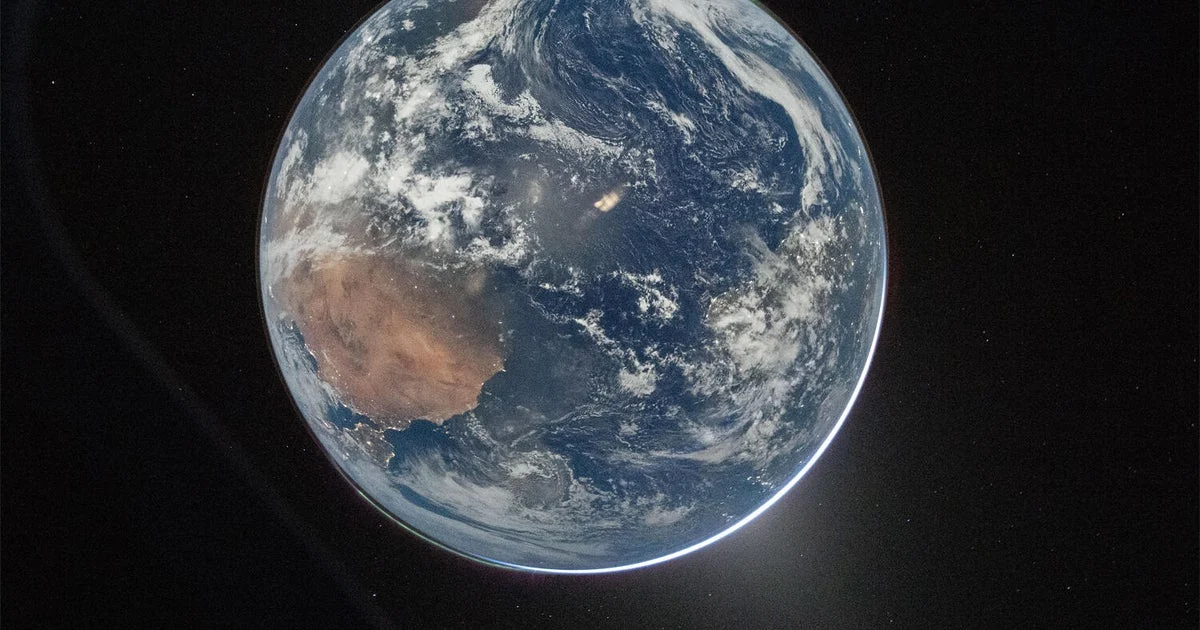
The Artemis II astronauts, the first humans to travel toward the moon since 1972, spent a relaxed day in space on April 3, 2026, capturing spectacular views of Earth and rehearsing medical procedures in preparation for their upcoming lunar flyby.
Commander Reid Wiseman took striking photographs of Earth as the Orion crew capsule pulled away from the planet late on April 2. One image showed a full Earth against the darkness of space, while lengthy exposures revealed details such as northern Africa, the Strait of Gibraltar, and Brazil’s Atlantic coast. Auroral displays were also visible near the poles, and another photo framed the planet through Orion’s cockpit window, highlighting the astronauts’ separation from Earth.
The crew also shared a midday meal and streamed video of astronaut Victor Glover following his workout aboard the spacecraft. The astronauts communicated frequently with mission control, confirming preferences for public video streaming and enjoying brief family chats. The spacecraft remained nearly perfectly on course, leading NASA to cancel a planned outbound trajectory correction maneuver.
The upcoming highlight will occur Monday evening, when Artemis II passes behind the moon’s leading edge, cutting off communication with Earth. The four astronauts—Wiseman, Glover, Christina Koch, and Canadian Jeremy Hansen—will fly within approximately 4,000 miles of the lunar far side, marking a new human distance record beyond Apollo 13’s 248,655-mile mark set in 1970.
During the roughly 40-minute period out of contact, the crew will focus on observing the far side of the moon, a vantage point never directly studied by humans. Koch emphasized the value of human eyes in providing unique scientific observations that can complement instrument data. After the flyby, Orion will re-establish contact and prepare for its return to Earth, with splashdown scheduled near San Diego on April 10.
Why it matters
This mission marks NASA’s first crewed lunar flight in over five decades and will test key capabilities for future Artemis program missions aimed at sustainable moon exploration. The Artemis II observations from the lunar far side will contribute new data for scientists studying the moon’s composition and geology. Additionally, training in medical emergency procedures aboard Orion helps establish protocols critical for astronaut safety on deep space missions.
Background
Artemis II follows the uncrewed Artemis I test flight and is a vital step toward NASA’s goal of returning humans to the moon and eventually sending astronauts to Mars. The mission utilizes the Orion spacecraft launched atop the Space Launch System rocket. Previous Apollo missions last flew humans near or around the moon, but none have ventured to the far side since Apollo 17 in 1972. The Artemis program seeks to build on this legacy with advanced technology and international partnerships.
Read more Space & NASA stories on Goka World News.