
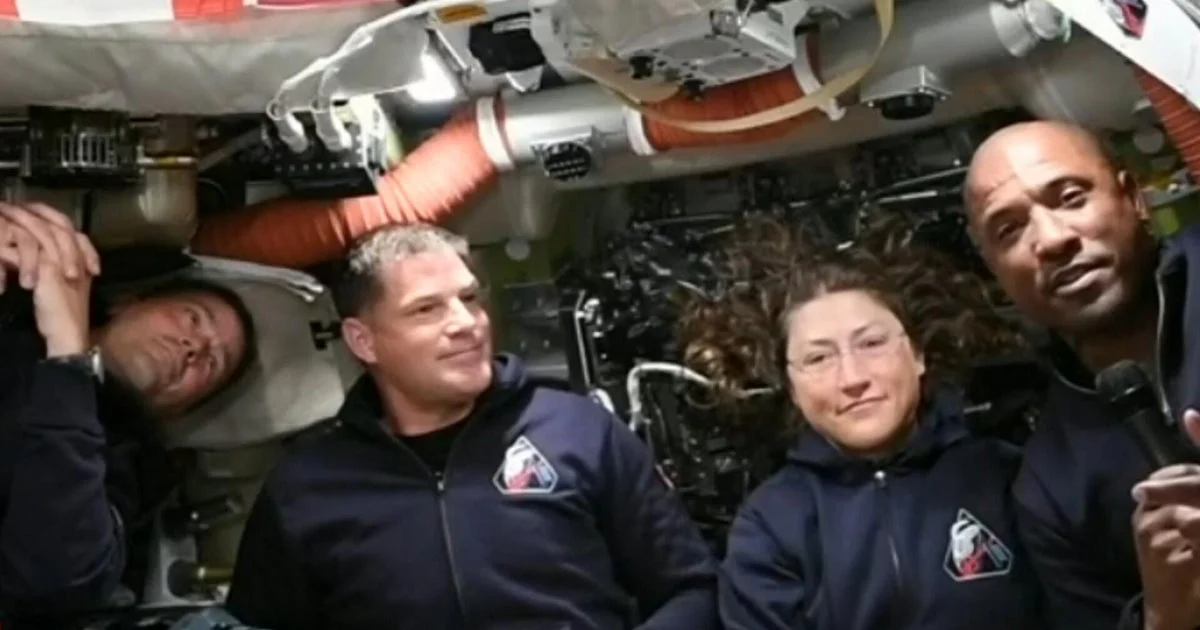
The four astronauts aboard NASA’s Artemis II mission have reached the halfway point on their journey from Earth to the Moon. During this milestone, the crew conveyed a message emphasizing the perspective of Earth as a shared “spaceship.”
Mark Strassmann of CBS News interviewed the Artemis II astronauts as they passed this key navigational landmark in their mission. In their comments, the astronauts highlighted the common human experience and interconnection that comes from viewing the planet from space.
One astronaut described Earth as “a spaceship called Earth,” underscoring the planet’s finite resources and the need for global cooperation for the well-being of all its inhabitants.
Why it matters
The crew’s reflections resonate with ongoing discussions about environmental stewardship and global unity. Seeing Earth as a fragile, shared vessel invites greater awareness of issues like climate change and natural resource management.
The Artemis II mission itself is a significant step forward in NASA’s broader Artemis program, aiming to establish sustainable human exploration of the Moon and eventually Mars. The journey brings renewed attention to space travel’s potential to inspire new perspectives on Earth.
Background
Artemis II is NASA’s second crewed mission in its Artemis lunar exploration program, following the uncrewed Artemis I test flight. The mission carries four astronauts on a curved trajectory around the Moon before returning to Earth.
Unlike the first Artemis mission, which was uncrewed, Artemis II is designed to validate life support systems and crew operations critical to future lunar landings. By passing the halfway mark, the mission moves closer to its goal of safely orbiting the Moon and returning the crew to Earth.
Read more US News stories on Goka World News.