
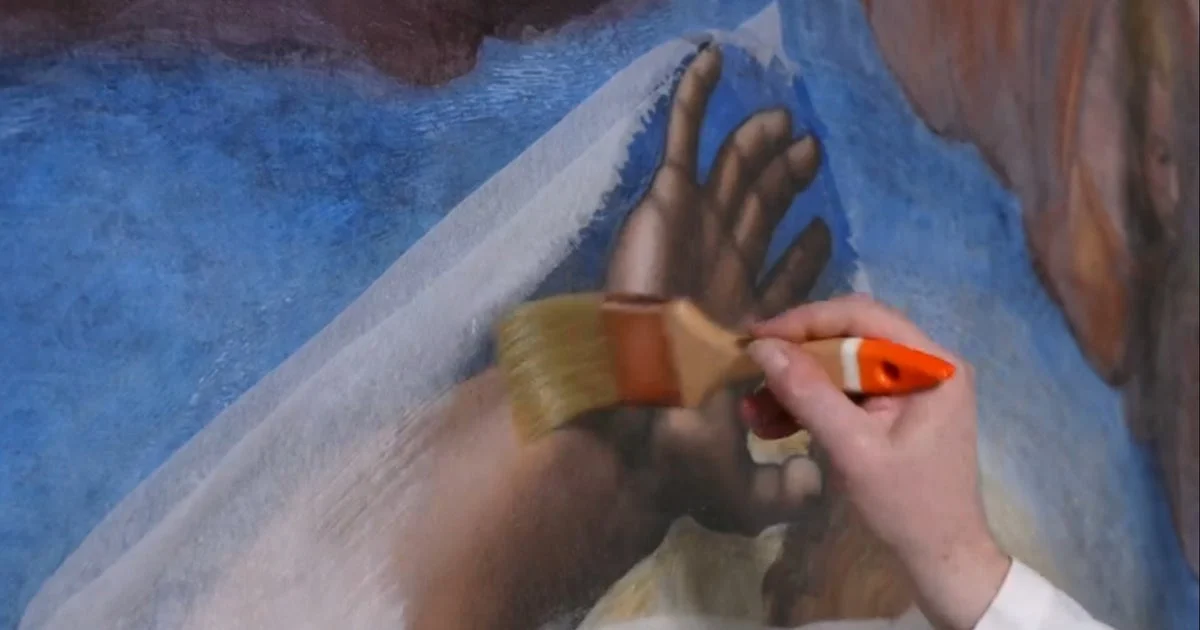
The ceiling of the Sistine Chapel, painted by Michelangelo in the early 1500s, remains one of the world’s most iconic works of art. After more than 500 years, specialists continue to preserve its vibrant colors and intricate details through meticulous cleaning and restoration processes.
“CBS Saturday Morning” provided an exclusive behind-the-scenes look at how conservators maintain the integrity of this Renaissance masterpiece. The cleaning and restoration efforts involve advanced techniques tailored to protect the fragile frescoes while removing layers of soot, dust, and other pollutants accumulated over centuries.
These preservation methods are vital for ensuring that the vivid storytelling depicted in the artwork remains visible to millions of visitors each year. Conservators work carefully to avoid any damage to the original pigments, balancing the need to clean with the imperative to respect the historical and artistic value of Michelangelo’s work.
Why it matters
The Sistine Chapel ceiling is a cultural and historical treasure, attracting tourists and art lovers from around the world. Its preservation is crucial not only for maintaining a masterpiece of Renaissance art but also for enabling future generations to experience it in its intended vibrancy. The cleaning process also serves as a benchmark in art conservation techniques, influencing methods used for other invaluable frescoes and heritage artworks globally.
Background
Michelangelo painted the Sistine Chapel ceiling between 1508 and 1512 under the commission of Pope Julius II. The frescoes depict scenes from the Bible, including the iconic Creation of Adam. Over centuries, exposure to candle soot, environmental pollution, and general aging has darkened the surfaces, necessitating periodic restorations.
The most notable restoration took place from 1980 to 1994, which revealed brighter colors and finer details than were visible for centuries. Since then, ongoing maintenance follows strict protocols to preserve the frescoes’ condition without compromising their authenticity.
Read more World News stories on Goka World News.