
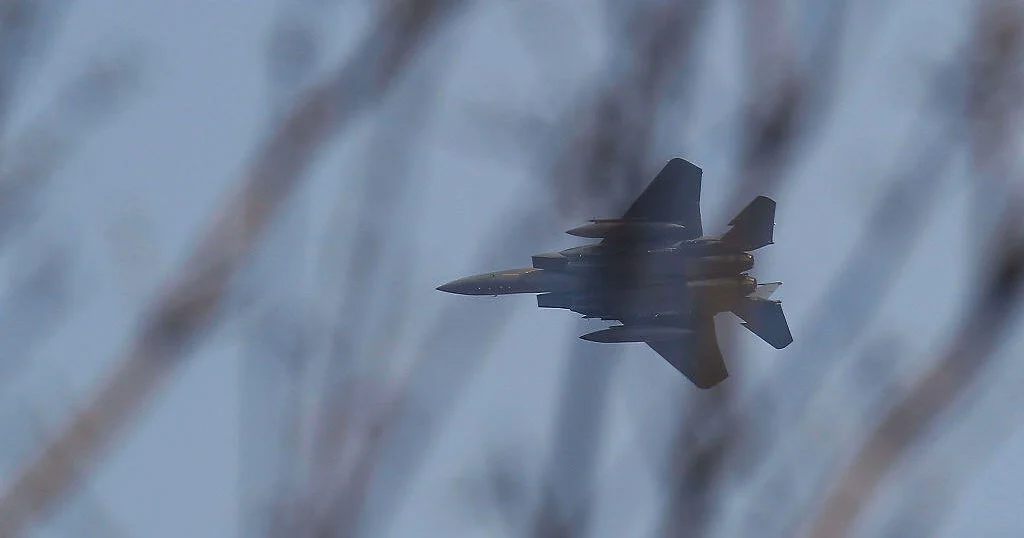
A U.S. military crew member who went missing after an F-15E fighter jet was shot down over a remote mountainous region of Iran was rescued early Sunday morning local time, according to multiple U.S. officials and President Donald Trump.
The jet, carrying two crew members, was downed on Friday. The pilot was rescued shortly after by U.S. forces. The second crew member, identified by Trump as a “highly respected Colonel,” remained missing until Sunday’s rescue operation.
Details of the Rescue Operation
The rescue mission involved dozens of U.S. special operations personnel, backed by several dozen aircraft including helicopters, warplanes, and transport planes. President Trump described it as “one of the most daring Search and Rescue Operations in U.S. History,” stating that U.S. forces spent approximately seven hours inside Iranian airspace to retrieve the officer.
According to officials, the rescued officer was seriously injured but expected to recover. He was flown to Kuwait for medical treatment following the extraction. The operation used extensive air support and weapons fire to keep Iranian Revolutionary Guard forces at bay while the crew member was located in a mountain crevice with only a handgun for defense.
The Central Intelligence Agency (CIA) played a central role, providing real-time intelligence on the officer’s location and conducting a deception campaign within Iran to mislead Iranian forces about the rescue progress. The CIA’s tracking enabled precise coordination between the Pentagon and the White House to carry out the mission efficiently.
Context of the Downing of the F-15E
The F-15E was shot down by Iranian Revolutionary Guards in southwestern Iran on Friday morning. Iranian state media released images purportedly showing the wreckage of the fighter jet, which weapons experts confirmed matched the American aircraft.
The pilot ejected safely and was rescued by two helicopters despite one being hit by small arms fire during the extraction. Another U.S. aircraft involved in the mission, an A-10 Warthog, was also hit and its pilot ejected over the Persian Gulf before being successfully recovered.
This incident marks the first time in over 20 years that a U.S. fighter jet has been shot down in combat, according to retired Air Force Brig. Gen. Houston Cantwell. It is distinct from previous losses attributed to friendly-fire incidents during the ongoing conflict in the region.
Why it matters
The successful recovery of the missing crew member prevents further escalation that could arise from capturing U.S. personnel in hostile territory. It highlights the considerable reach and coordination capabilities of U.S. special operations and intelligence units. President Trump’s warning to Iran to reopen the Strait of Hormuz within 48 hours underscores ongoing tensions that have global economic implications, especially regarding oil shipments.
Background
The downing occurred amid increased hostilities following the February 28 outbreak of open conflict between the United States and Iran. The Strait of Hormuz, a strategic chokepoint for oil exports, has become a focal point of this conflict. Prior to Sunday’s rescue, the U.S. had cautiously restrained public disclosures to avoid endangering the missing officer’s extraction.
President Trump had previously halted other operations in Iran to prioritize the search and rescue effort, deploying hundreds of special operations forces and sending dozens of aircraft as part of the operation. Two transport planes intended to support the mission were destroyed to prevent their capture after being unable to take off from a remote Iranian base.
Read more Politics stories on Goka World News.