
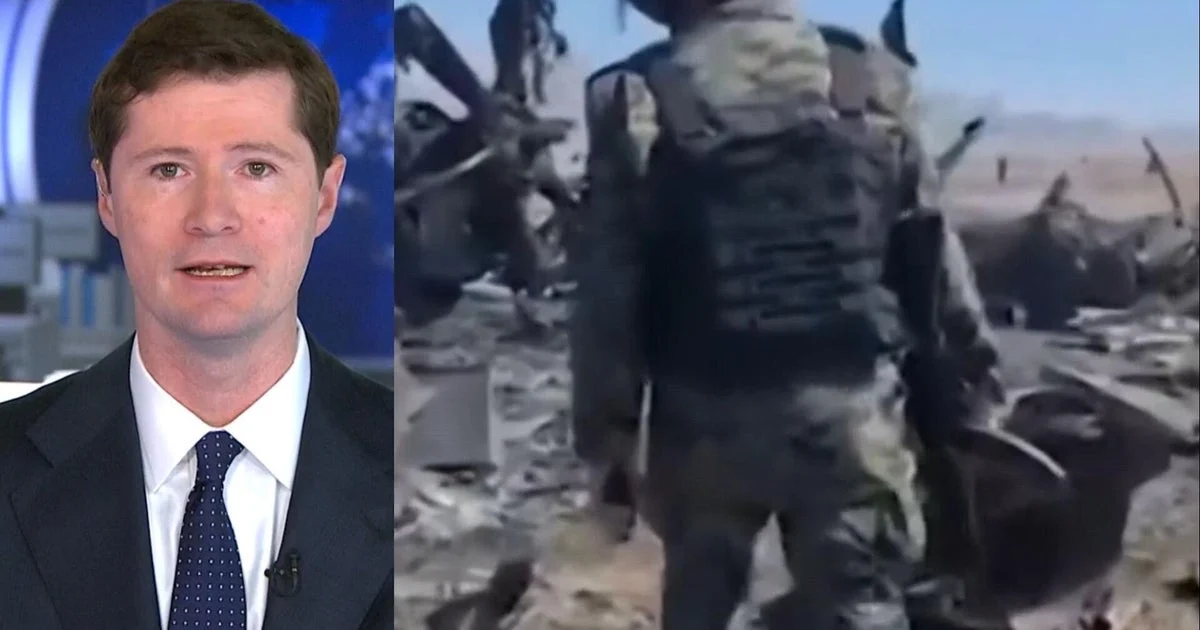
Retired U.S. Marine and CBS News national security analyst Aaron MacLean provided his insights on the complexities involved in rescue missions after Iran shot down a U.S. fighter jet on Friday. The incident occurred amid escalating tensions in the Strait of Hormuz, where President Donald Trump has issued stern warnings against Iran.
MacLean joined “CBS Mornings” to evaluate the operational and strategic challenges faced by U.S. forces in recovering the crew members from hostile territory. He highlighted the dangers associated with launching rescue missions in contested airspace controlled by Iranian military forces.
The Strait of Hormuz remains a critical maritime chokepoint for global oil shipments, contributing to its strategic importance and sensitivity. President Trump’s threats reflect ongoing U.S. efforts to deter Iran from further aggressive actions that could disrupt regional stability and global energy markets.
Why it matters
The downing of the U.S. fighter jet represents a significant military confrontation that raises the stakes for U.S.-Iran relations. Successful or failed rescue operations not only impact the safety of American personnel but also influence diplomatic and military calculations in a volatile region. The Strait of Hormuz’s status as a vital oil transit route adds urgency to preventing any escalation that might threaten global energy security.
Background
Incidents involving military aircraft and naval forces in the Strait of Hormuz have increased in recent years amid heightened U.S.-Iran tensions. Iran’s military actions, including this recent attack, are part of a broader pattern of challenging U.S. presence in the Persian Gulf. The Trump administration has responded with a combination of military preparedness and sanctions aimed at curbing Iran’s influence and nuclear ambitions.
Read more World News stories on Goka World News.