
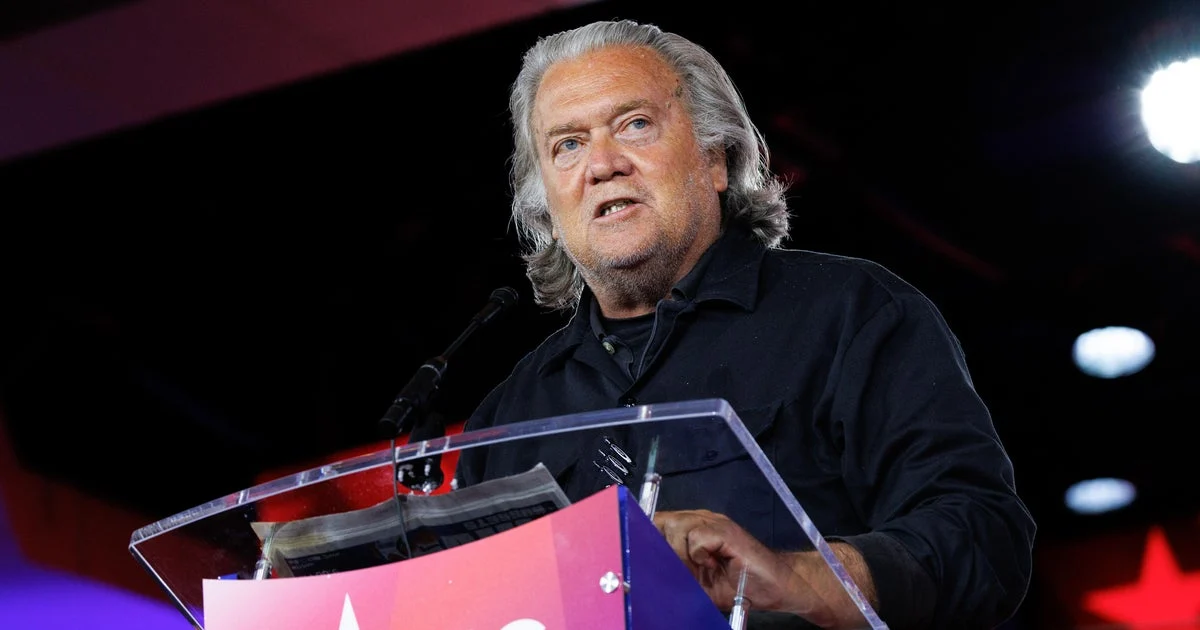
The U.S. Supreme Court on Monday set aside the conviction of Steve Bannon, former White House adviser to President Donald Trump, on two counts of contempt of Congress, removing the legal barrier to dismissing the case. The court’s brief, unanimous order vacated a lower court ruling that upheld Bannon’s conviction and remanded the case to the U.S. Court of Appeals for the D.C. Circuit for further proceedings.
The Justice Department has requested the dismissal of Bannon’s criminal case, and the Supreme Court’s decision clears the way for that step. Bannon had served a four-month prison sentence in 2024 after the Supreme Court denied his request to remain free while appealing the conviction.
Background of the conviction
The contempt charges stem from Bannon’s refusal in 2021 to comply with a subpoena from the House Select Committee investigating the January 6, 2021, attack on the U.S. Capitol. This subpoena sought documents and testimony regarding Bannon’s communications with then-President Trump about efforts to overturn the 2020 presidential election results.
Bannon argued that an assertion of executive privilege by Trump’s legal counsel barred him from providing the requested materials. While Bannon served as Trump’s chief strategist early in his first term, he was a private citizen during the 2020 election.
After Bannon refused to comply with the subpoena, the House of Representatives voted to hold him in contempt. He was subsequently indicted on two criminal contempt counts and pleaded not guilty. During his 2022 trial, Bannon shifted position, expressing willingness to testify and asserting that Trump had waived executive privilege. Despite this, a jury convicted him on both counts.
A three-judge panel of the U.S. Court of Appeals for the D.C. Circuit upheld the conviction in May 2024. Bannon’s legal team described the prosecution as “ill-conceived” and “unjust” in filings to the Supreme Court. Meanwhile, the government, represented by Solicitor General D. John Sauer, said dismissing the case served the “interests of justice.”
Why it matters
The Supreme Court’s reversal of Bannon’s conviction and the potential dismissal of his case mark a significant development in legal battles over congressional subpoenas and executive privilege claims. It also closes a chapter in one of the most high-profile prosecutions connected to the January 6 investigation and underscores the complexities of enforcing congressional oversight through criminal contempt charges.
Read more Politics stories on Goka World News.