
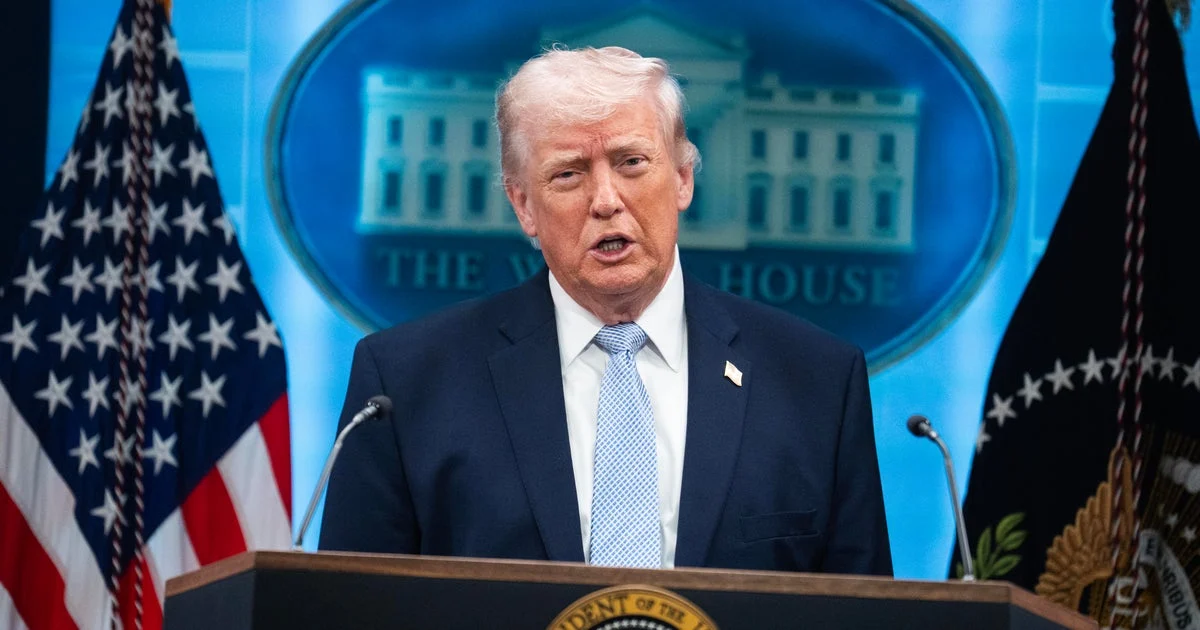
President Donald Trump issued a stark warning to Iran, stating that “a whole civilization will die tonight” if his deadline for a nuclear and strategic deal is not met by 8 p.m. Eastern Time on Tuesday. The president framed the deadline as critical to reopening the Strait of Hormuz and preventing military conflict.
In a post on his social media platform Truth Social on Tuesday morning, Trump emphasized the urgency of the moment, calling it “one of the most important moments in the long and complex history of the World.” He expressed hope for a breakthrough, suggesting “revolutionarily wonderful” outcomes if “different, smarter, and less radicalized minds” take control in Iran.
Trump has threatened to order attacks to destroy Iran’s power plants and bridges should the deadline pass without agreement. Speaking Monday at the White House, he warned, “the entire country could be taken out in one night, and that night might be tomorrow night.”
This announcement follows renewed diplomatic engagement. Trump told reporters on Monday that Iran had presented a “significant” but “not good enough” proposal, describing the Iranians as negotiating “in good faith” and as an “active, willing participant” in ongoing talks.
Ahead of the deadline, U.S. forces conducted strikes on military targets on Iran’s Kharg Island, a key site for the country’s oil exports. U.S. officials clarified that oil infrastructure was not targeted in these operations, consistent with similar attacks carried out earlier in March.
Trump’s escalated rhetoric has drawn criticism from Congressional Democrats concerned about the risk of military escalation. Senate Minority Leader Chuck Schumer described the president as “an extremely sick person.” House Minority Leader Hakeem Jeffries urged Republicans to oppose what he called the “madness” and called for bipartisan resistance to war.
Some Democratic lawmakers called for invoking the 25th Amendment or impeachment proceedings against Trump, while others demanded that Congress reconvene immediately to respond to the crisis.
Republican voices expressed caution; Senator Ron Johnson of Wisconsin stated he did not support attacks on civilian infrastructure.
The situation remains tense with the looming deadline potentially triggering significant geopolitical and security consequences in the Middle East and beyond.
Why it matters
A potential military strike against Iran’s critical infrastructure risks escalating conflict in a volatile region and could disrupt global oil supplies given Iran’s control of the Strait of Hormuz. The U.S. threat raises concerns over international stability and the risk of direct confrontation between Washington and Tehran.
Background
The Strait of Hormuz is a strategic maritime chokepoint through which approximately 20% of global oil trade passes. Iran has previously threatened to close the strait amid sanctions and diplomatic disputes. President Trump’s administration has pressured Iran over its nuclear program and regional influence, combining sanctions and military posturing in efforts to force compliance with U.S. demands. Trump’s current hardline stance reflects ongoing tensions and unresolved negotiations from prior agreements dismantled by the U.S. in earlier years.
Read more Politics stories on Goka World News.