
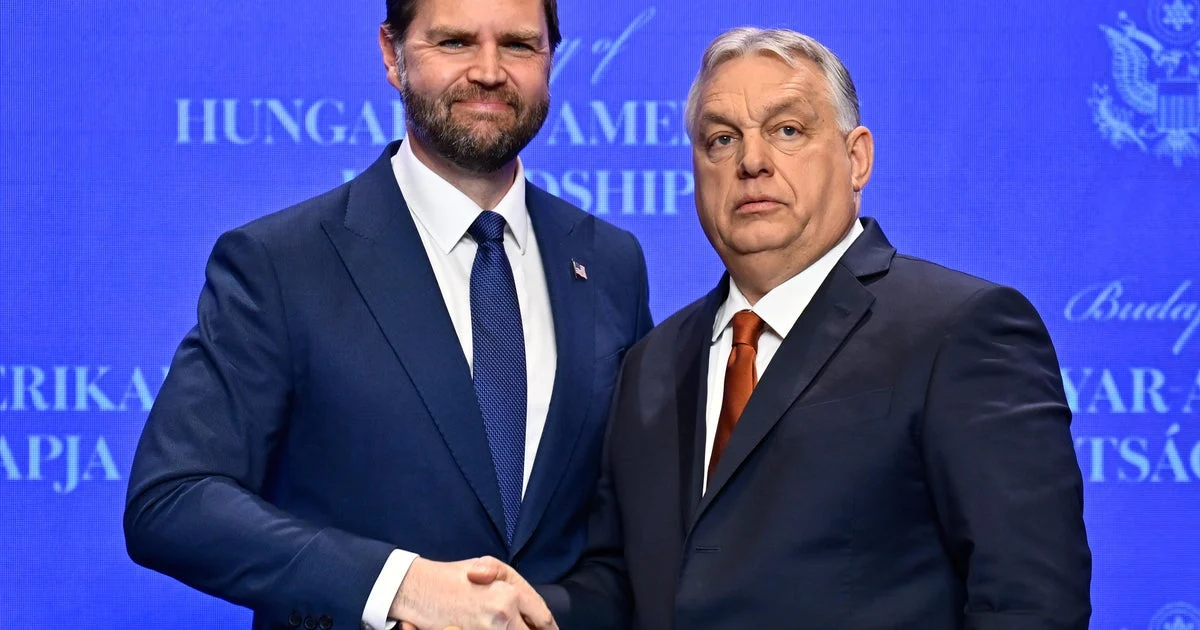
Vice President JD Vance expressed confidence on April 7 that Iran will respond before the U.S. deadline of 8 p.m. ET Tuesday amid high-stakes negotiations to resolve tensions related to the Strait of Hormuz. Speaking in Budapest during a meeting with Hungarian Prime Minister Viktor Orbán, Vance said despite delays typically seen in Iranian communications, he expects a reply from Tehran by the deadline set by President Donald Trump.
Trump has threatened to destroy Iran if a peace deal is not reached by the deadline. Vance outlined two potential outcomes: Iran could agree to a deal, or the worsening economic situation in the country will continue. He emphasized that the United States has largely fulfilled its military objectives but remains focused on limiting Iran’s ability to manufacture weapons.
Vance suggested that Iran’s attacks on U.S. partners in the Middle East are an attempt to inflict economic hardship due to the successful U.S. military efforts. Meanwhile, in Washington, Trump issued a stark warning on Truth Social, asserting that “a whole civilization will die tonight,” referring to Iran, though he also hinted at potential regime change that could lead to positive outcomes.
During the Budapest meeting, Vance highlighted the partnership between the U.S. and Hungary as a defense of Western civilization under the leadership of Trump and Orbán. He praised shared values such as freedom of speech, rule of law, and Christian principles. The meeting took place days before Orbán’s bid for a fifth consecutive term as Hungarian prime minister, a controversial figure labeled by some experts as an “illiberal democrat.”
Vance also mentioned receiving a message from U.S. special envoy Steve Witkoff about ongoing negotiations but did not disclose details. Concurrently, U.S. forces conducted strikes on Iranian military targets on Kharg Island.
Why it matters
The upcoming deadline amplifies the risk of military conflict in a strategically crucial region. Iran’s response—or lack thereof—will signal whether diplomacy can avert further escalation. The Strait of Hormuz is a vital artery for global oil shipments, and instability there could have significant geopolitical and economic repercussions. Additionally, Vance’s alliance-building with Orbán underscores U.S. efforts to solidify support among ideological partners amid global security challenges.
Background
President Trump set a firm deadline of April 7 for a peace agreement with Iran, threatening military action if talks fail. Iran has historically been slow in negotiations, and the economic situation in the country has deteriorated under international sanctions. Hungary’s Orbán, whose government is rated “partly free” by Freedom House due to concerns over democratic backsliding, enjoys strong support from Trump and now from Vice President Vance, reflecting a shift in U.S. foreign alliances.
Read more Politics stories on Goka World News.