
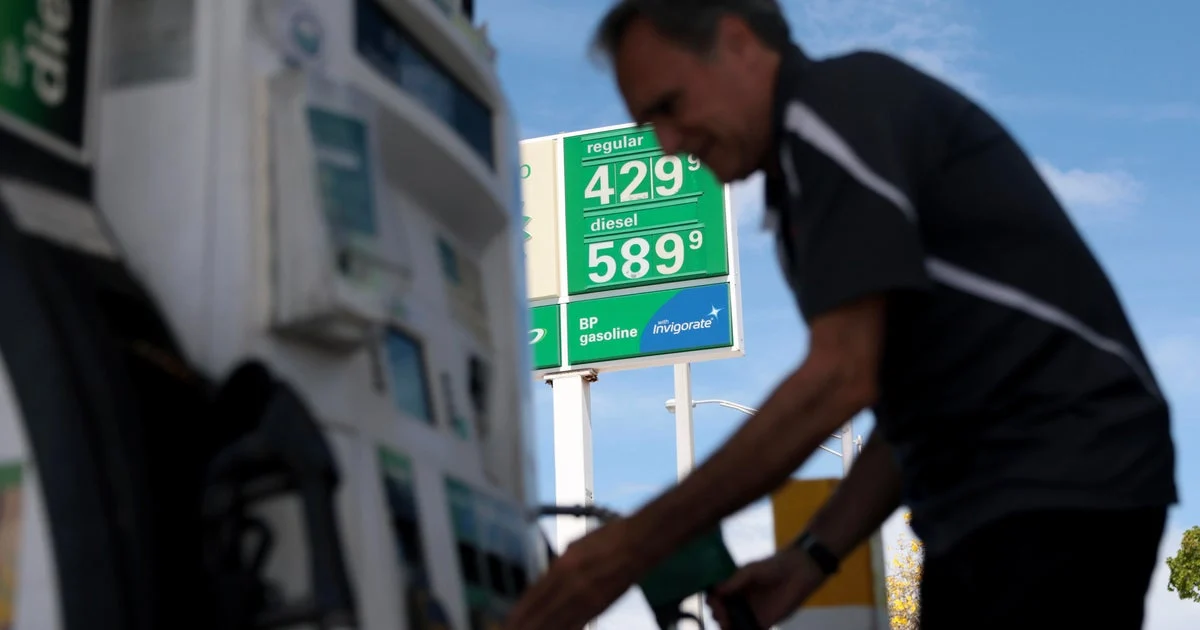
Gasoline prices in the United States could exceed $5 per gallon as early as late April if the Strait of Hormuz remains closed, J.P. Morgan energy analysts warned this week. The closure, linked to the ongoing conflict involving Iran, threatens to further disrupt global oil shipments through this critical waterway.
Since the Iran war began in February, gas prices in the U.S. have already risen by $1.16 per gallon, pushing the national average to $4.14 as of Tuesday, according to AAA data. Prior to the conflict, prices averaged $2.98 per gallon. Analysts at J.P. Morgan estimate that if these increased prices persist for the remainder of the year, U.S. consumers could face an overall $100 billion reduction in purchasing power.
“Every 10-cent rise in the average price of regular gasoline this year would add just over another $12 billion to the annual outlays for gasoline,” J.P. Morgan said in a client note. The report also highlighted that higher pump prices may offset much or all of the expected larger tax refunds many Americans anticipate due to last year’s Republican-backed tax and spending bill.
Petroleum expert Patrick De Haan of GasBuddy agrees with the assessment, noting that new records for gasoline and diesel prices “are possible” if the situation does not deescalate soon. He added that President Trump’s recent threats to escalate military action against Iran could further exacerbate price spikes.
The Strait of Hormuz, a narrow but vital channel through which a significant portion of the world’s oil passes, has seen drastically reduced ship traffic since the war—dropping from about 130 daily transits in February to six in March, according to a United Nations panel. Although there was a slight increase over the recent weekend with 21 ships passing through, the flow remains far below normal levels.
President Trump issued a stern ultimatum on Tuesday via social media, demanding Iran reopen the strait by 8 p.m. Eastern Time or face unspecified consequences. In interviews and speeches, he has emphasized the need for free passage of oil shipments and urged countries dependent on Middle Eastern oil to take the lead on protecting these supply routes, given the U.S. imports relatively little oil from the region.
Why it matters
The closure of the Strait of Hormuz directly threatens global oil supply chains, risking a substantial increase in fuel costs for American consumers already grappling with inflationary pressures. Rising gasoline prices reduce discretionary spending, potentially slowing economic growth. The strategic importance of the strait also complicates geopolitical tensions, as military escalation could further disrupt energy markets and global trade.
Background
The Strait of Hormuz is a crucial maritime chokepoint through which approximately 20% of the world’s oil passes. Recent conflicts involving Iran have prompted threats and closures of the strait, affecting international oil shipments and contributing to volatility in global energy markets. U.S. gasoline prices last neared $5 per gallon in 2022, reaching an inflation-adjusted all-time high amid severe inflation pressures.
Read more Business stories on Goka World News.