
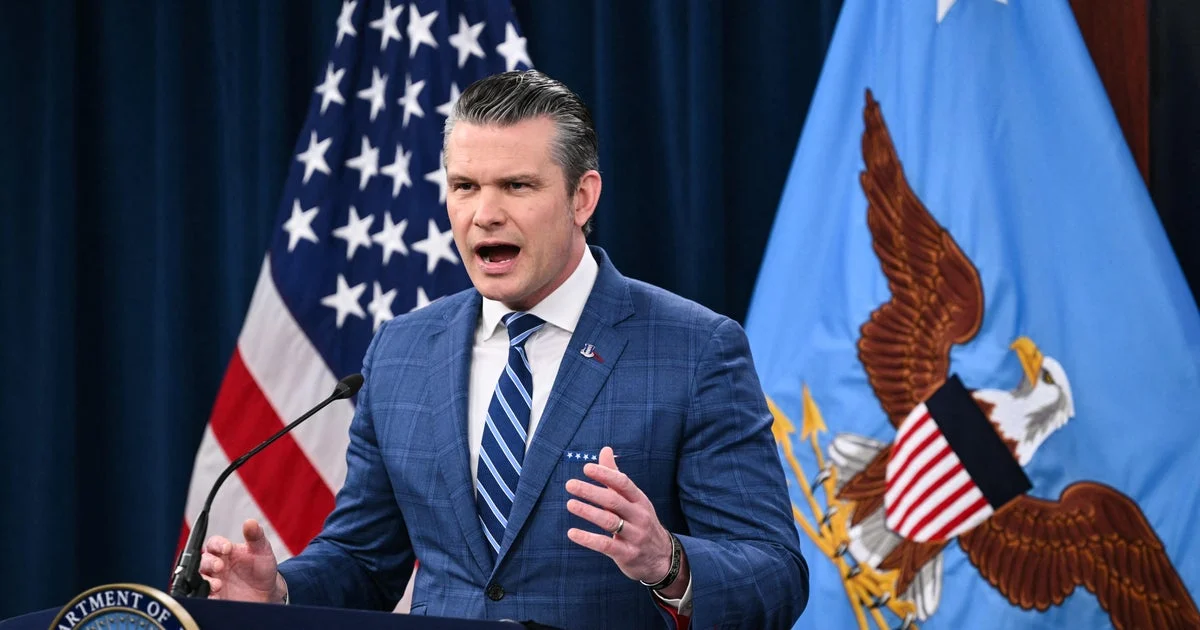
Defense official Pete Hegseth stated on April 8, 2026, that U.S. forces will remain in the Middle East despite the recently declared two-week ceasefire with Iran, underscoring that American troops are prepared to defend or resume offensive operations if needed. This announcement followed President Donald Trump’s late Tuesday declaration to suspend bombing and attacks against Iran for two weeks.
At a Pentagon briefing, Hegseth affirmed that while the military’s primary objectives in the campaign—dubbed “Epic Fury”—have been met and exceeded, the U.S. is not withdrawing. He said, “we’ll be hanging around” to ensure Iran complies with the ceasefire terms and prevent nuclear weapon development. “Iran knows this agreement means that they will never, ever possess a nuclear weapon,” he added.
Hegseth credited the U.S. military operation with decisively crippling Iran’s military capabilities in just under 40 days. He described Iran as a longstanding threat and stated that the campaign rendered its forces “combat ineffective for years to come.”
The ceasefire agreement entails halting uranium enrichment and working collaboratively with Iran to remove deeply buried nuclear materials, according to Trump. Iran’s foreign minister, Seyed Abbas Araghchi, confirmed that Iran agreed to stop “defensive operations” such as drone and missile strikes, provided U.S. attacks cease. Araghchi also noted coordination to allow “safe passage through the Strait of Hormuz.”
Following the ceasefire announcement, maritime activity in the Strait of Hormuz resumed, with multiple ships passing through the strategic waterway, vital to global oil transport. Meanwhile, oil prices dropped below $100 per barrel for the first time since the conflict began, and U.S. stock markets surged.
At least three explosions were reported near Iran’s Lavan Island Oil Refinery hours after the ceasefire was announced, though it remained unclear whether these were linked to U.S. or Israeli forces. While Israel has agreed to the two-week ceasefire with Iran, it clarified that the agreement does not affect its ongoing conflict with Hezbollah in Lebanon.
Joint Chiefs Chairman General Caine emphasized that U.S. forces successfully achieved all military objectives during the 38-day operation and welcomed the ceasefire, expressing hope that Iran will pursue lasting peace.
Why it matters
The ceasefire marks a pivotal moment in de-escalating nearly two months of intense military conflict between the U.S. and Iran. The continued U.S. military presence signals a commitment to enforce compliance with non-proliferation terms and regional stability, particularly safeguarding critical shipping lanes like the Strait of Hormuz. The agreement also impacts global oil markets and international diplomatic dynamics, as key players like Israel coordinate their position in the region.
Background
The conflict escalated over 47 years of hostility between the U.S. and Iran, culminating in the recent large-scale U.S. military operation Epic Fury, aimed at dismantling Iran’s military capacity and nuclear ambitions. The operation reportedly achieved rapid success in debilitating Iran’s infrastructure and combat forces, prompting urgent diplomatic efforts to establish a ceasefire to prevent further escalation and regional instability.
Read more US News stories on Goka World News.