
President Donald Trump announced a conditional two-week ceasefire agreement with Iran on April 7, 2026, contingent upon Iran agreeing to a “complete, immediate, and safe opening” of the Strait of Hormuz. This move is part of ongoing negotiations facilitated by Pakistan aimed at de-escalating tensions in the Middle East.
Trump conveyed the announcement on his social media platform Truth Social, stating that Iran provided a 10-point peace proposal that he described as a “workable basis on which to negotiate.” He emphasized that most contentious issues between the United States and Iran had been addressed and that the ceasefire period would allow time to finalize a long-term peace agreement.
Ceasefire details and international responses
The ceasefire agreement includes a commitment by both sides to halt hostilities for two weeks while talks continue. A White House official confirmed that Israel has agreed to the contours of the ceasefire, although specific terms endorsed by Israel were not publicly disclosed. The agreement also covers fighting involving Iran-backed militias in Lebanon, according to Pakistani Prime Minister Shehbaz Sharif.
Following Trump’s announcement, Iran’s Supreme National Security Council confirmed the ceasefire and the framework proposed in the 10-point peace plan. The council stated that safe passage through the Strait of Hormuz would be permitted for two weeks via coordination with Iran’s armed forces, acknowledging current technical limitations. However, Iran maintains control over the strait under this arrangement.
Iran’s 10-point proposal reportedly includes demands for the withdrawal of U.S. combat forces from the region, lifting of sanctions, and an end to military actions against groups it collectively terms the “Axis of Resistance,” which includes Hamas, Hezbollah, and the Houthis. The United States has not publicly confirmed details beyond the ceasefire and the reopening of the strait.
Escalation before the ceasefire and regional impact
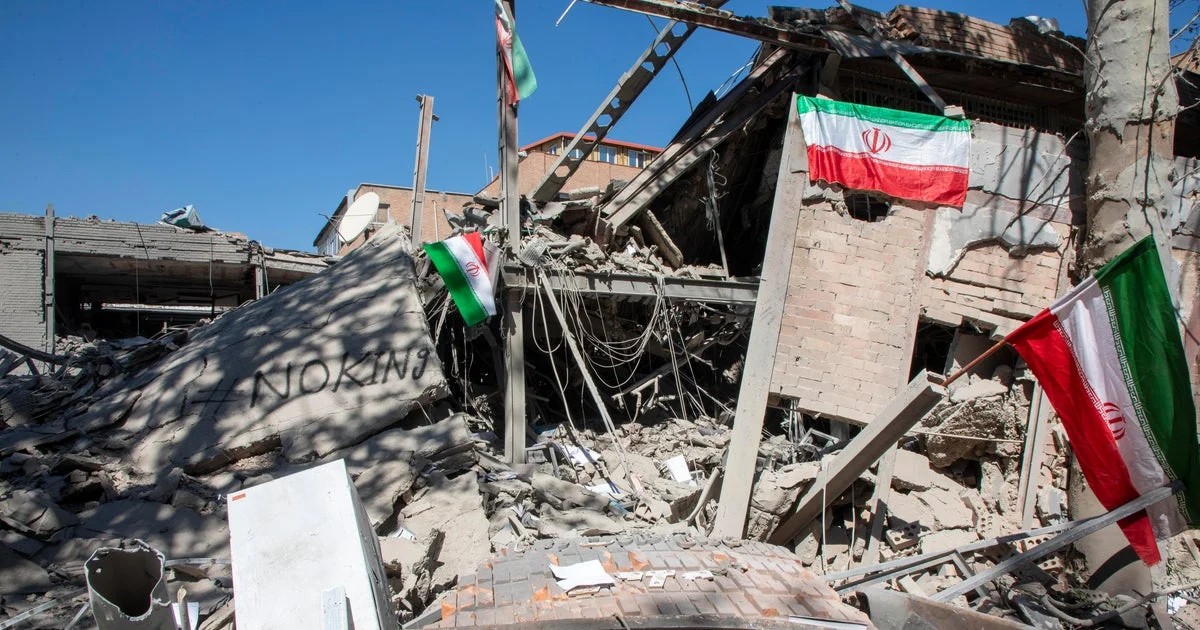
Prior to the ceasefire agreement, U.S. and Israeli forces intensified strikes against Iranian military targets, including attacks on Iranian railways, bridges, and the oil-export hub of Kharg Island. Iranian officials reported at least 18 civilian deaths from the strikes in one province.
Amid the heightened conflict, Iran called for young people to form human chains around the country’s power plants as a show of unity and resistance. Meanwhile, the release of American journalist Shelly Kittleson by an Iranian-backed militia in Iraq was confirmed, conditional on her immediate departure from the country.
Next steps in negotiations
Iran’s Supreme National Security Council announced that peace talks would begin on April 10, 2026, in Islamabad, Pakistan, with the option to extend the negotiation period by mutual agreement. It remains unclear whether U.S. officials will participate in person. The Pakistani government has played a significant intermediary role in facilitating dialogue between the two nations.
Why it matters
The Strait of Hormuz is a strategic chokepoint through which a significant portion of the world’s oil supply passes. Its closure or blockade would severely disrupt the global energy market and escalate geopolitical instability. The conditional ceasefire and reopening of the strait could reduce immediate conflict risks and contribute to stabilizing oil prices, which have fluctuated sharply amid the regional tensions.
Moreover, the ceasefire marks a potential thaw in hostilities that could pave the way for a broader peace agreement between the United States, Iran, and their allies, impacting regional security dynamics.
Read more World News stories on Goka World News.