
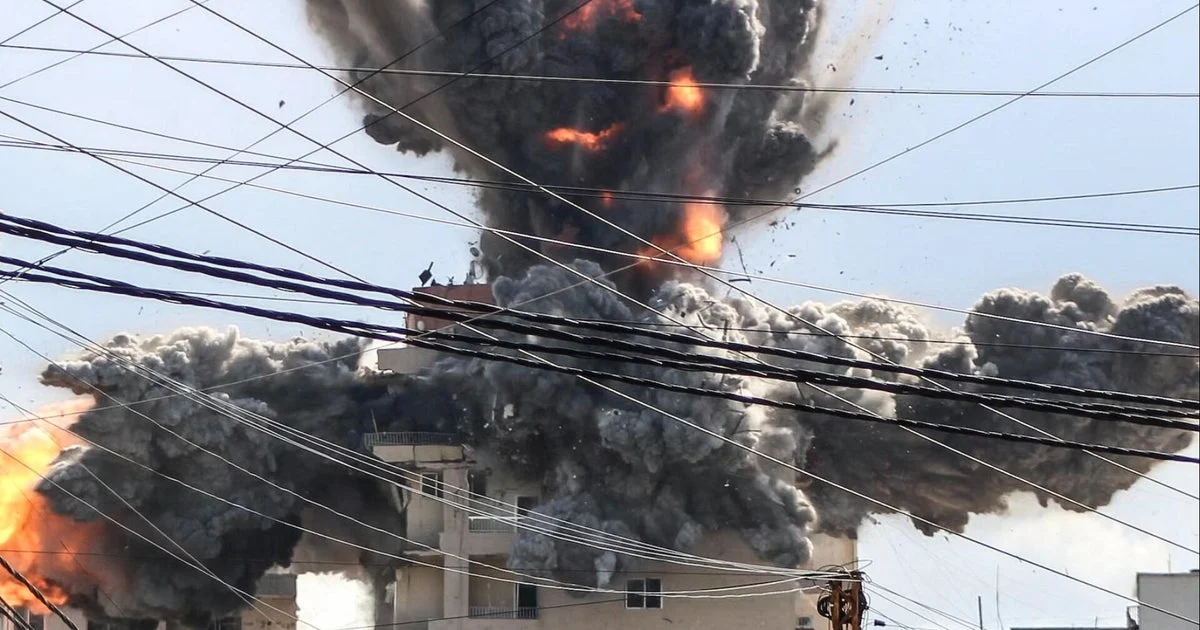
Israel launched a significant military offensive against Hezbollah, the Iranian-backed militia based in Lebanon, on Wednesday, just hours after a ceasefire agreement with Iran was announced. The sudden escalation has raised concerns about the stability of the fragile truce.
The Israeli attack targeted Hezbollah positions, marking a sharp increase in hostilities between the two longtime adversaries. Details on the scale and specific locations of the strikes have yet to be fully disclosed, but the offensive signals Israel’s intent to directly confront Hezbollah’s growing influence in Lebanon.
Heightened tensions following ceasefire announcement
The ceasefire between Israel and Iran was declared less than 24 hours before Israel’s offensive began, highlighting the volatility of the current situation in the region. Although the truce aimed to reduce hostilities, the rapid Israeli operation against Hezbollah indicates underlying tensions remain unresolved and may derail peace efforts.
Hezbollah, which is closely aligned with Iran, has been a key player in Lebanon’s security dynamics and a persistent threat to Israel due to its extensive arsenal and regional ambitions. The group’s involvement in the conflict reflects the broader struggle between Iran and Israel for influence across the Middle East.
Potential regional impact
The offensive complicates the security landscape in Lebanon, where Hezbollah holds significant military and political power. It also raises the risk of broader confrontation between Israel and Iranian-backed forces, potentially destabilizing neighboring countries.
Why it matters
This development is critical because it threatens to undo an effort to pause hostilities between Iran and Israel, two regional rivals often engaging through proxy groups like Hezbollah. Any escalation could lead to wider conflict across northern Israel and southern Lebanon, affecting civilian populations and international diplomatic initiatives.
Read more World News stories on Goka World News.