
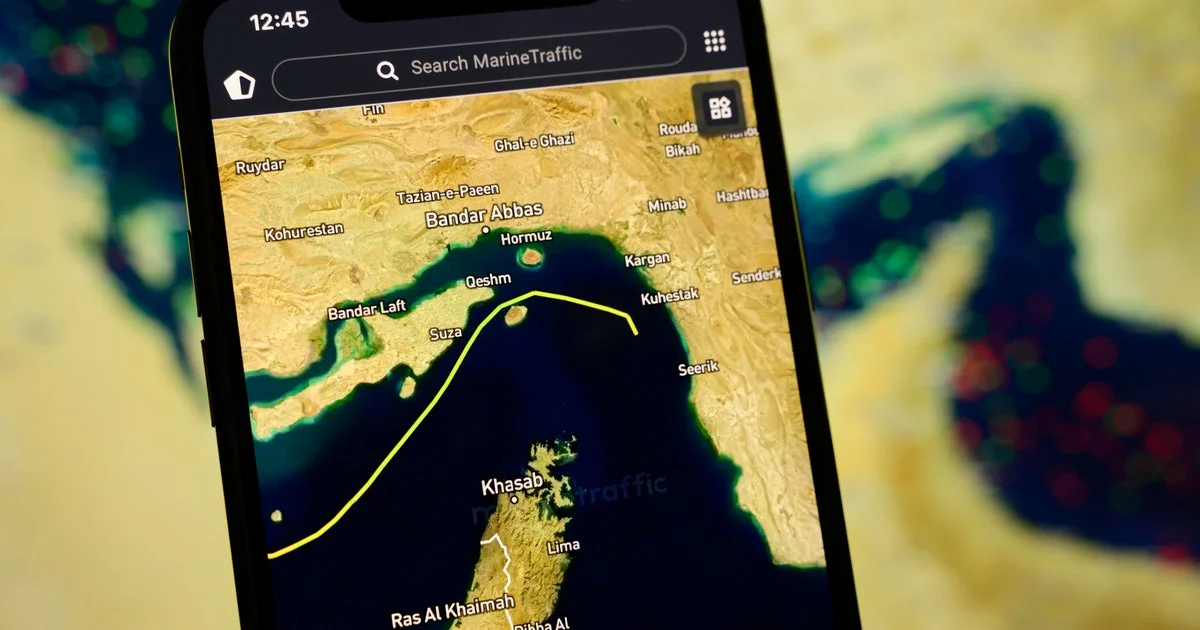
Reports that Iran plans to charge vessels a toll for passing through the Strait of Hormuz have raised alarms over potential impacts on global energy markets and geopolitical stability. The Islamic Revolutionary Guard Corps (IRGC) has established a stringent control regime in the strategic waterway, requiring ships to submit full documentation, obtain clearances, and accept IRGC-escorted transit through a single corridor.
Although Iran has not formally imposed a toll, at least two vessels have reportedly paid fees in Chinese yuan. Tehran indicated it may charge a fee under a prospective peace agreement aimed at reopening the strait, a move that would be unprecedented for this critical trade route connecting the Persian Gulf to global markets.
The Strait of Hormuz normally handles about 20% of the world’s liquefied natural gas and oil supply. However, tanker traffic has sharply declined due to heightened risks, with fewer than 10 vessel crossings daily in recent months compared to the usual 100-plus. This disruption has contributed to global oil prices rising from $65–$73 per barrel pre-conflict to over $95 per barrel.
Economic impact on oil prices and shipping costs
An Iranian toll could be equivalent to about $1 per barrel, potentially adding up to $2 million per tanker crossing. While this surcharge may not drastically increase global oil prices given the low production costs in Persian Gulf countries—around $20 per barrel—it introduces a new variable that could affect market dynamics.
Capital Economics economist Neil Shearing noted that the toll’s main economic consequence might be a persistent risk premium on oil prices, as Tehran could leverage tolls to exert geopolitical pressure. Additionally, shipping industry experts warn that insurance premiums and freight rates are likely to rise due to increased perceived risks, further raising energy costs for consumers.
Geopolitical risks of controlling a vital energy corridor
Experts warn that Iran’s tightening control over the Strait of Hormuz represents significant geopolitical risk by giving Tehran de facto influence over a crucial energy artery. This control could be used as leverage in future conflicts or economic negotiations, amplifying global instability.
Meanwhile, analysts emphasize that damage to oil and gas infrastructure in the Gulf may have a more direct and substantial impact on global energy markets than the toll itself. The narrow, strategic nature of the strait means any disruption—whether through tolls, military actions, or infrastructure damage—can significantly affect supply chains and global energy prices.
Why it matters
The Strait of Hormuz is vital to global energy security, and Iran’s potential toll could disrupt international trade flows of oil and natural gas. The route’s constricted geography already makes it vulnerable to blockages and geopolitical conflict, and Iran’s actions increase the risk of supply disruptions that could exacerbate inflation and economic uncertainty worldwide.
Policy makers, energy markets, and shipping industries will closely monitor Iran’s enforcement of tolls and their broader implications, including shifts in regional power dynamics and energy security strategies.
Read more World News stories on Goka World News.