
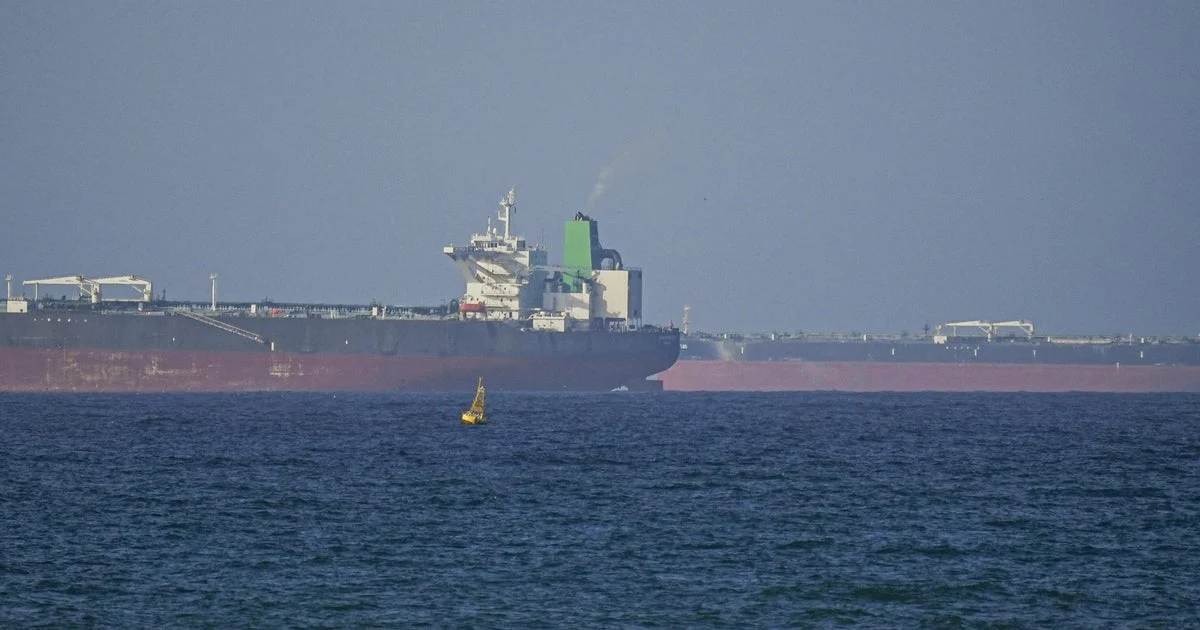
Ship movements through the Strait of Hormuz have stayed dramatically lower than normal since the United States and Iran announced a ceasefire agreement earlier this week, marine transit data shows. The waterway, critical for about 20% of the world’s oil supply, saw only around a dozen vessels cross in the first two days after the deal took effect.
The ceasefire, announced late Tuesday by President Donald Trump, included Iran’s commitment to allow vessels to pass safely through the strait. However, early on Wednesday, Iranian state-linked media reported a suspension of traffic due to Israel’s attacks on Hezbollah in Lebanon, a claim disputed by the White House. Press Secretary Karoline Leavitt emphasized that the Lebanon conflict was not part of the ceasefire terms and reiterated the U.S. demand for the Strait of Hormuz to be reopened immediately and safely.
Vice President JD Vance referred to a “legitimate misunderstanding” about the ceasefire conditions but noted that traffic had seen some increase by Wednesday.
Data from Marine Traffic, a ship tracking company, indicated that on Wednesday and Thursday, at least 12 ships passed through the strait—far below typical volumes before the war. The United Nations Conference on Trade and Development reported that from February 1 to 27, before hostilities began, an average of 129 vessels transited the waterway daily. That number dropped sharply after the war started on February 28, when 74 ships passed that day, and averages fell to six ships daily in March.
Current data shows a slight uptick to roughly 10 ships per day as of early April, though it remains a fraction of normal activity. Of the vessels passing since the ceasefire, about 58% have been oil, chemical, or gas tankers, but only three oil or chemical tankers crossed on Thursday. Those three are under U.S. sanctions for previously transporting Iranian oil. One tanker reportedly carried around 1 million barrels of oil, while another was not loaded.
Matt Smith, lead oil analyst at Kpler, which owns Marine Traffic, highlighted that before the conflict, approximately one-third of the world’s seaborne crude—about 15 million barrels per day—passed through the strait, but current flows have slowed to a “trickle.”
Monitoring movements is complicated by some ships disabling or spoofing their automatic identification system (AIS) transponders, which transmit location data and are used for real-time tracking.
Why it matters
The Strait of Hormuz is a strategic chokepoint responsible for nearly one-fifth of global oil shipments. Disruptions or restrictions on traffic here can significantly influence global oil supply, prices, and energy security. The persistently low vessel flow after the ceasefire raises concerns about the stability of regional maritime commerce and the potential for renewed conflict to disrupt energy markets.
Background
The Strait of Hormuz, located between Oman and Iran, is one of the world’s most important maritime corridors for crude oil and liquefied natural gas. Tensions escalated into open conflict in late February 2026, causing sharp reductions in commercial shipping traffic due to safety concerns and Iranian restrictions. The recent ceasefire aims to restore safe passage, but lingering uncertainties related to broader regional conflicts, including Israeli strikes in Lebanon, continue to affect maritime operations.
Read more Business stories on Goka World News.