
NASA’s Artemis II mission concluded on April 10, 2026, with a parachute-assisted splashdown of the Orion spacecraft in the Pacific Ocean off California. The mission marked the first crewed journey around the moon since the Apollo program, advancing human exploration beyond low Earth orbit.
Launch and early mission operations
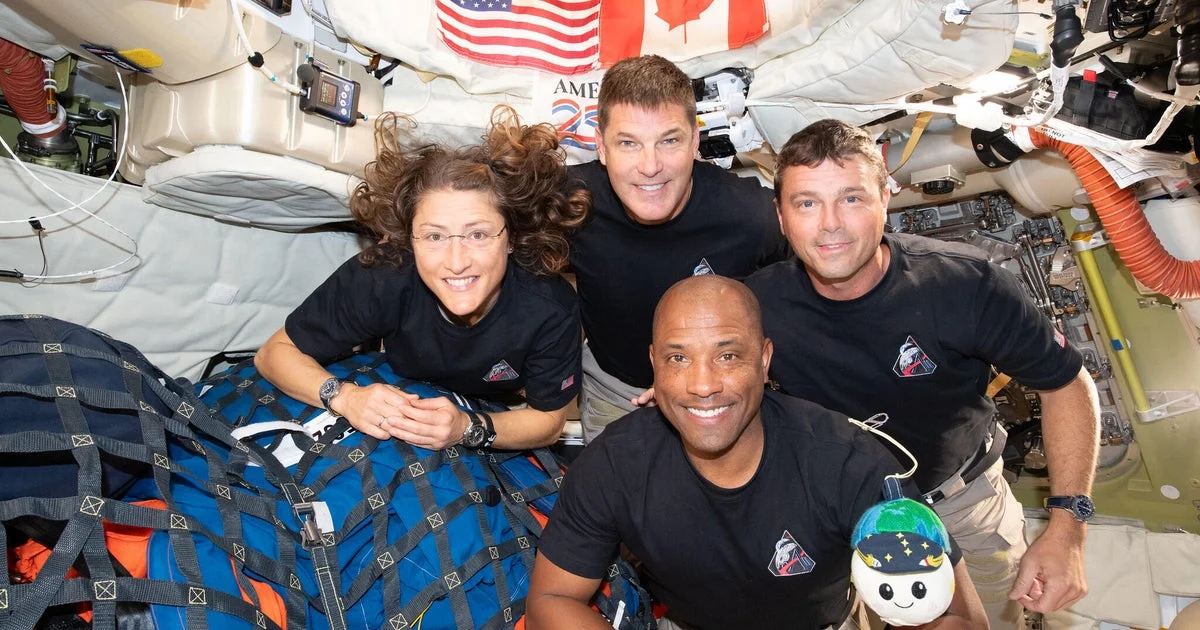
Artemis II launched on April 1, 2026, from Kennedy Space Center in Florida aboard NASA’s Space Launch System rocket, carrying four astronauts: commander Reid Wiseman, pilot Victor Glover, and mission specialists Christina Koch and Jeremy Hansen. This launch was the first time Orion and the SLS rocket flew with astronauts on board, following only one previous uncrewed test flight.
The crew spent approximately 24 hours orbiting Earth immediately after launch, testing the Orion capsule’s life support and environmental control systems—90% of which had never been tested in space with humans aboard. This included crucial checks on carbon dioxide scrubbing and water supply systems to ensure astronaut safety on the deep space journey.
Lunar flyby and new distance record
After verifying spacecraft performance, the crew took photographs of Earth from the capsule, the first such images from Orion since its launch. The four astronauts then began their transit toward the moon, celebrating Easter during the journey and observing the lunar far side, which is never visible from Earth.
During the scripted flyby on April 6, Artemis II passed behind the moon, experiencing a 40-minute communication blackout. At this point, the crew set a new record for the farthest human distance from Earth, reaching 252,756 miles—surpassing Apollo 13’s 1970 record by over 4,000 miles.
Tributes and historic achievements
In a poignant moment, the crew named a small crater on the lunar surface “Carroll,” honoring commander Wiseman’s late wife, Carroll Taylor Wiseman, who passed away in 2020. This tribute was chosen during the pre-launch quarantine period and deeply affected the team.
The astronauts captured rare images of a solar eclipse visible only from space and provided detailed observations of the moon’s terrain, including the rugged terminator line between lunar day and night.
Return to Earth and reentry
On April 10, the Orion capsule reentered Earth’s atmosphere at approximately 24,000 mph, enduring temperatures near 5,000 degrees Fahrenheit on its heat shield. After a critical six-minute communications blackout during peak heating, the spacecraft deployed parachutes and splashed down safely in the Pacific Ocean, ending the 10-day mission.
The successful completion of Artemis II demonstrates NASA’s renewed capability to send humans beyond Earth’s orbit and lays the groundwork for future lunar landings and deeper space exploration.
Why it matters
Artemis II’s mission represents a critical step in NASA’s Artemis program, reigniting human lunar exploration after a half-century hiatus. It validates the performance of new spacecraft and systems intended to sustain longer, more complex missions, ultimately aiming for sustained human presence on the moon and future missions to Mars. By surpassing previous distance records and navigating the moon’s far side, Artemis II also enhances understanding of deep space travel challenges and opportunities.
Read more US News stories on Goka World News.