
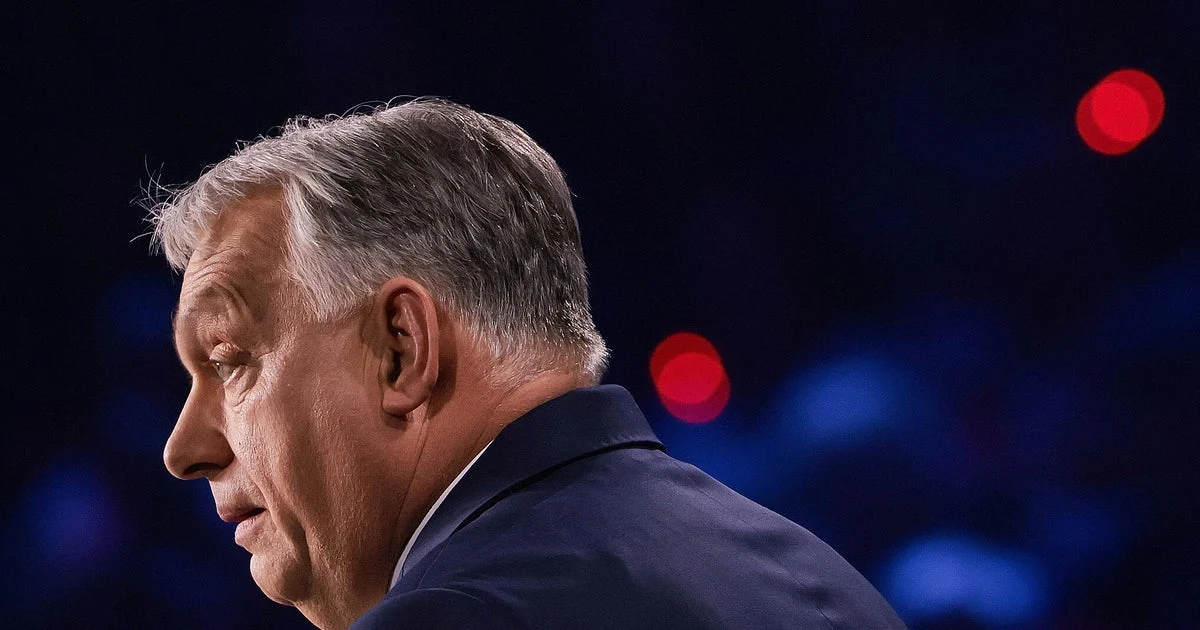
Hungary’s far-right Prime Minister Viktor Orbán, who has led the country for 16 years, faces a strong challenge in the April 2026 parliamentary elections as his Fidesz party trails the center-right opposition Tisza Party. Recent polls show Orbán’s party holding 37% support compared to 50% for the opposition, signaling a potential end to his nearly two-decade rule.
Orbán’s Leadership and Criticism
Orbán has been a controversial figure internationally, particularly admired by some US conservatives and former President Donald Trump, who publicly endorsed him on social media days before the election. Orbán has driven policies marked by efforts to centralize power, weaken independent institutions, restrict media freedom, and enact laws targeting migrants and LGBTQ communities. Human Rights Watch has documented discrimination and xenophobic rhetoric from Orbán, including describing refugees as “Muslim invaders.”
Transparency International ranks Hungary as the most corrupt country in the European Union, citing Orbán’s undermining of judicial independence. Freedom House classifies Hungary as “partly free,” noting restrictions on democratic processes under his tenure.
US-Hungary Relations and Conservative Support
Orbán’s relationship with former US President Trump has been notably close, with Orbán endorsing Trump’s 2016 campaign and both leaders promoting similar nationalist and anti-immigration agendas. Vice President JD Vance campaigned with Orbán during a recent rally in Budapest, emphasizing shared values of sovereignty and Western civilization. Conservative think tanks such as the Heritage Foundation have praised Orbán’s governance style, and his government hosted a US-Hungarian civilian nuclear cooperation agreement in early 2026.
Geopolitical Context: Ukraine and Russia
The election carries significant implications amid the ongoing war in Ukraine. Orbán has opposed EU support for Ukraine, maintaining warm ties with Russian President Vladimir Putin, while the Tisza Party advocates deeper Western integration. Hungary’s reliance on Russian oil has increased since 2022, with 93% of its oil imports coming from Russia in 2025, complicating EU energy policy and sanctions efforts.
A recent dispute over the Druzhba oil pipeline between Hungary, Ukraine, and the EU has heightened tensions. Hungary blocked a €90 billion EU loan to Ukraine until pipeline transit resumed, and Orbán’s government opposes further military aid to Kyiv. Ukrainian President Volodymyr Zelenskyy has publicly criticized Orbán, escalating political tensions between the two countries.
Leaked communications show Hungarian officials coordinating with Russian diplomats, and there are unverified reports of Russian efforts to boost Orbán’s popularity, including staged events. While US officials acknowledge such reports, Vice President Vance also pointed to Ukraine’s pipeline actions as attempts to influence the Hungarian vote.
Why it matters
The outcome of Hungary’s election may reshape the country’s political orientation and its role within the EU, particularly regarding democratic governance and foreign policy in the context of the Ukraine conflict. A loss for Orbán could lead to changes in Hungary’s alignment with Russia and the EU, impacting broader regional stability and energy security in Europe.
Read more Politics stories on Goka World News.