
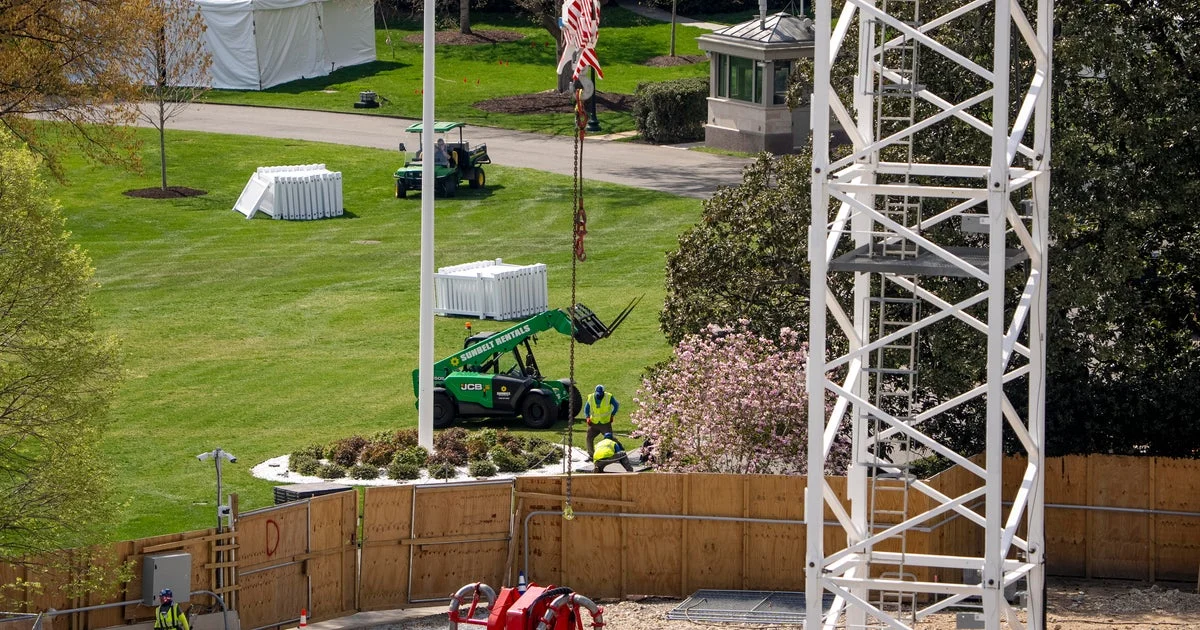
A federal appeals court has instructed a judge to reconsider the national security factors involved before halting construction on President Trump’s $400 million White House East Wing ballroom. The U.S. Court of Appeals for the District of Columbia Circuit ruled Saturday that the lower court lacked sufficient information to determine whether suspending work on the project could compromise the safety of the president, his family, or White House staff.
The case was returned to U.S. District Judge Richard Leon, who in a March 31 ruling barred continued construction without congressional approval but temporarily suspended enforcement of that injunction for 14 days. The appellate panel extended the suspension by three days to April 17 to allow the administration time to seek Supreme Court review.
Government lawyers contend the project includes critical security upgrades designed to protect against threats such as drones, ballistic missiles, and biohazards. They argue that halting construction could jeopardize national security, noting features underneath the ballroom, including bomb shelters, military installations, and a medical facility.
Judge Leon initially allowed construction needed for safety and security to continue, having reviewed sensitive government submissions in private. He ruled the preservationist group challenging the project was likely to prevail in court because the president lacks clear authority to proceed without congressional authorization. The administration’s appeal emphasized the importance of below-ground security elements, which it claimed could be constructed separately from the ballroom’s above-ground structure.
However, the appeals court found this position inconsistent, noting the White House later portrayed the security features as “inseparable” from the ballroom construction, creating uncertainty about which parts of the project are essential for protection and should proceed.
The lawsuit was filed in December by the National Trust for Historic Preservation, a group that opposes the demolition of the White House East Wing’s historic elements to build the 90,000-square-foot ballroom, which Trump said will accommodate 999 guests. The group seeks consultation and congressional oversight, emphasizing stewardship of the White House’s historical significance.
Despite ongoing legal challenges, the project received final approval in early April from an oversight agency stocked with Trump allies. Public funds are reportedly being used to finance underground security improvements, while Trump claims private donations cover the ballroom itself.
The appeals panel is composed of judges appointed by presidents Obama, Trump, and Biden, reflecting a bipartisan bench. Judge Neomi Rao, appointed by Trump, dissented, citing a statute permitting the president to undertake White House improvements and emphasizing government evidence of ongoing security vulnerabilities made worse by construction delays.
Why it matters
This ruling underscores the tension between presidential authority, historic preservation laws, and national security considerations affecting major White House modifications. The outcome will influence how future structural changes are reviewed and how security requirements weigh against legal and public scrutiny.
Background
The Trump administration’s ballroom project involves the most significant structural alteration to the White House in over 70 years. Critics argue the president overstepped legal bounds by initiating construction prior to securing congressional approval. The legal dispute centers on balancing historic preservation statutes with claimed security imperatives amid the politically sensitive nature of the White House as both a public monument and an active seat of government.
Read more Politics stories on Goka World News.