
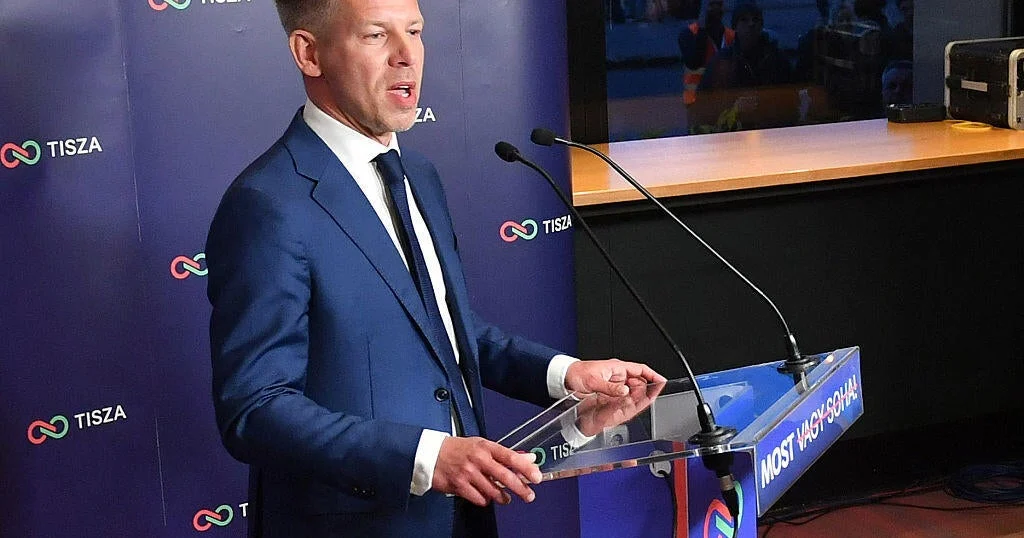
Hungarian Prime Minister Viktor Orbán has conceded defeat in the national election, ending his 16-year tenure as leader. Opposition leader Peter Magyar is poised to win a sizable parliamentary majority, marking a significant change in Hungary’s political landscape.
Orbán, the European Union’s longest-serving head of government and a close ally of former U.S. President Donald Trump, acknowledged his loss Sunday night after describing the election result as “painful.” Speaking to supporters in Budapest, he said, “I congratulated the victorious party. We are going to serve the Hungarian nation and our homeland from opposition as well.”
On social media, Magyar confirmed Orbán’s concession came via a phone call. Early official returns, with 37% of votes counted, showed Magyar’s party leading Orbán’s by 11 percentage points, though the margin could fluctuate as counting continues.
Election turnout and campaign context
Magyar stated that roughly 6 million of Hungary’s approximately 9 million citizens participated in the election. His center-right TISZA party campaigned on a pro-European platform and, despite reports of election irregularities, Magyar expressed cautious optimism about the outcome.
Orbán, 62, praised the campaign’s mobilization efforts after voting but in recent years has faced criticism from EU officials and watchdogs. These groups accused his administration of undermining democratic institutions and eroding the rule of law since Orbán’s initial ascent to power in 2010.
Public opinion and political implications
At polling stations in Budapest, voters expressed support for Magyar, citing Orbán’s perceived alignment with Russia and opposition to the European Union. One young voter described Orbán’s Russia ties as detrimental to Hungary’s interests, while another emphasized the need for national unity and a stronger European identity.
Orbán’s alliance with Donald Trump shaped his political profile internationally. The relationship, visible during Trump’s presidency and after, was highlighted last week when U.S. Vice President JD Vance campaigned alongside Orbán in Budapest.
Why it matters
Orbán’s defeat represents a significant political turning point in Hungary, potentially altering the country’s direction on key issues such as EU membership, judicial independence, and foreign relations. The election outcome may also influence broader European Union dynamics, particularly in regard to democratic standards and regional stability.
Read more Politics stories on Goka World News.