
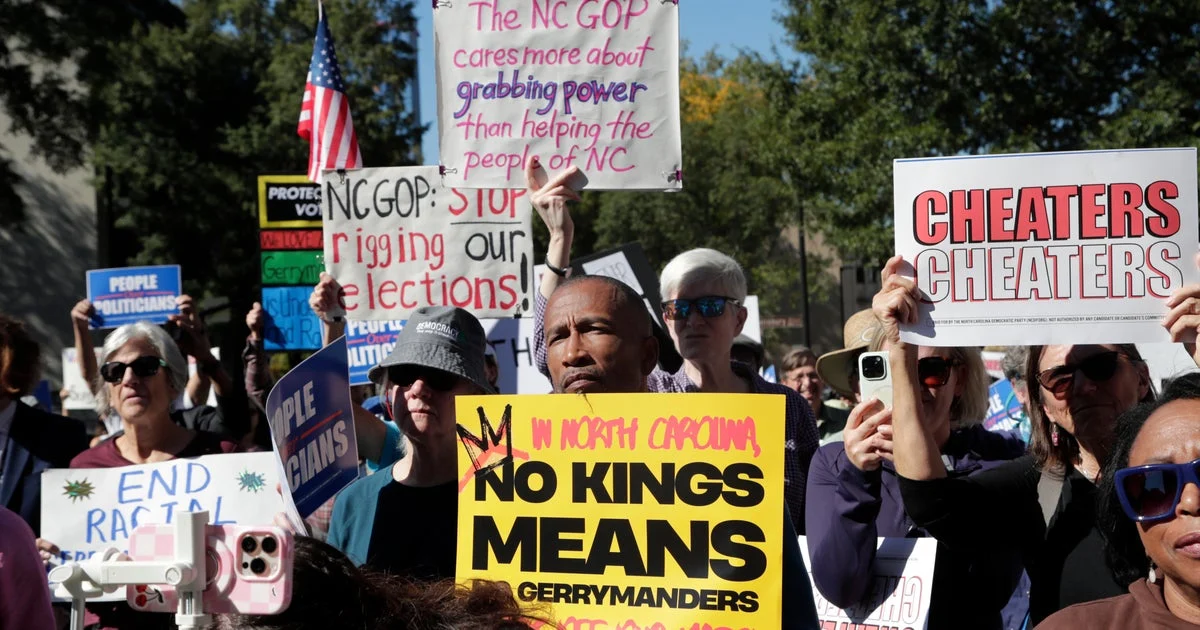
Several states including Texas, California, Missouri, North Carolina, and Utah have engaged in mid-decade redistricting efforts to reshape congressional districts in ways that could advantage their dominant political parties ahead of the 2026 midterms.
State-by-State Redistricting Actions
Texas initiated its redistricting in 2024 under Governor Greg Abbott’s leadership, with legislation designed to create five additional GOP-favorable congressional seats. The state holds 38 House seats, 25 currently held by Republicans and 13 by Democrats. The new maps target districts in the Rio Grande Valley and Dallas-Fort Worth areas, shifting Democratic strongholds to reduce their advantage and alter demographic balances in several districts. For example, Democratic Rep. Al Green’s Houston district changed from 72% Democratic to 40% Democratic under the new maps. However, a U.S. District Court panel initially blocked the maps, citing racial gerrymandering concerns, though the Supreme Court later reinstated them.
California’s redistricting, driven by Governor Gavin Newsom, sought to help Democrats solidify control over its 52 House seats, of which 43 are Democratic and nine Republican. Notable shifts include GOP Rep. David Valadao’s 22nd District in the Central Valley increasing from 47% to 49% Democratic, making it more competitive. Similarly, GOP Rep. Darrell Issa’s 48th District swung from 42% to 52% Democratic. These changes reflect an effort to protect Democratic incumbents and challenge Republican seats.
In Missouri, the Republican-led legislature redrew districts in late 2025 to weaken Democratic incumbents, particularly targeting Rep. Emanuel Cleaver from Kansas City. Cleaver’s district shifted from 62% Democratic to 41% Democratic, though he intends to run for reelection. The map also made neighboring districts slightly more Democratic but retained their Republican leaning. Opponents collected over 300,000 signatures to force a ballot measure on the new map, which a judge is currently reviewing.
North Carolina’s Republicans focused on redrawing the 1st Congressional District held by Democrat Don Davis, who won in 2024. The new boundaries move the district southward, lowering its Democratic percentage from 48% to 44%. The state’s delegation currently comprises 14 seats with 10 Republicans, though the state’s political landscape is increasingly competitive.
Utah’s 2025 redistricting was prompted by a judge ruling that the existing districts violated a voter-approved ban on partisan gerrymandering. The GOP-controlled legislature approved a new map that creates a Democratic-leaning district in Salt Lake City but remains heavily Republican overall as all four current representatives are GOP.
Failed and Contested Efforts in Other States
Indiana’s Republican-majority Senate rejected a proposed map that would have favored Republicans in all nine congressional districts. The session ended amid bomb threats and pressure from former President Trump and his administration. In Maryland, Democratic Governor Wes Moore’s attempt to redraw maps to unseat the state’s only Republican congressperson stalled when the state Senate left the proposal in committee.
Why it matters
Mid-decade redistricting is uncommon but has been employed strategically by both parties to influence control of the House of Representatives ahead of the 2026 midterm elections. These efforts reflect intensified partisan competition in key states where demographic shifts and recent election results have made districts more competitive. The changes made could affect which party holds critical congressional seats, potentially influencing the balance of power in Congress. Legal challenges and voter backlash, such as in Missouri and Texas, highlight ongoing debates about fairness and racial considerations in redistricting.
Background
Congressional maps are typically redrawn once every 10 years following the U.S. Census to account for population changes. This mid-decade redistricting wave was initiated after former President Trump urged Republican-controlled states to create more favorable districts for the GOP to help maintain or expand its slim House majority. Courts have increasingly scrutinized such efforts for racial gerrymandering and partisan bias, leading to legal challenges and adjustments.
Read more Politics stories on Goka World News.