
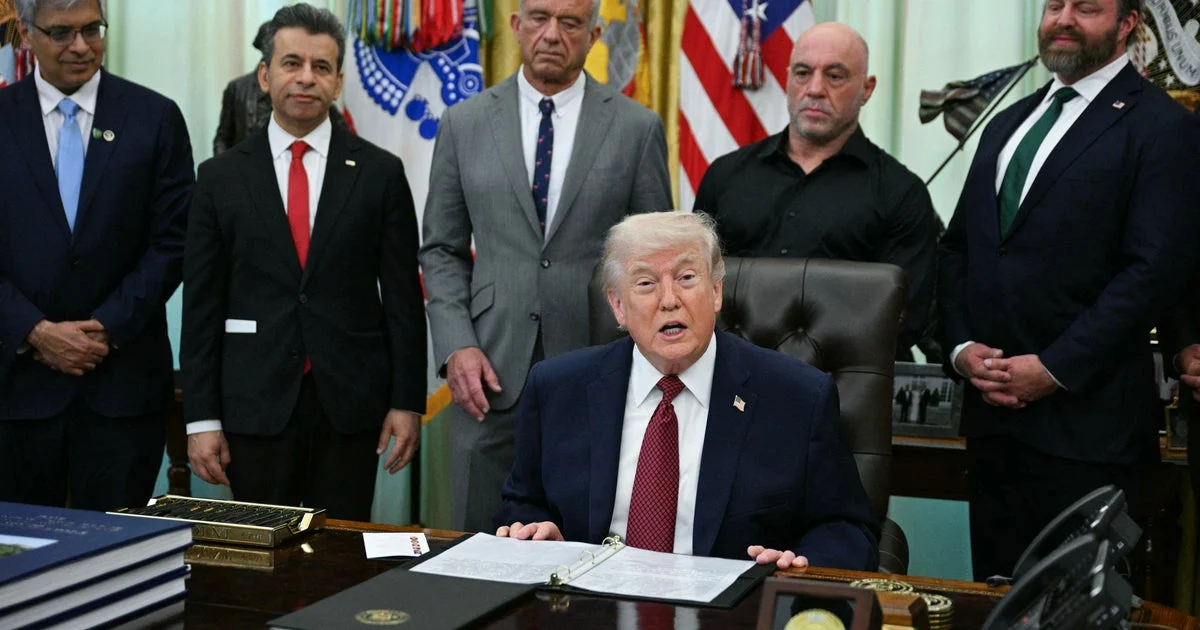
President Donald Trump signed an executive order on April 18, 2026, aimed at easing federal restrictions to accelerate research on psychedelic drugs, including ibogaine, for mental health treatment. The order, signed in the Oval Office with Health and Human Services Secretary Robert F. Kennedy Jr. and podcaster Joe Rogan present, commits the federal government to invest $50 million in psychedelic research and opens pathways to provide access to experimental treatments for severely ill patients.
Federal Support and Regulatory Changes
Trump emphasized the potential of psychedelics to offer new treatments, particularly for veterans suffering from post-traumatic stress disorder (PTSD) and other mental health conditions. Under the executive order, the Food and Drug Administration (FDA) will allow ibogaine to be administered to patients under the FDA’s Right To Try rule, designed to give terminally or critically ill patients access to experimental drugs that have passed initial safety testing but are not yet fully approved.
FDA Commissioner Marty Makary announced that three psychedelic substances would be added to the National Priority Voucher pilot program. This program expedites the drug review process for products that address urgent national health needs, potentially fast-tracking clinical trials and approvals for these treatments. Makary also stated that the FDA would begin allowing human trials for ibogaine to assess its safety and efficacy.
Ibogaine and Its Research Status
Ibogaine is a naturally occurring compound found in the root bark of a shrub native to Africa, historically used in some countries to treat depression, anxiety, addiction, and PTSD. Researchers see promise in its potential to address opioid dependence, but current scientific evidence remains limited. To date, only one double-blind, placebo-controlled randomized clinical trial has been completed, with most data coming from small open-label and observational studies.
Despite recent investments in research, including Texas’ $50 million state funding, ibogaine remains a Schedule I controlled substance in the U.S., classified alongside heroin and ecstasy by the Drug Enforcement Administration. This classification has restricted formal clinical research and medical use.
Health Risks and Safety Concerns
Clinical studies have raised significant safety concerns regarding ibogaine. The drug has been linked to dangerous heart rhythm disturbances, which can be fatal. A 2023 review of 24 studies involving 705 patients reported at least 27 deaths attributed to ibogaine use, highlighting its serious risk profile. Because of these health risks and its illegal status, some Americans currently travel to unregulated clinics in Mexico and the Caribbean to undergo ibogaine treatment.
Why it matters
This executive order represents a notable policy shift, aiming to reduce barriers to psychedelic research and explore novel treatments for mental health disorders, including those affecting military veterans. By increasing federal research funding and streamlining regulatory pathways, the administration could facilitate more rigorous scientific studies to determine the safety and effectiveness of psychedelics like ibogaine. This move reflects growing interest in alternative therapies amidst rising mental health challenges nationwide.
Background
Psychedelic-assisted therapy has gained attention recently for its potential to treat conditions such as PTSD, depression, and substance use disorders. While some psychedelics like psilocybin and MDMA have advanced in clinical trials, ibogaine’s legal status and safety concerns have limited broader research. Existing treatments for opioid addiction and PTSD have varying effectiveness, driving interest in alternatives that might offer improvements in recovery outcomes.
Read more Health & Public Health stories on Goka World News.