
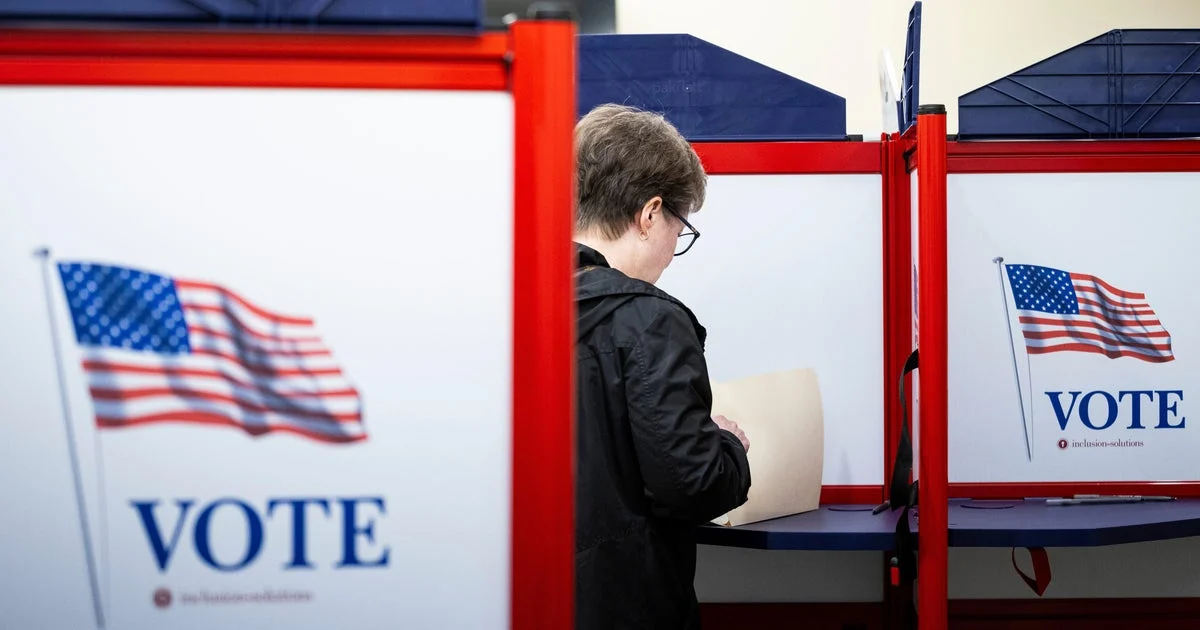
Virginia voters are deciding on April 21, 2026, whether to approve a constitutional referendum that would permit a mid-decade redistricting, creating new congressional districts designed to favor Democrats in 10 of the state’s 11 House seats.
The referendum, if approved, would allow maps drawn by the Democratic-controlled Virginia General Assembly to replace the current bipartisan-drawn districts ahead of the 2026 election. These new districts aim to expand Democratic representation by reshaping the northern Virginia suburbs and incorporating more Democratic-leaning areas such as Richmond and Virginia Beach. The maps would only remain in place until the 2030 election cycle, when the standard post-census redistricting process resumes.
Background of the Referendum and Political Context
Virginia’s current congressional map was drawn by a bipartisan commission and currently gives Democrats control of six out of 11 House seats. The proposed redistricting breaks up the reliably Democratic northern suburbs of Washington, D.C., extending those districts into more conservative southern and western parts of the state to maximize Democratic electoral advantage.
This referendum follows a pattern seen in several states where parties controlling state legislatures seek to redraw districts to their advantage outside the usual 10-year cycle. California recently passed a similar referendum, while Texas, Missouri, and North Carolina saw Republicans redraw maps to benefit their party in 2024 and 2025. Democrats have framed Virginia’s vote as part of a national response to Republican-led redistricting efforts, highlighted by ads featuring former President Barack Obama.
Political Reactions and Voter Turnout
Former President Donald Trump has urged Republicans to vote against the measure, calling it unfair and warning it threatens the country’s democratic process. Democrats led by Governor Abigail Spanberger defend the referendum as a necessary countermeasure to Republican gerrymandering in other states.
Early voter turnout has been robust, with over 1.35 million Virginians voting before Election Day—almost matching early votes from last fall’s statewide races. However, polls show the referendum leading by only about five percentage points, reflecting a divided electorate. Some Democrats oppose the measure as well, citing concerns about overturning a 2021 constitutional amendment establishing a bipartisan commission for fair redistricting.
Financial Influence and Broader Implications
Nearly $100 million has been spent on the campaign for and against the referendum, with 95% coming from dark money groups. Supporters include Virginians for Fair Elections, which has spent $64 million, while the opposition group, Virginians for Fair Maps, has contributed nearly $20 million.
Experts suggest Virginia’s referendum could impact the balance of power nationally if Democrats gain seats through redistricting, as other efforts to redraw maps in states like Indiana and Maryland have stalled. The vote also illustrates the ongoing nationwide struggle over congressional district boundaries ahead of the 2026 midterm elections.
Why it matters
This referendum is significant because it challenges the typical once-a-decade redistricting process, potentially setting a precedent for mid-decade map changes that could alter political control. The vote reflects heightened partisan tensions around electoral fairness and gerrymandering nationwide, influencing the composition of the U.S. House of Representatives and shaping future redistricting debates.
Read more Politics stories on Goka World News.